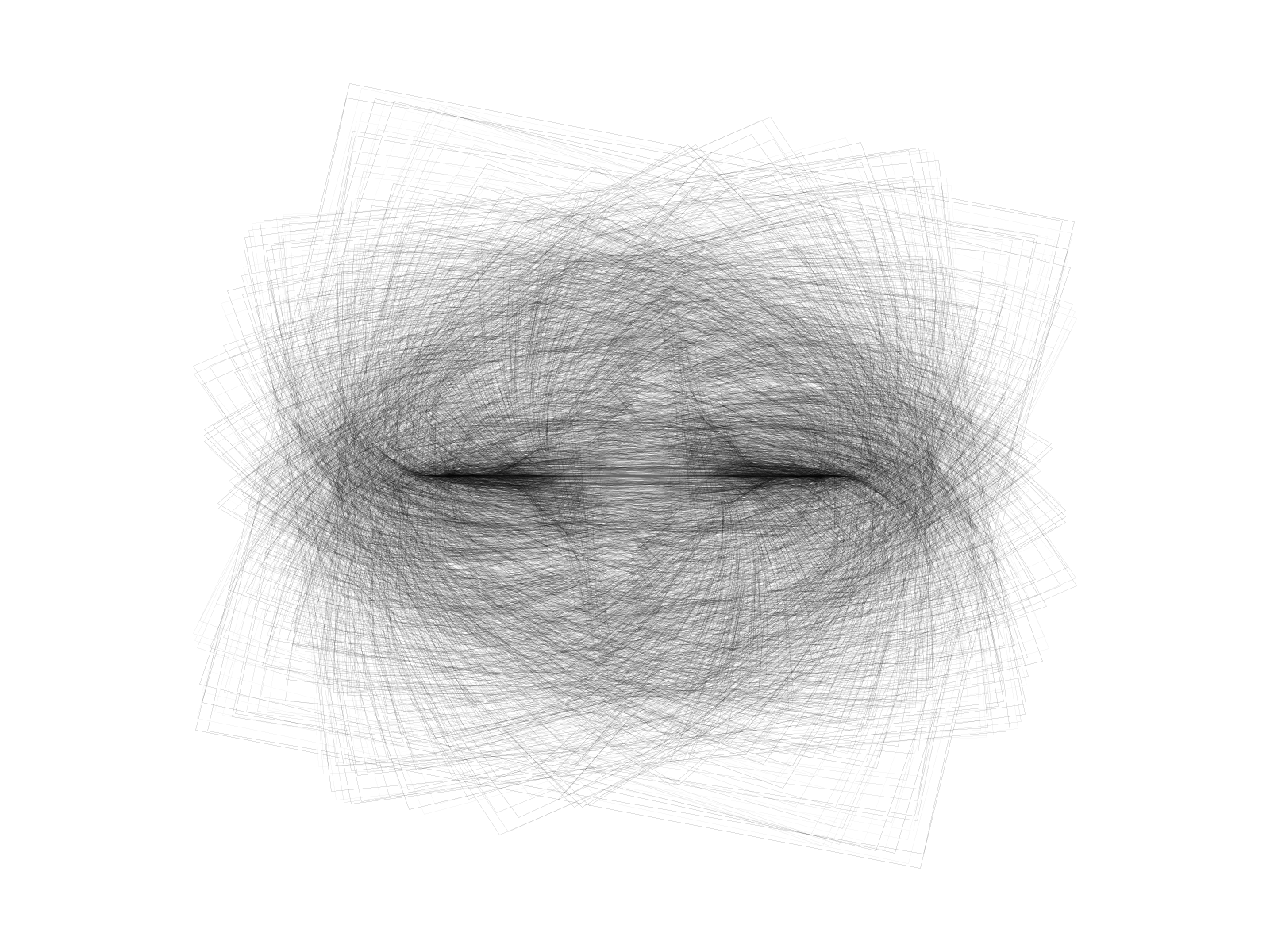


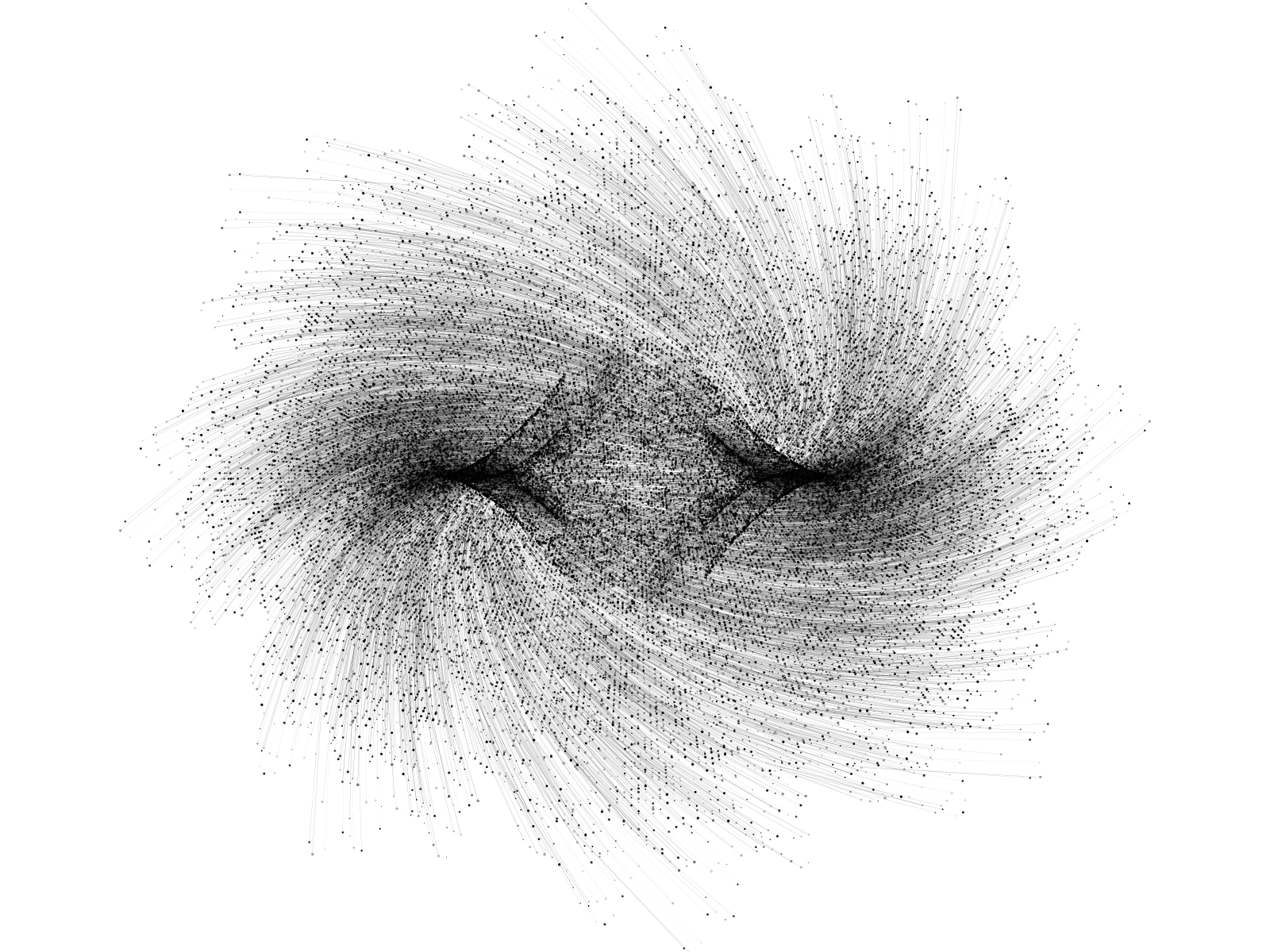
Sutcliffe noticed that if you draw a pentagon, then plot the midpoints of each of its five sides
and extend a line perpendicular to each of these points, you can connect the end of these
lines to make another pentagon. In doing this, the remaining area of the shape also ends up
being subdivided into further pentagons, meaning that within each pentagon are six subpentagons.
And within each of those, another six sub-pentagons, repeated downward toward
the infinitesimal. Using the Sutcliffe pentagon a myriad of exciting effects are possible, of which only a few examples are displayed here.