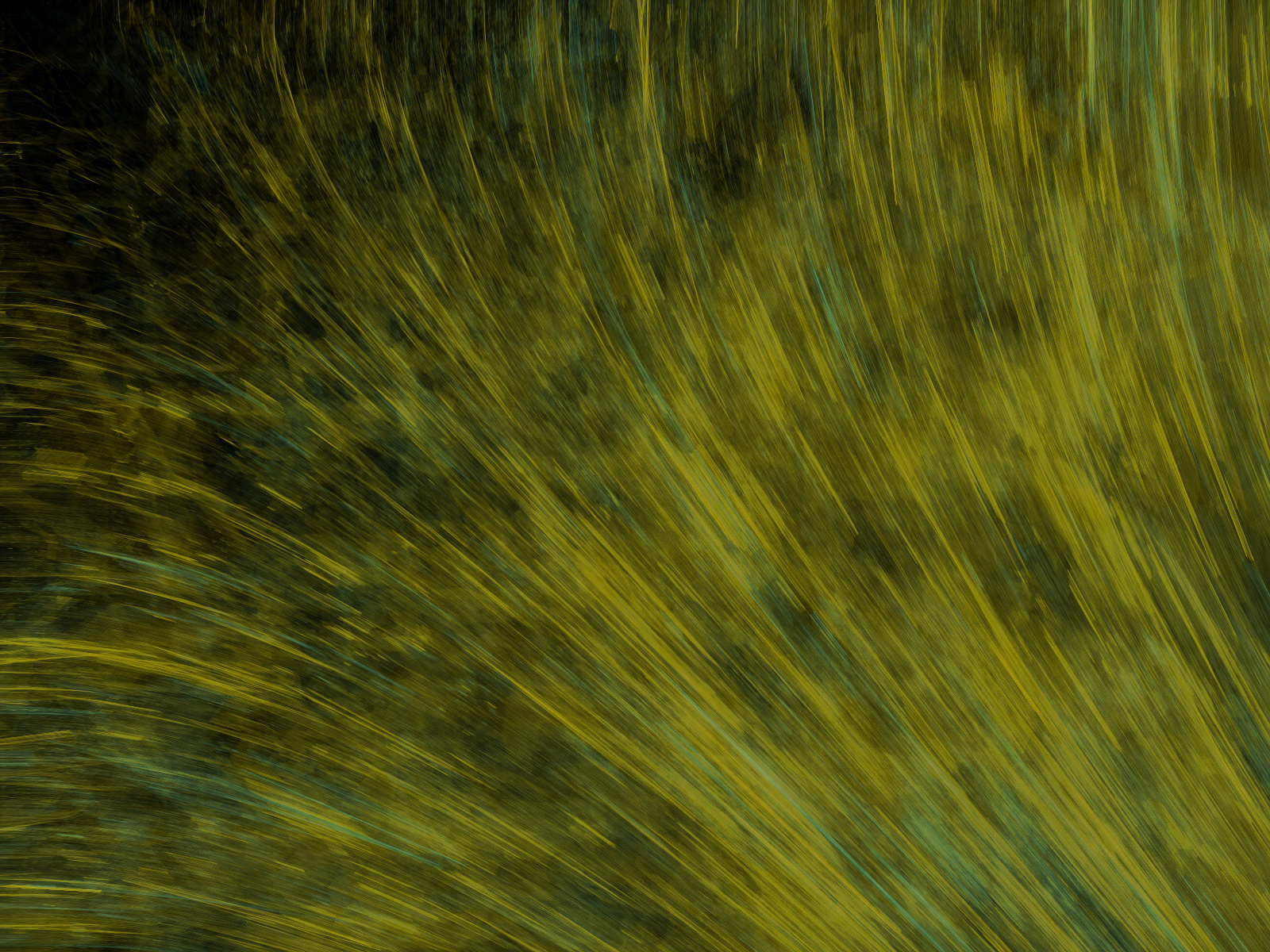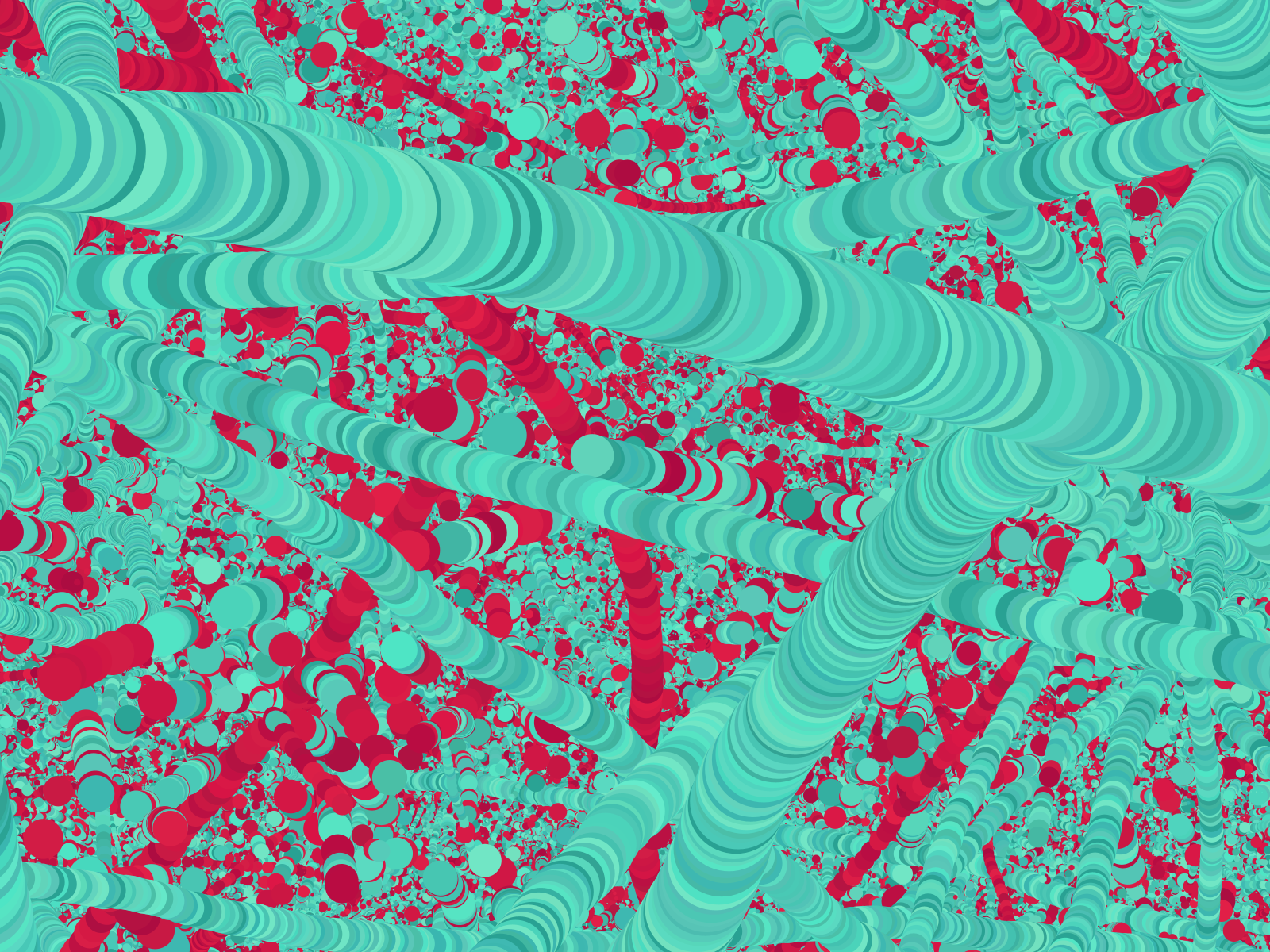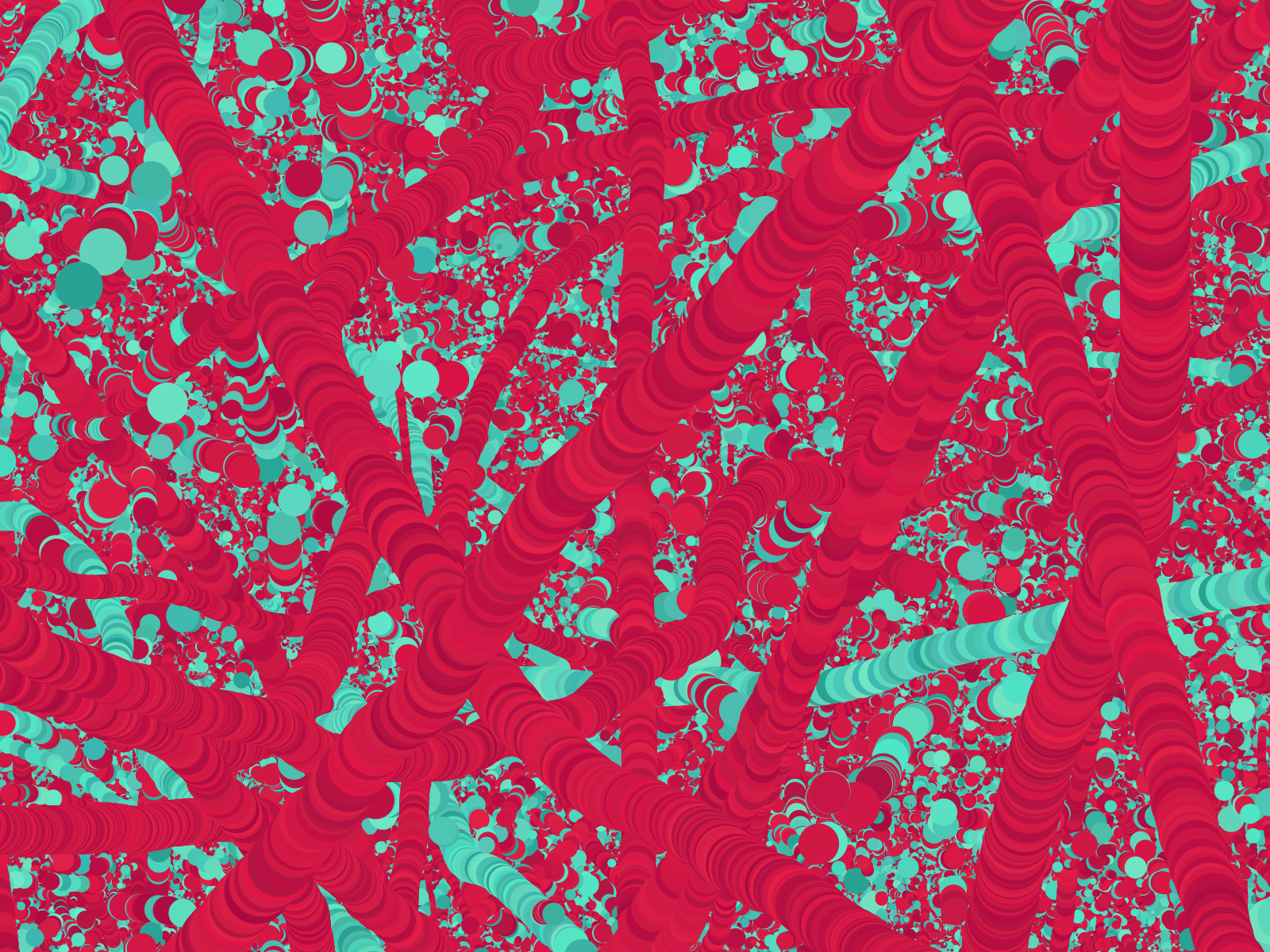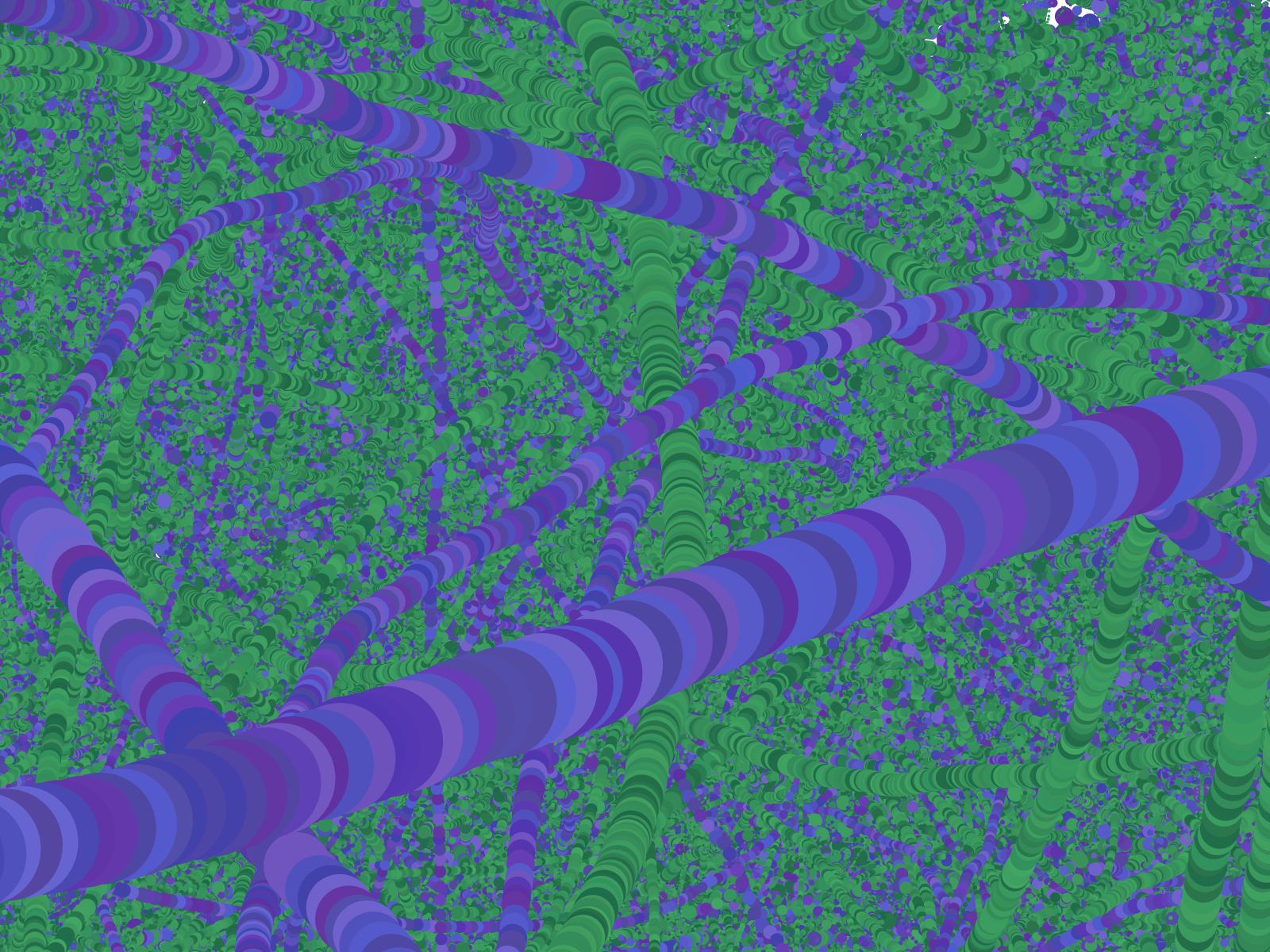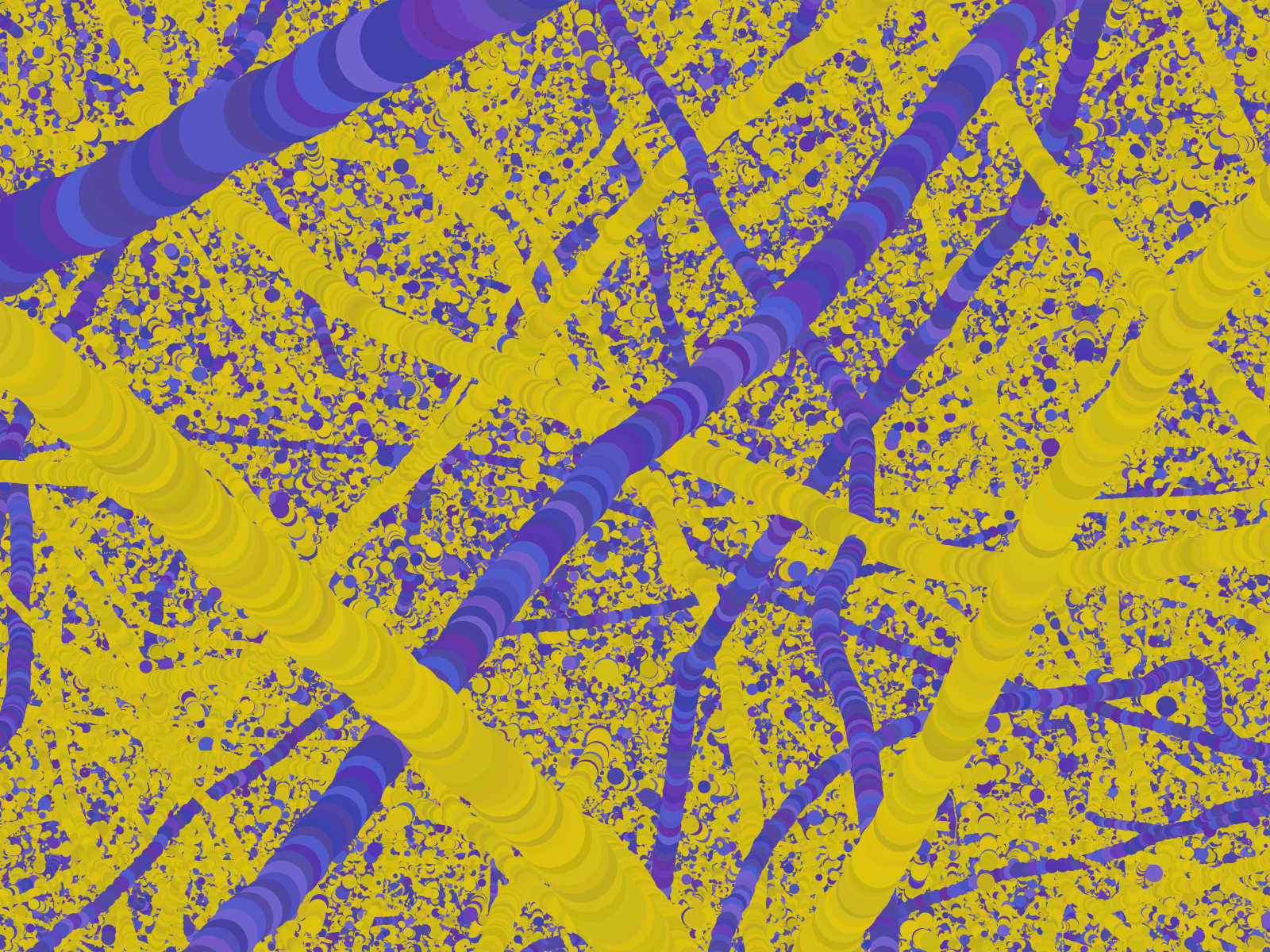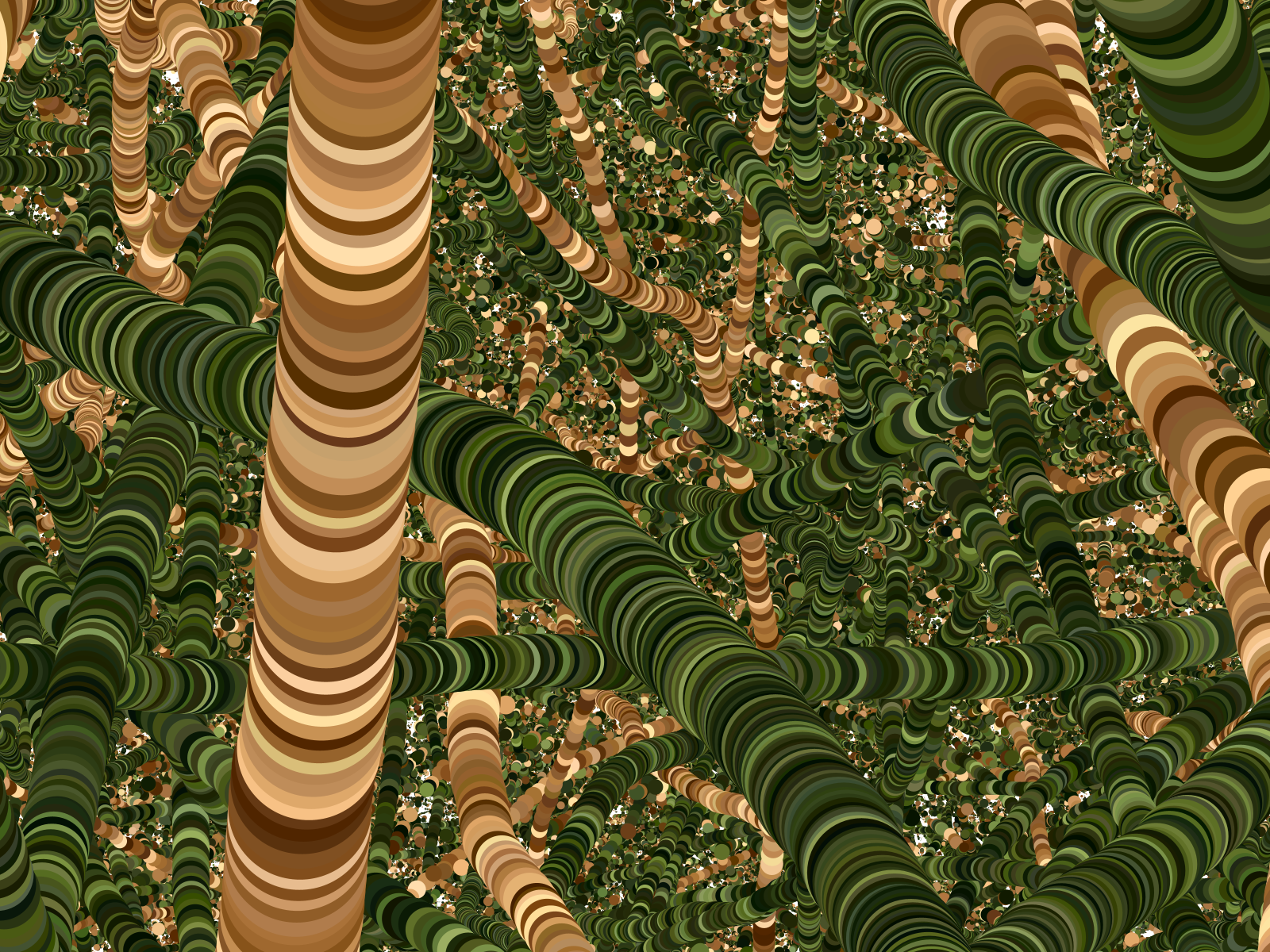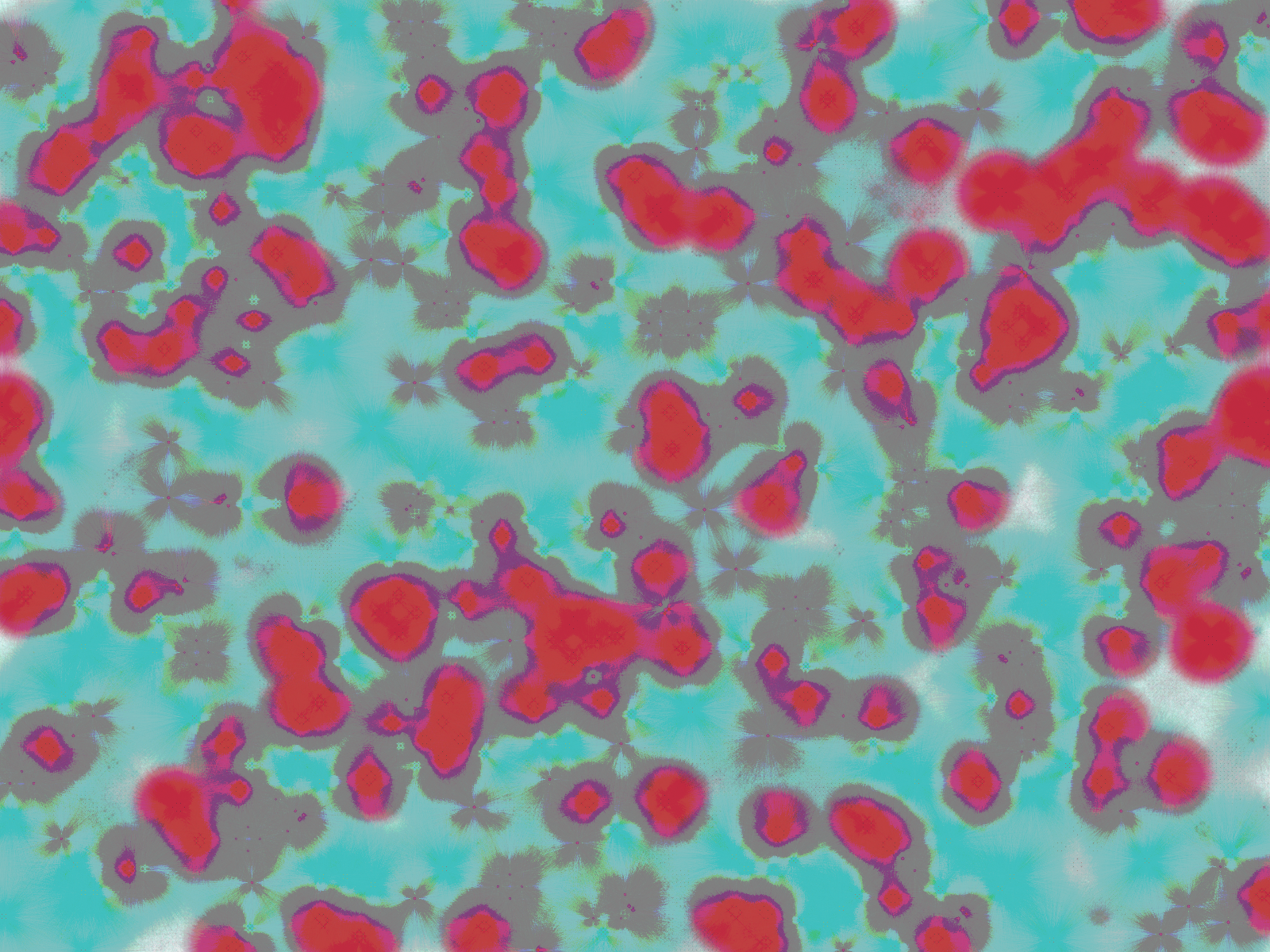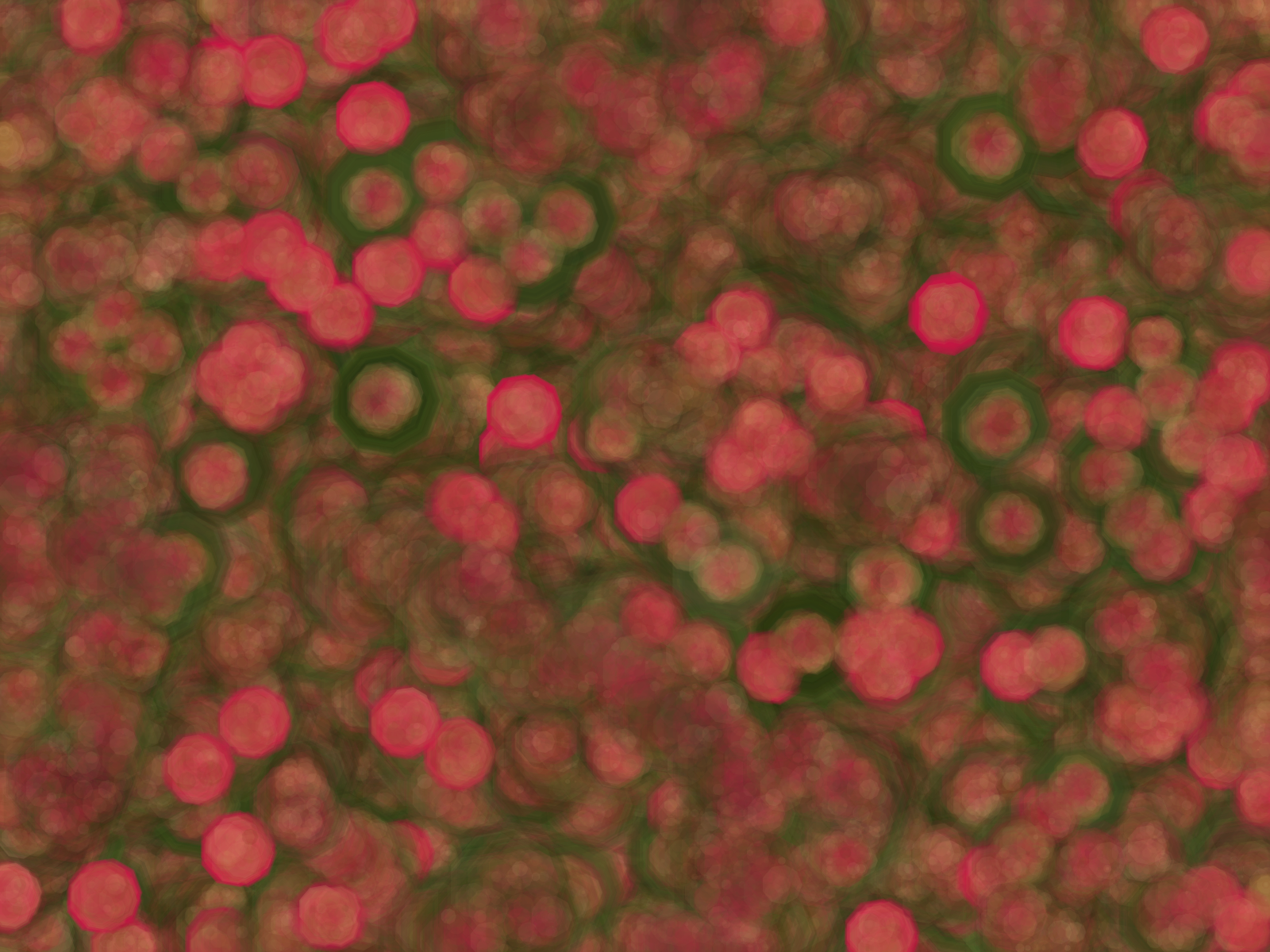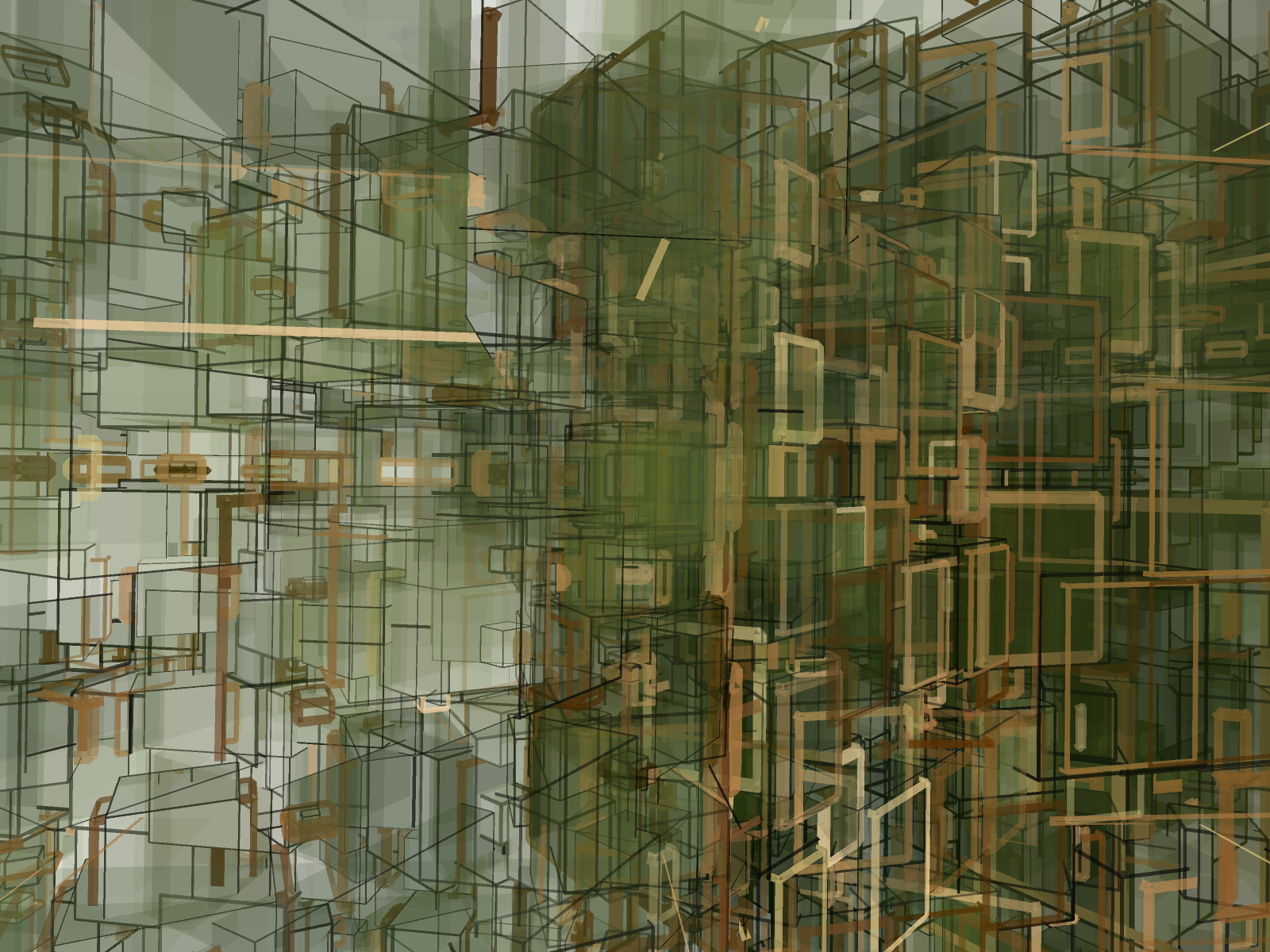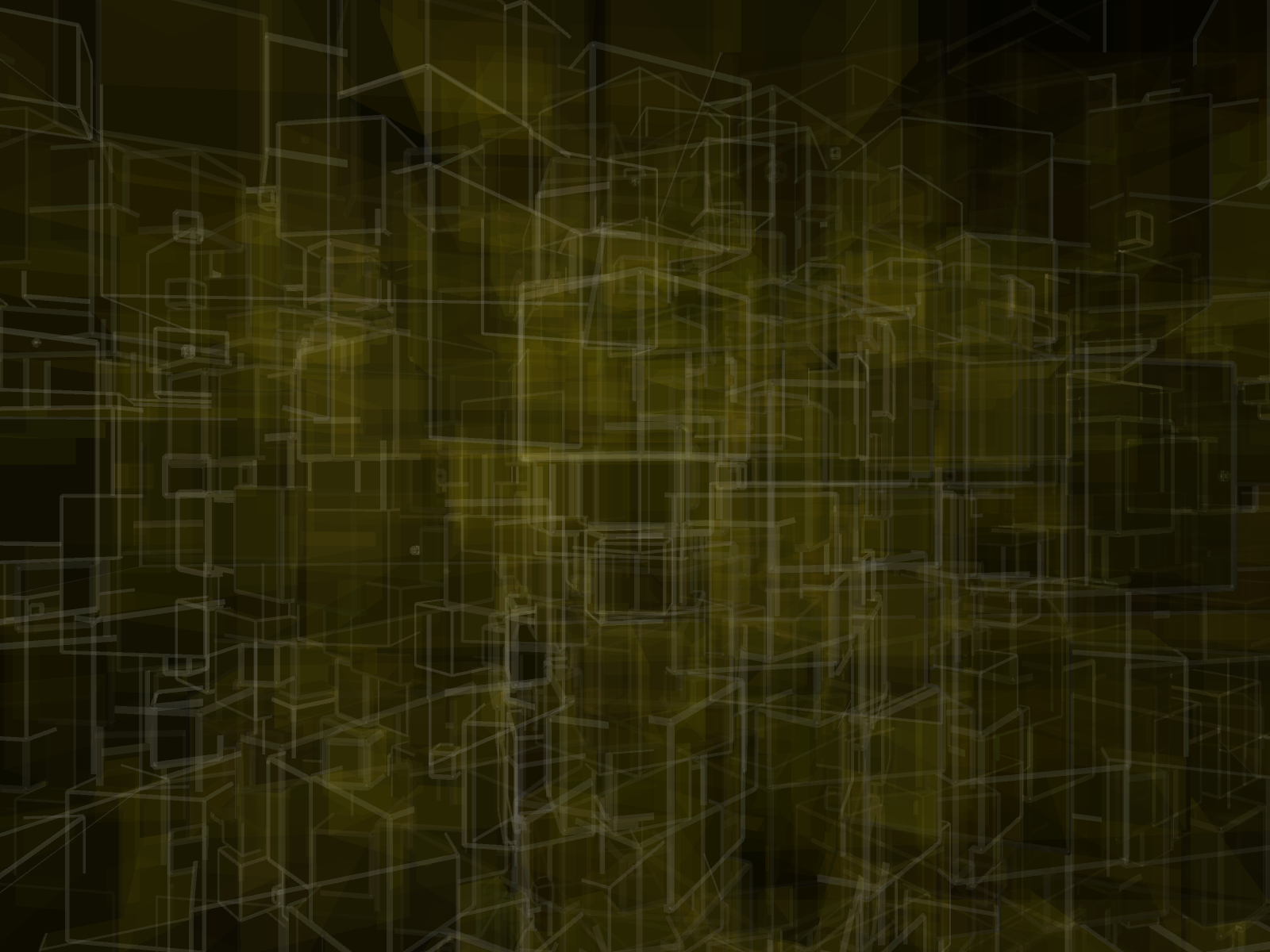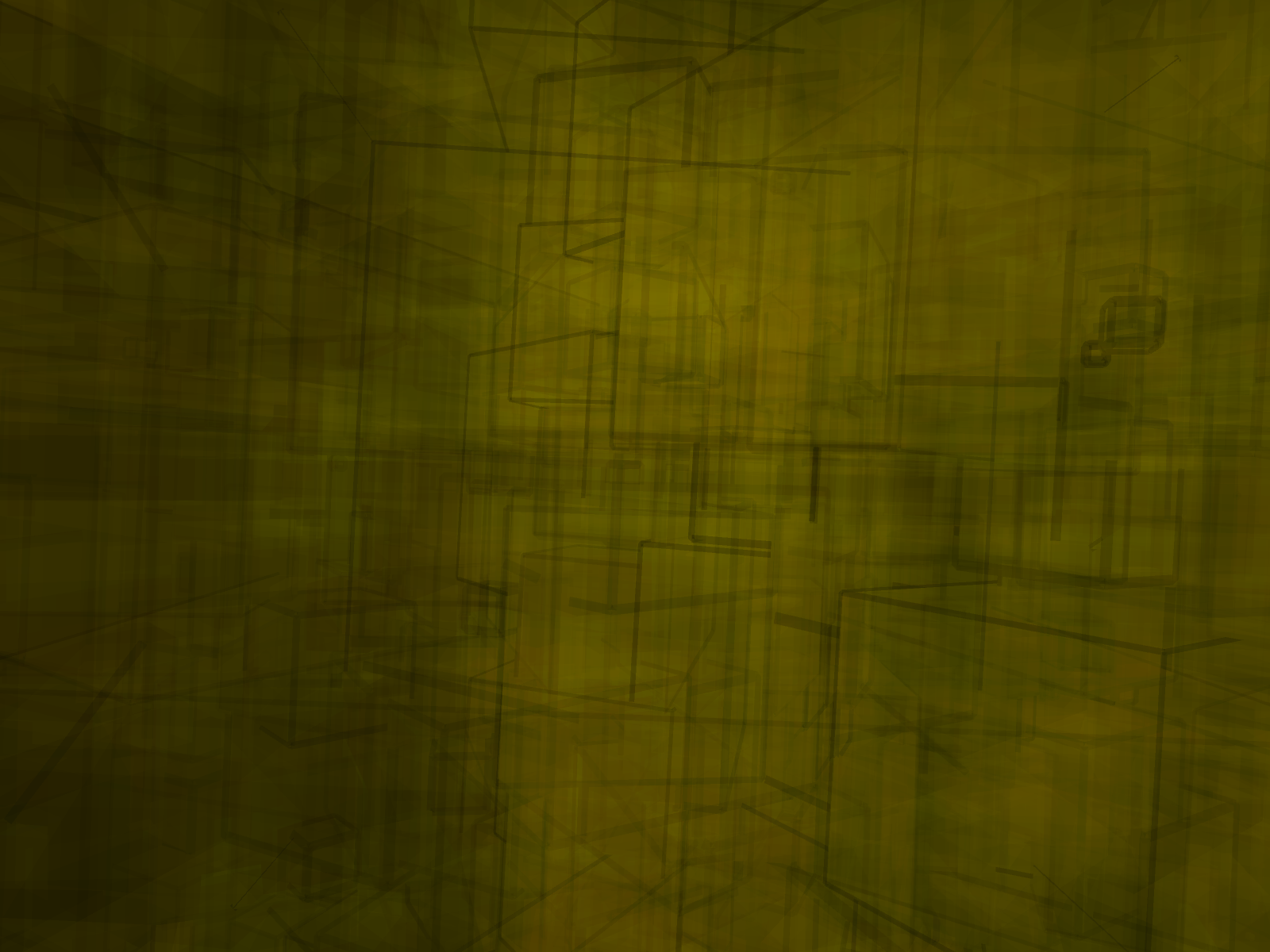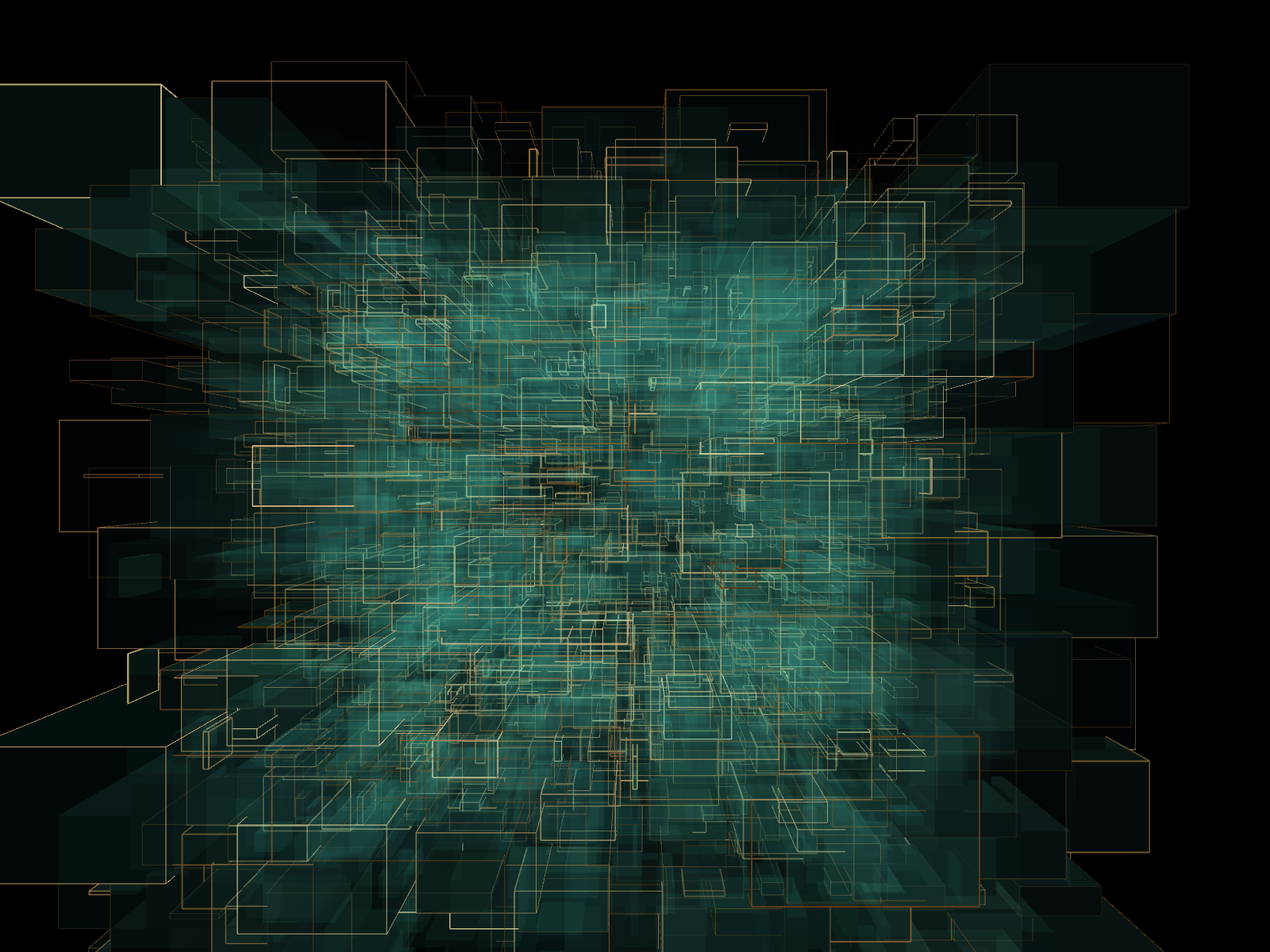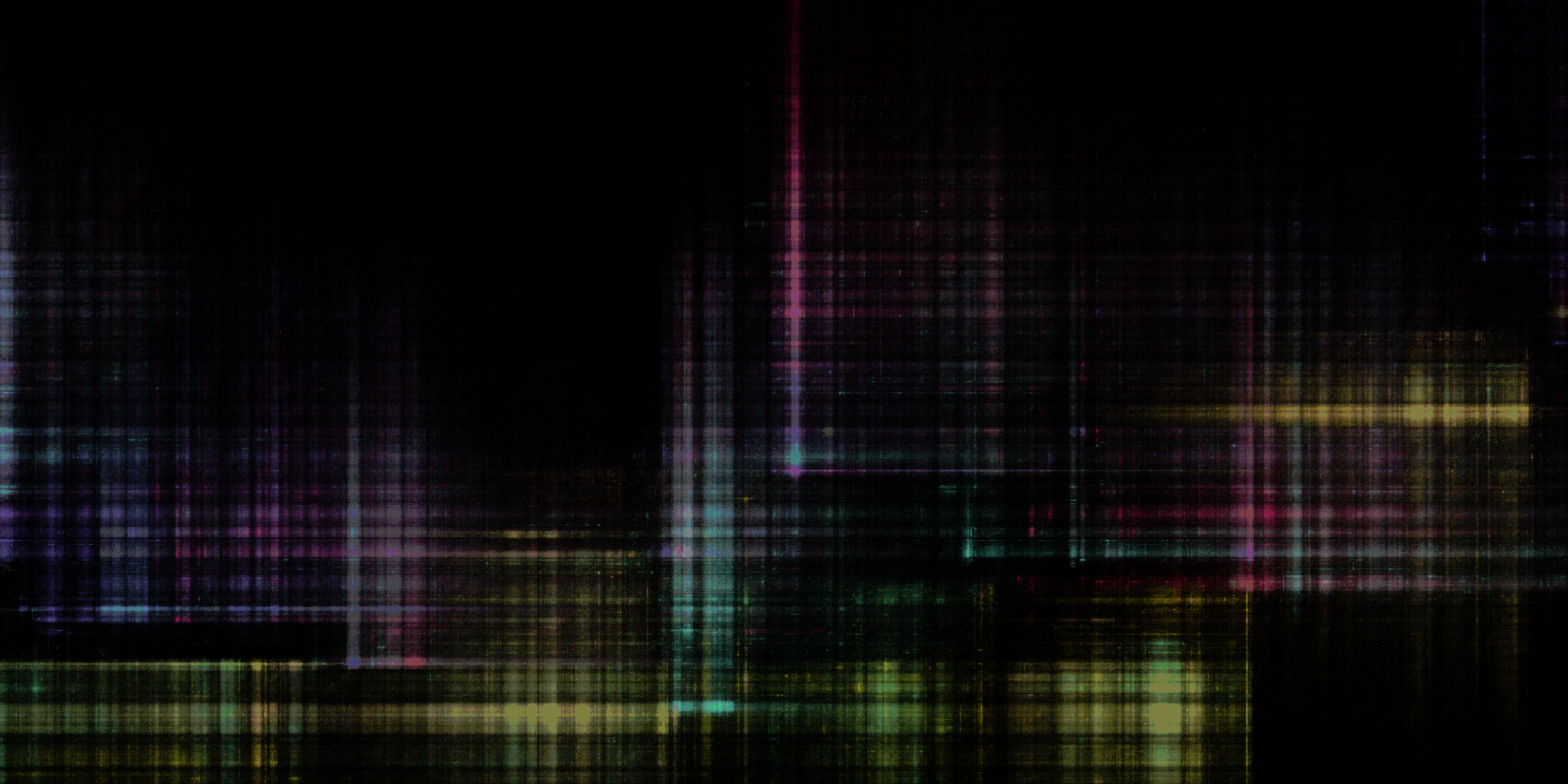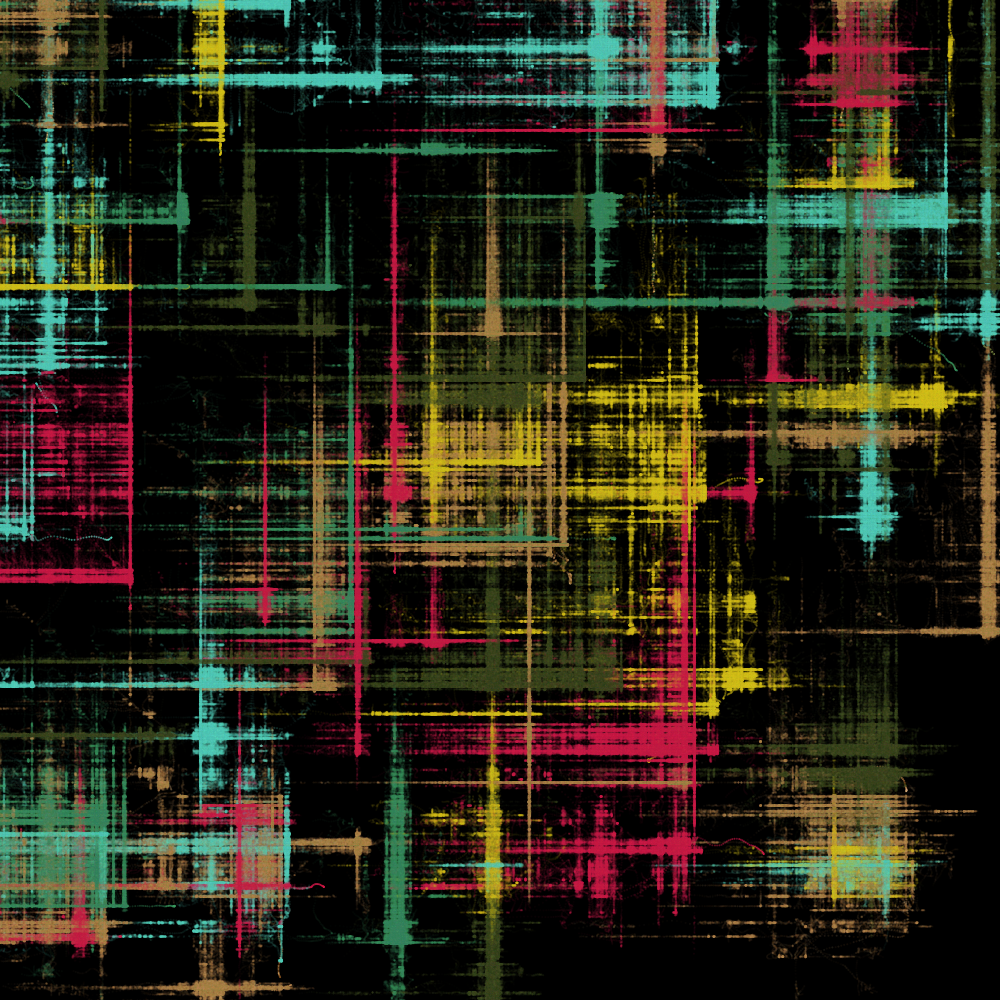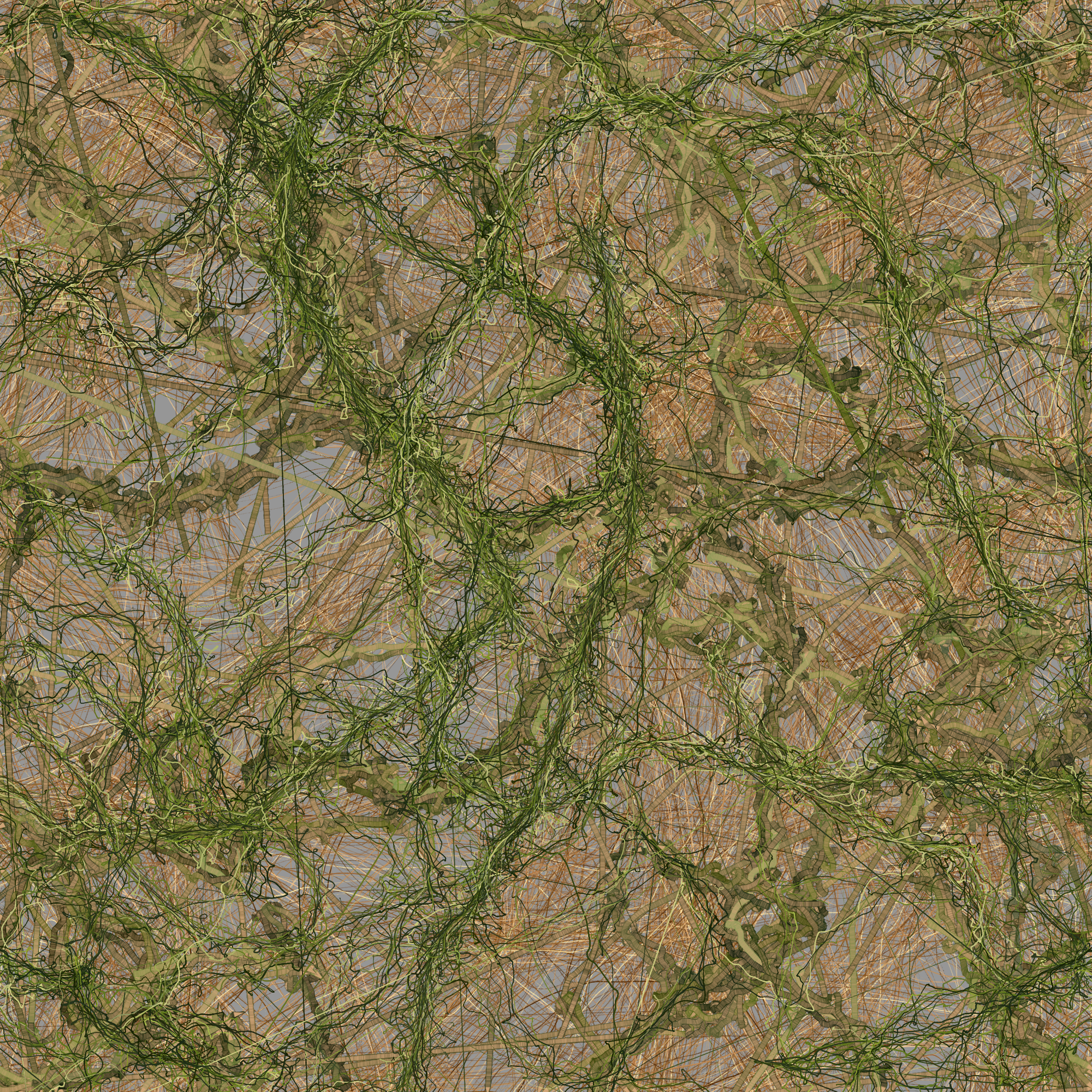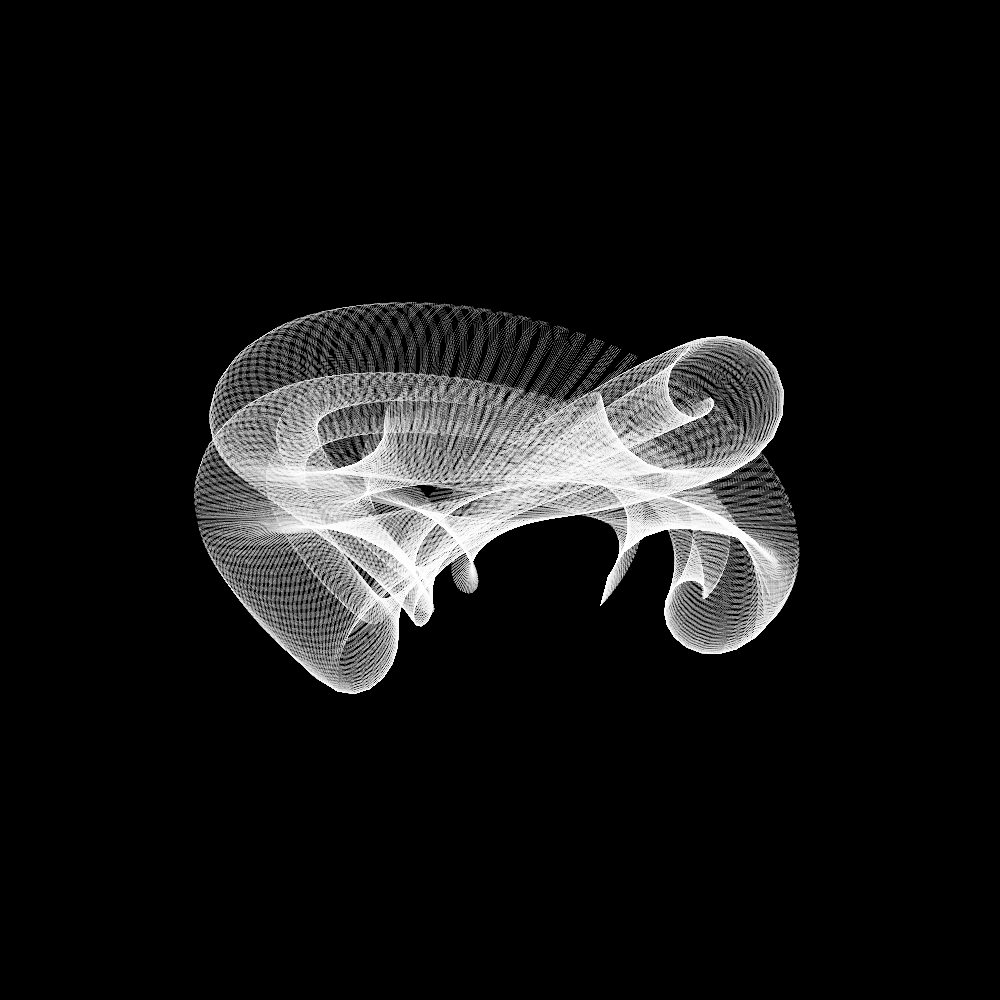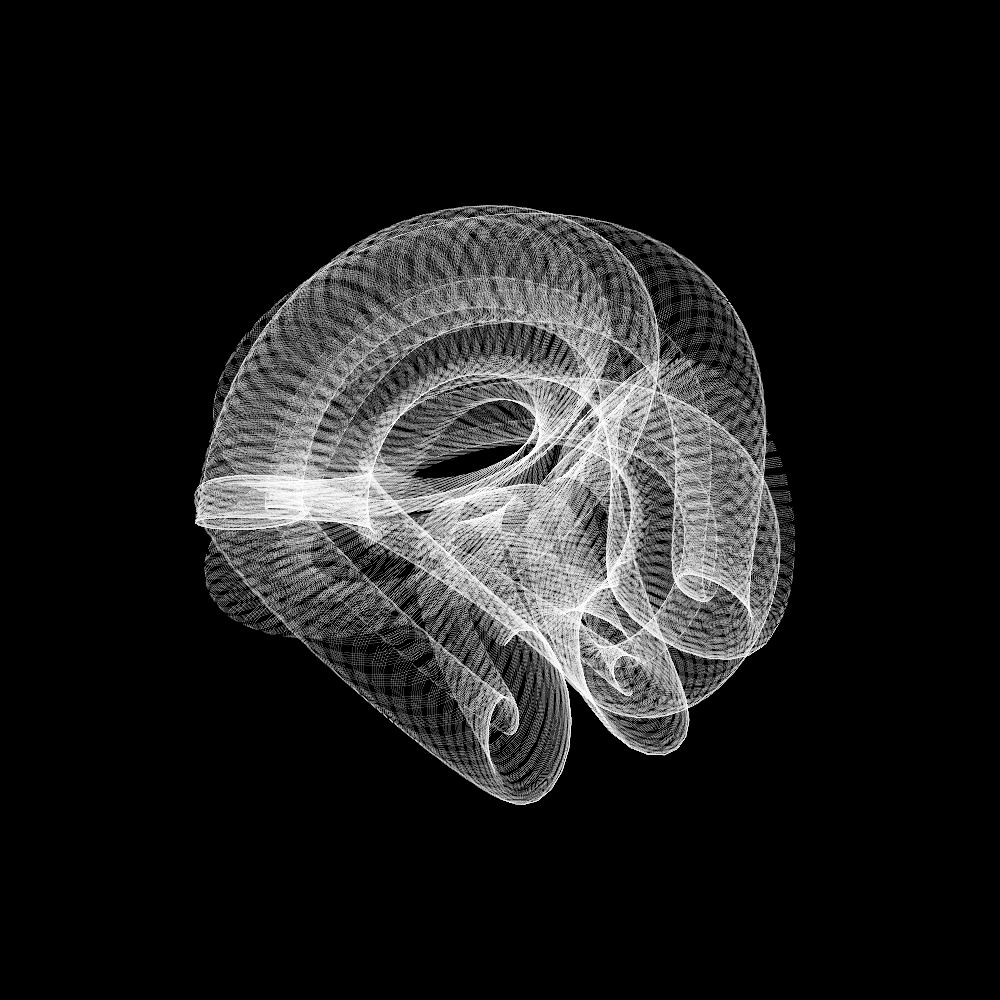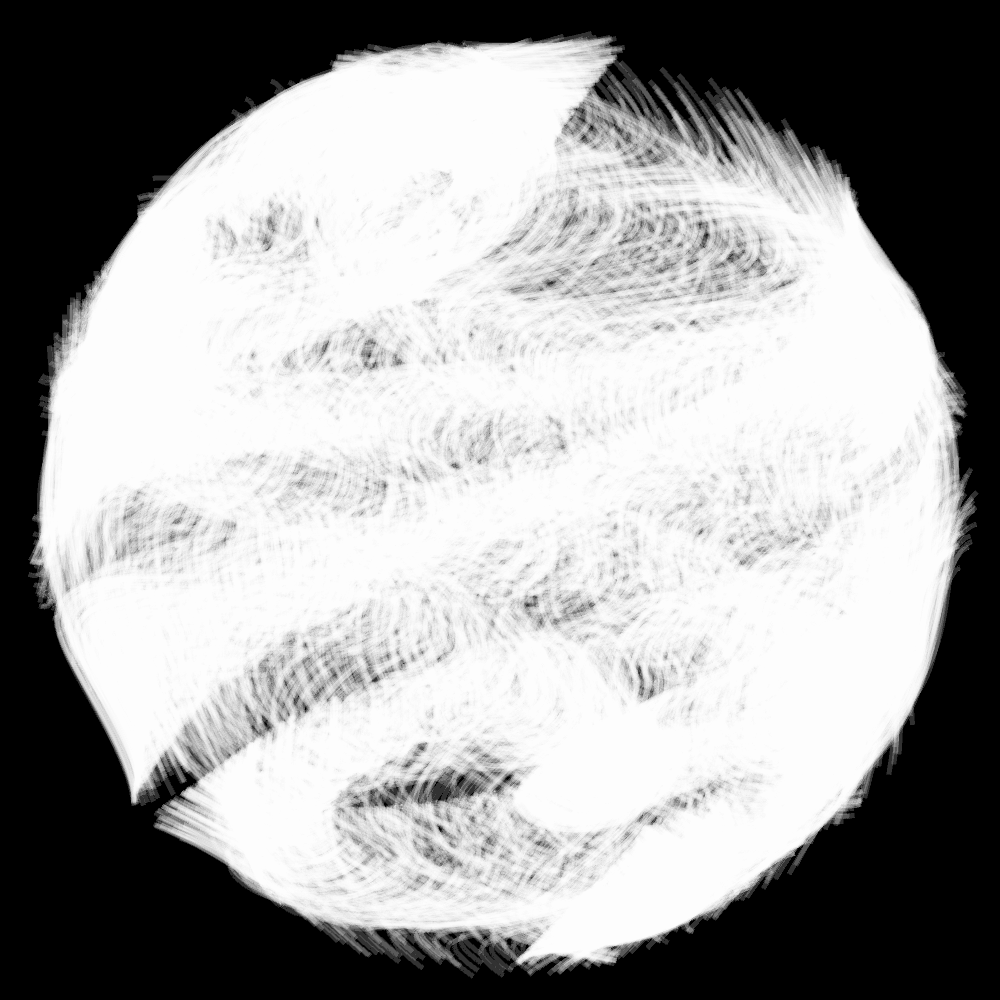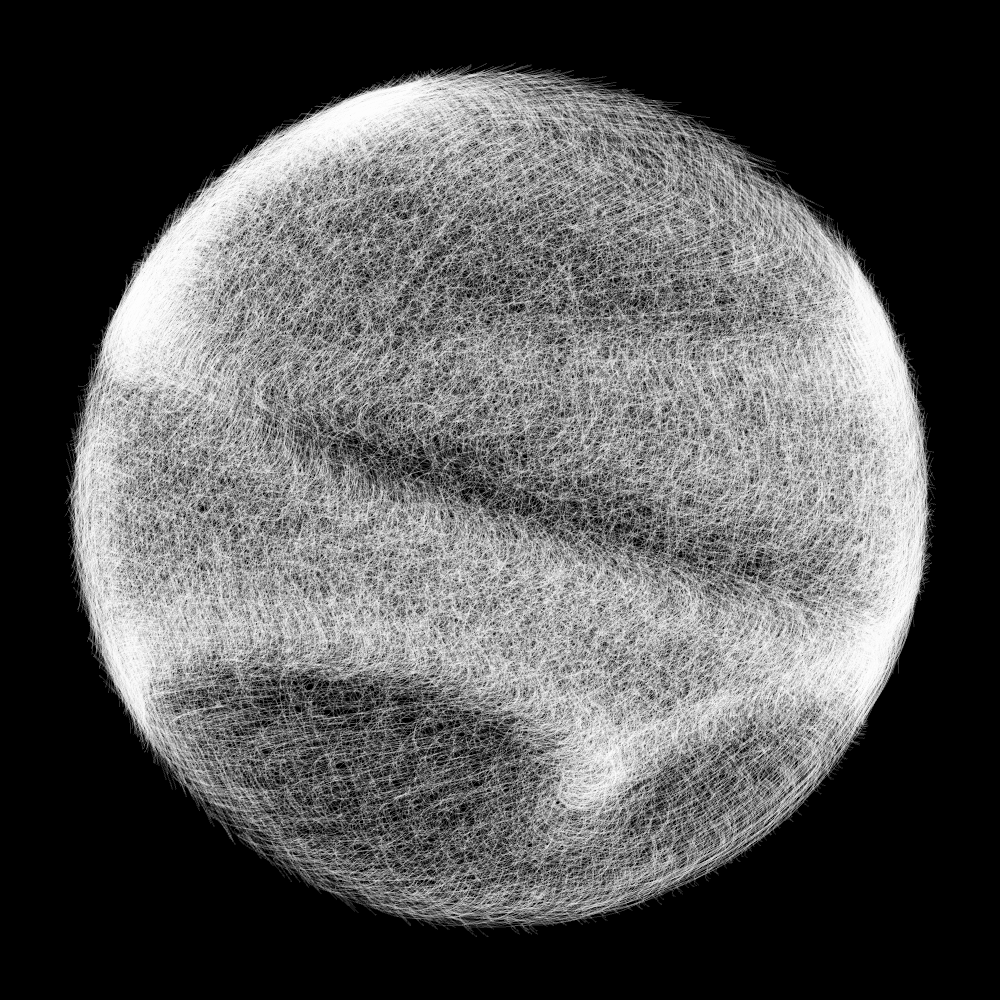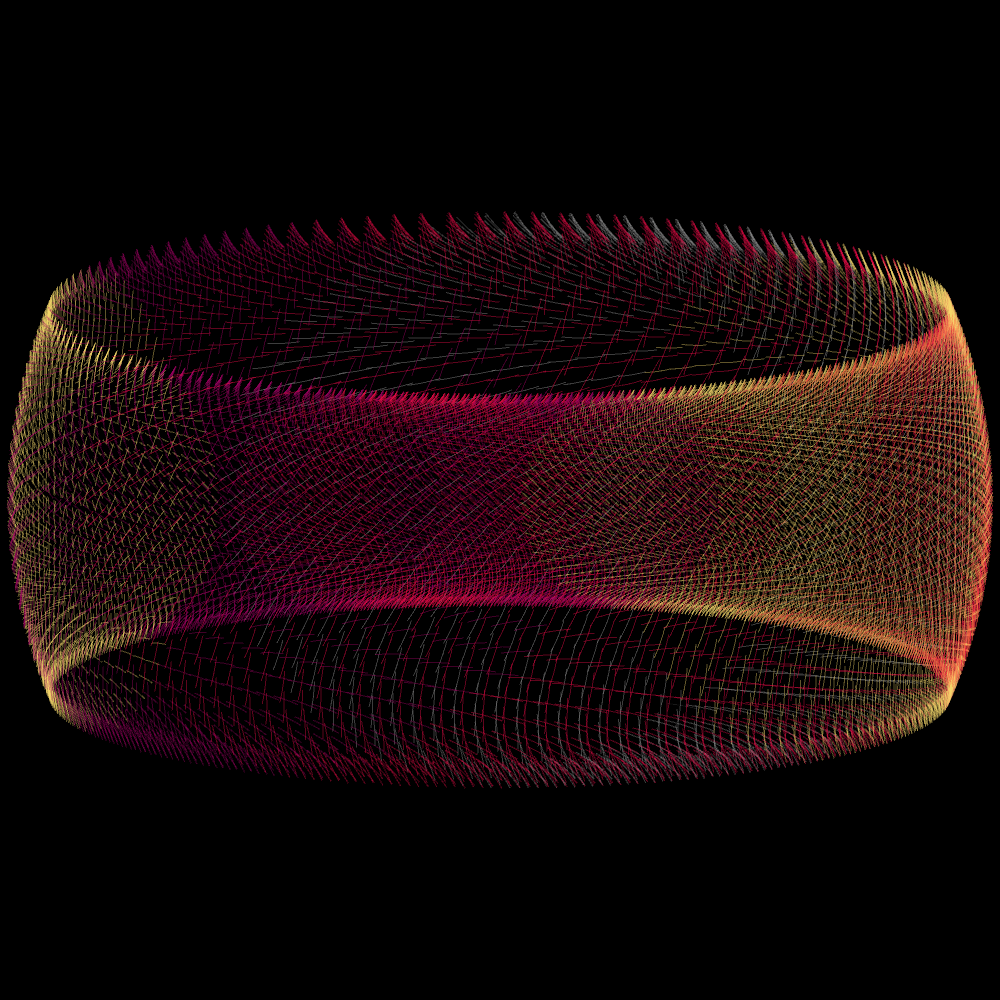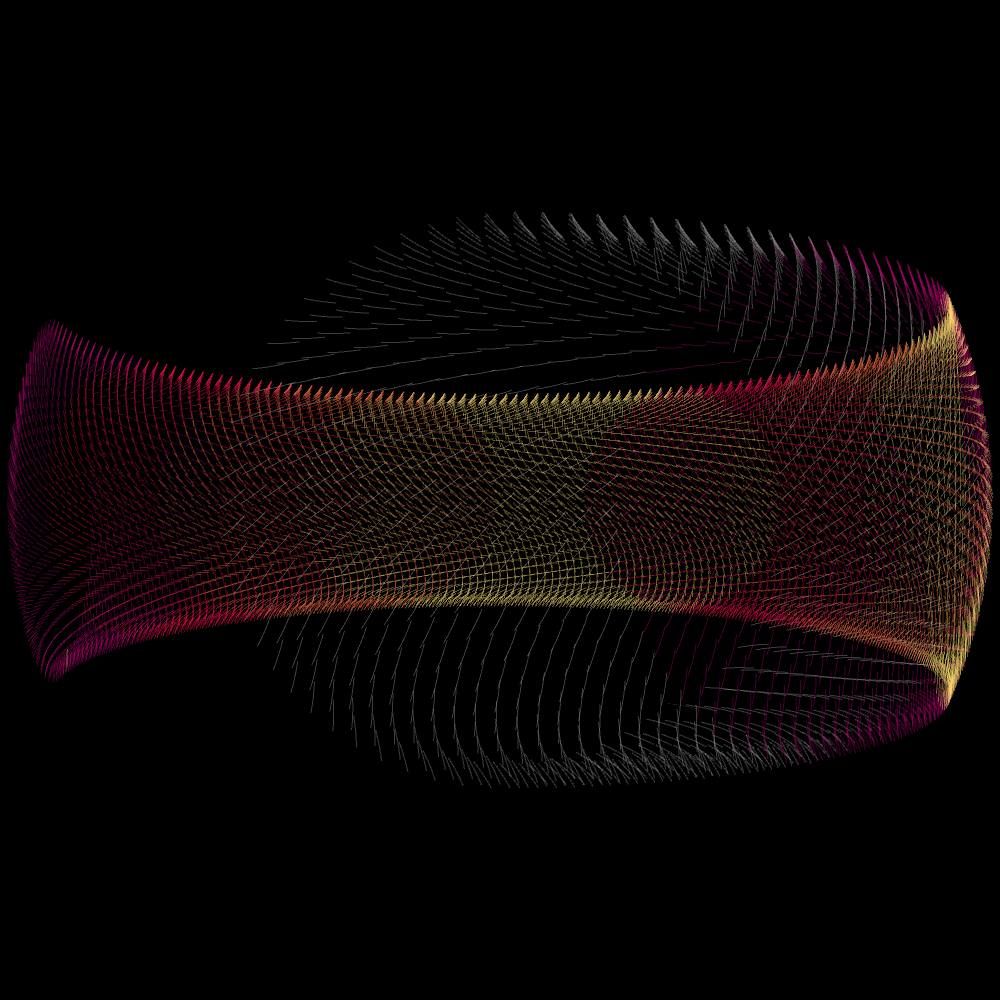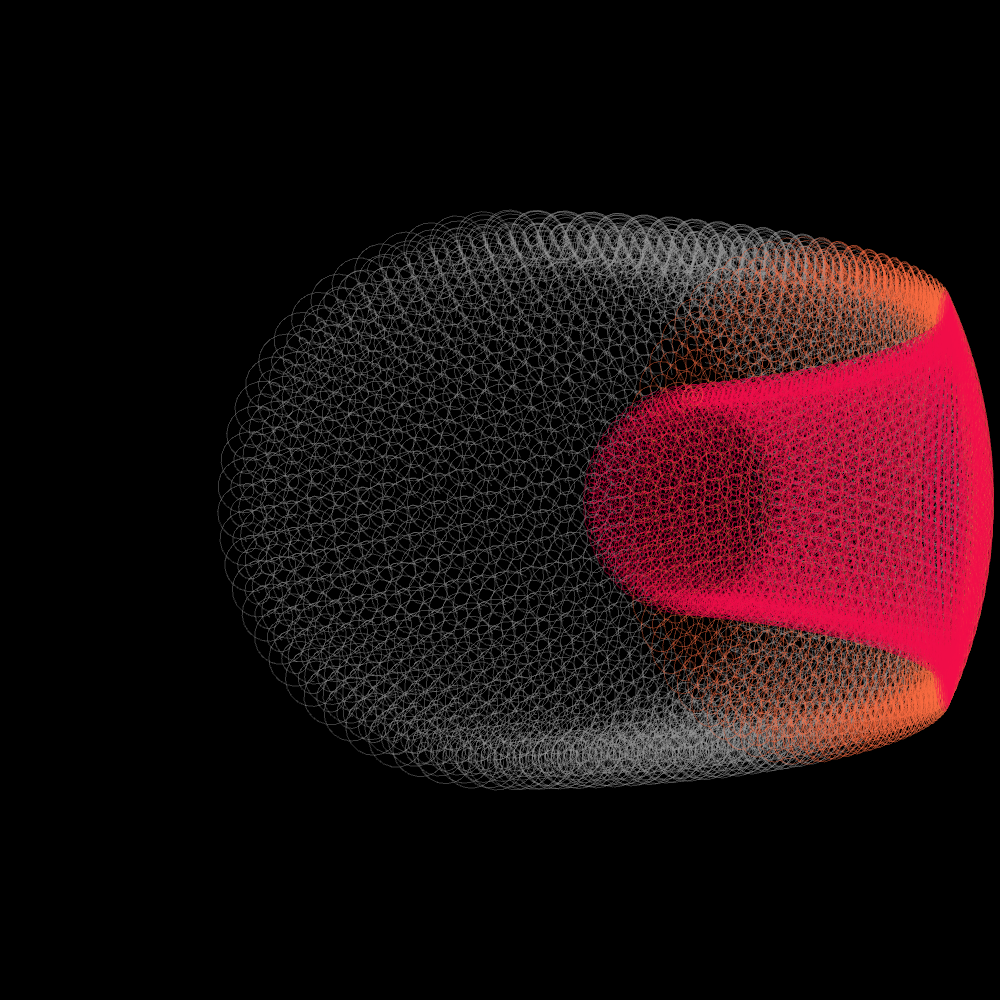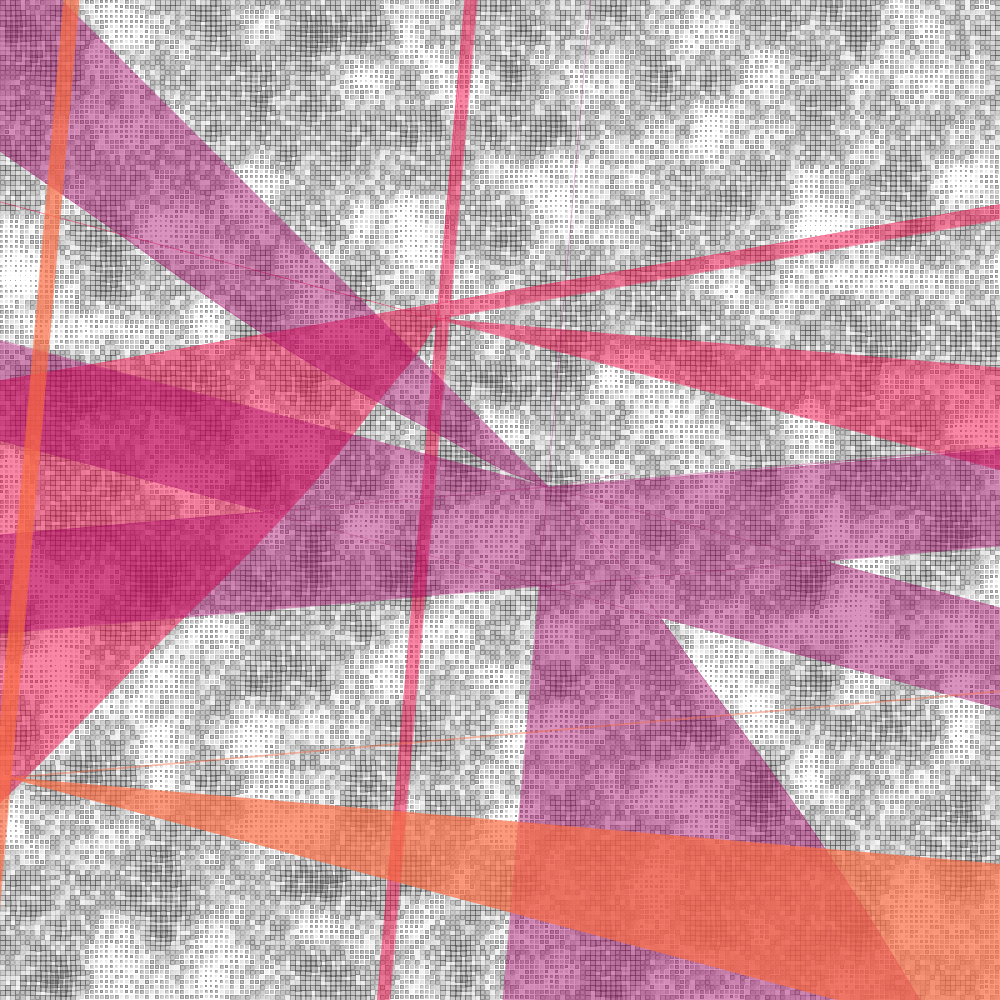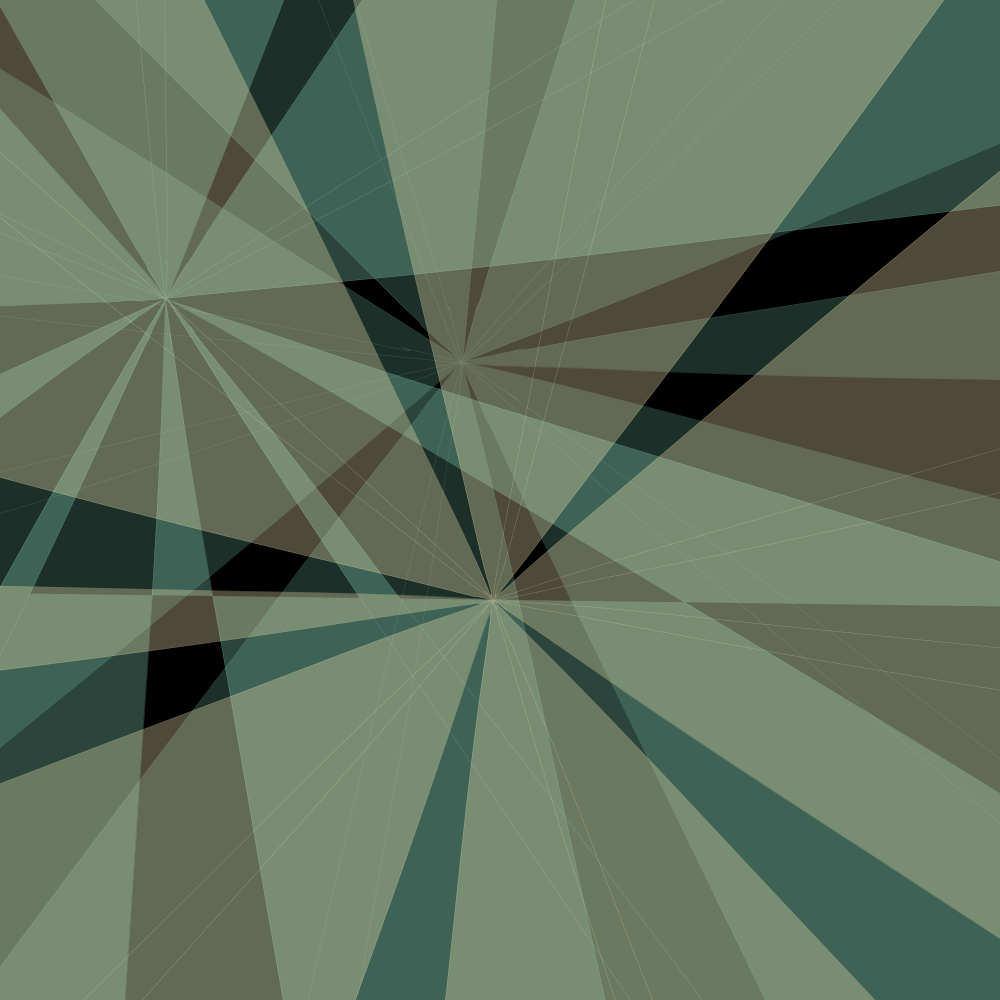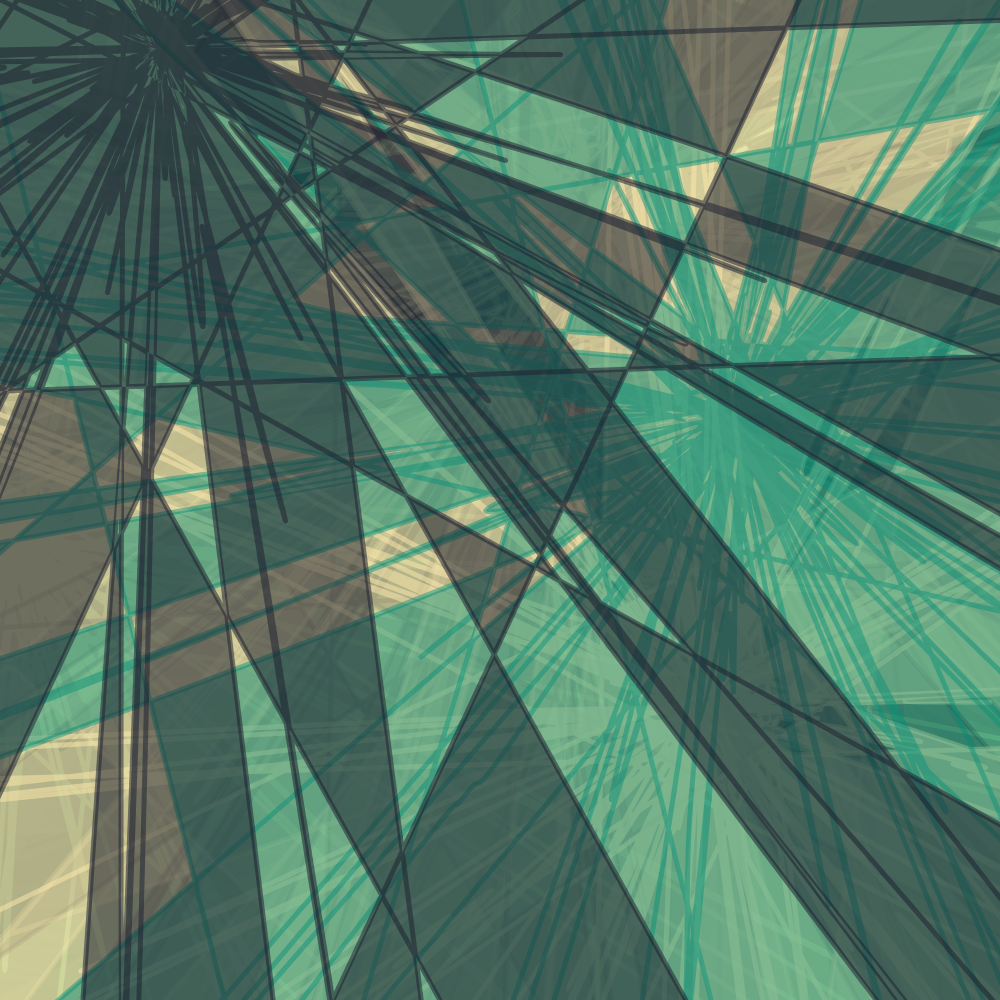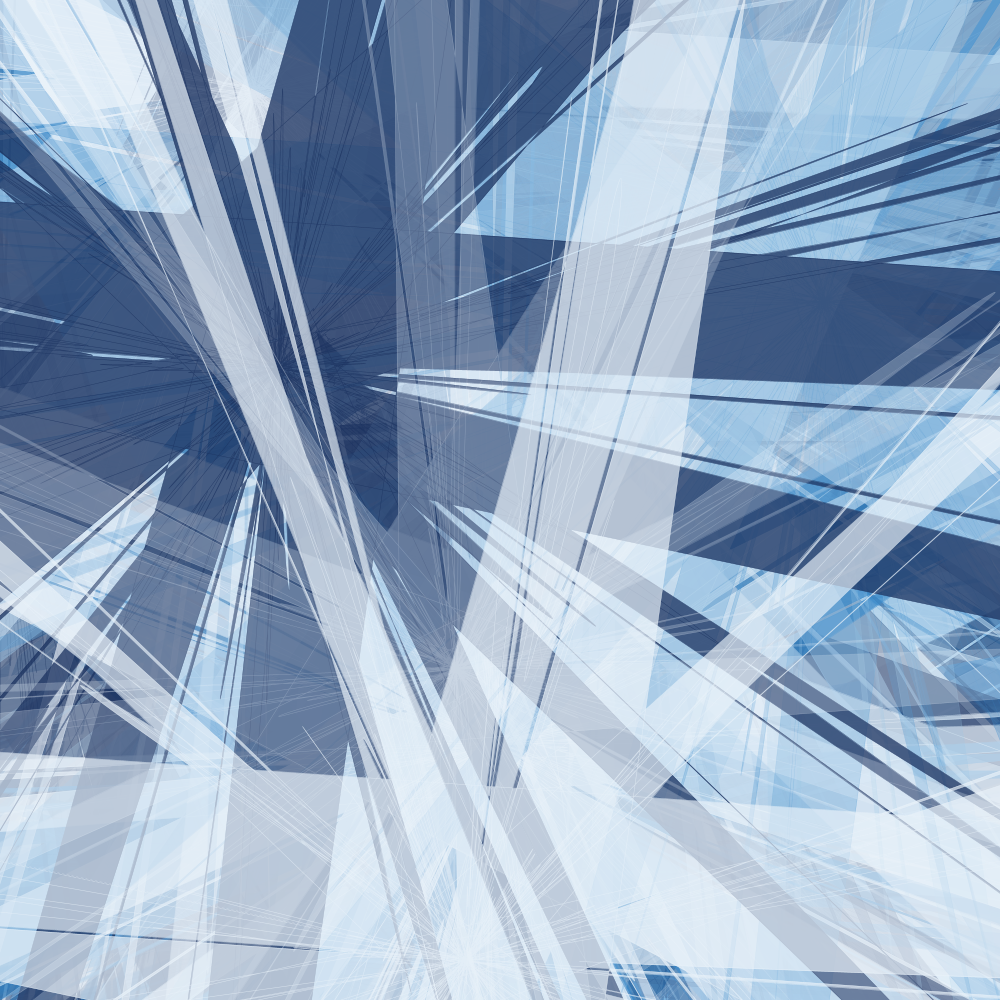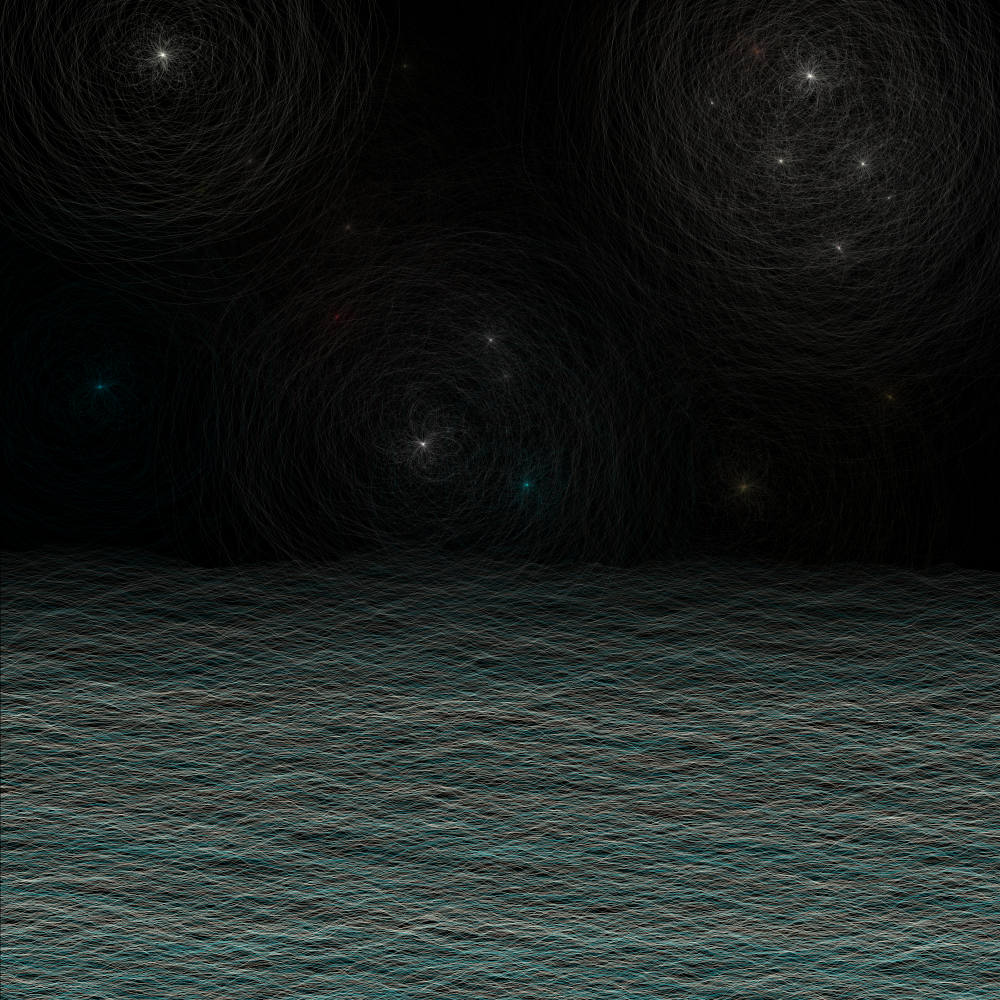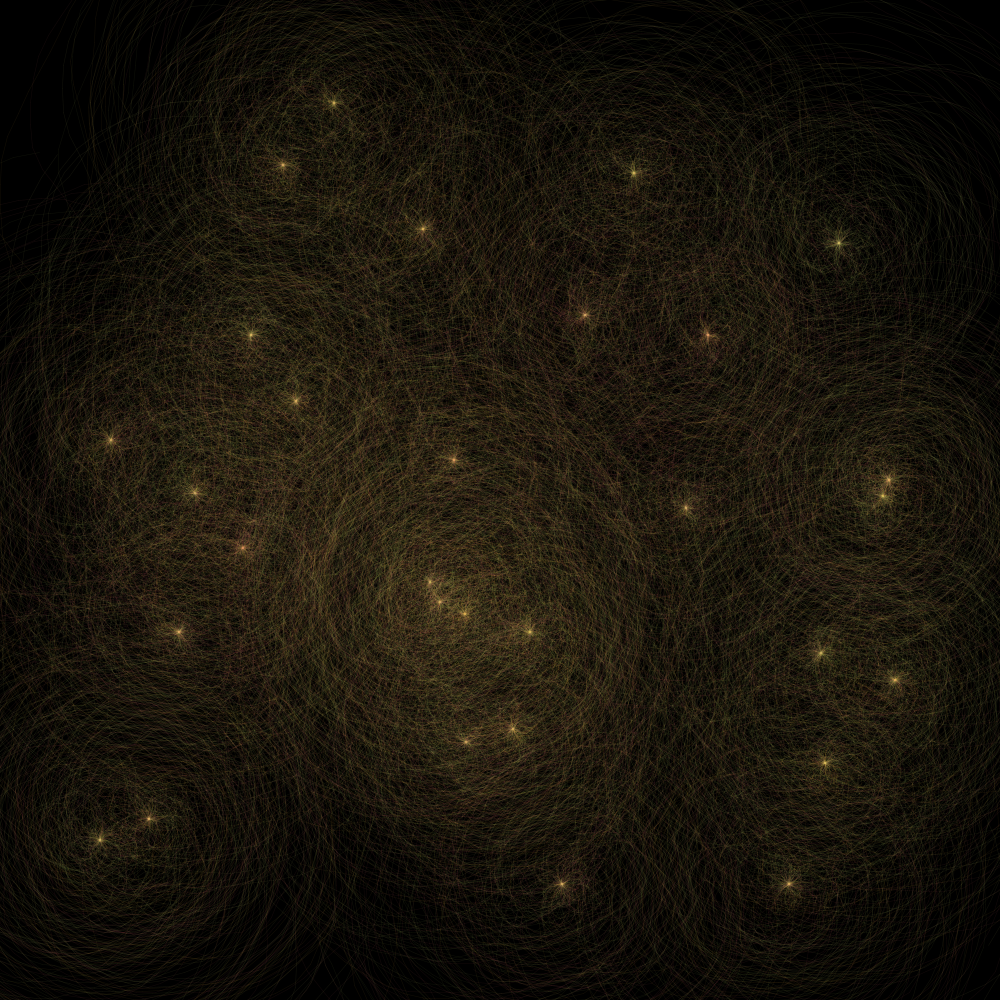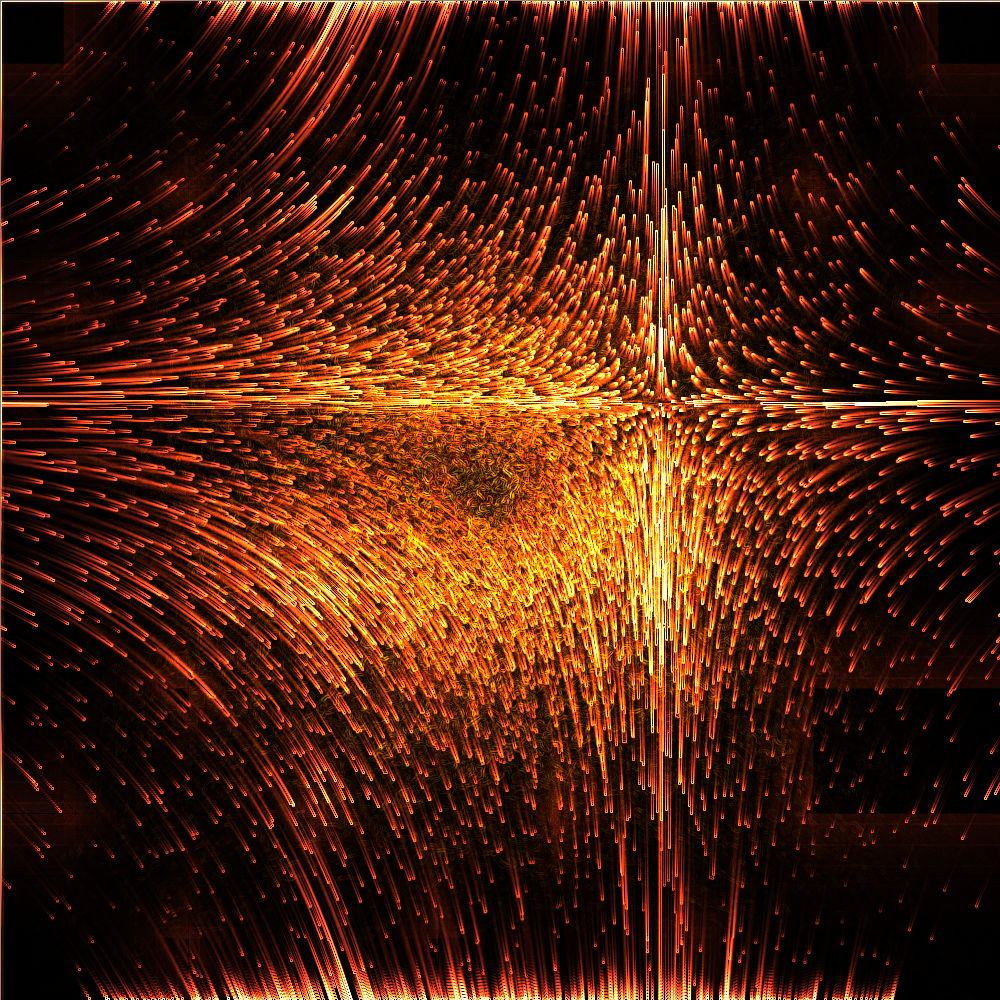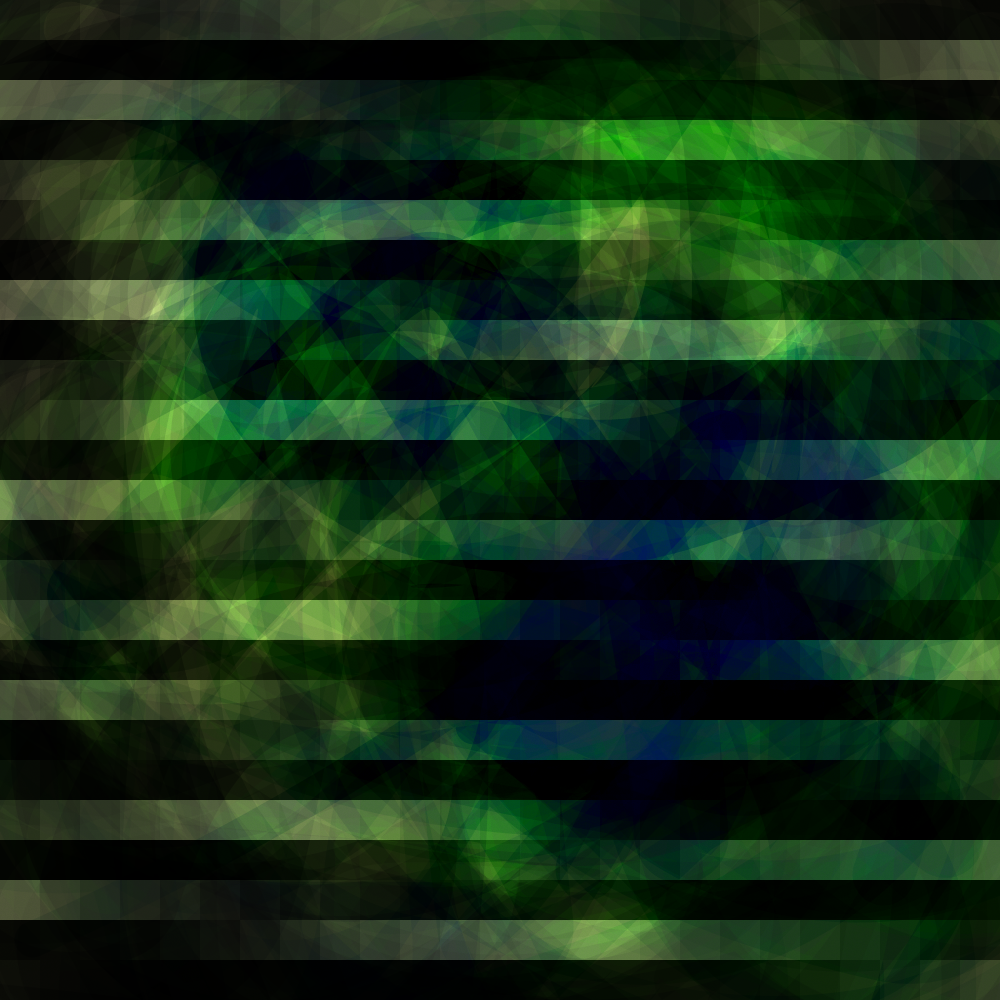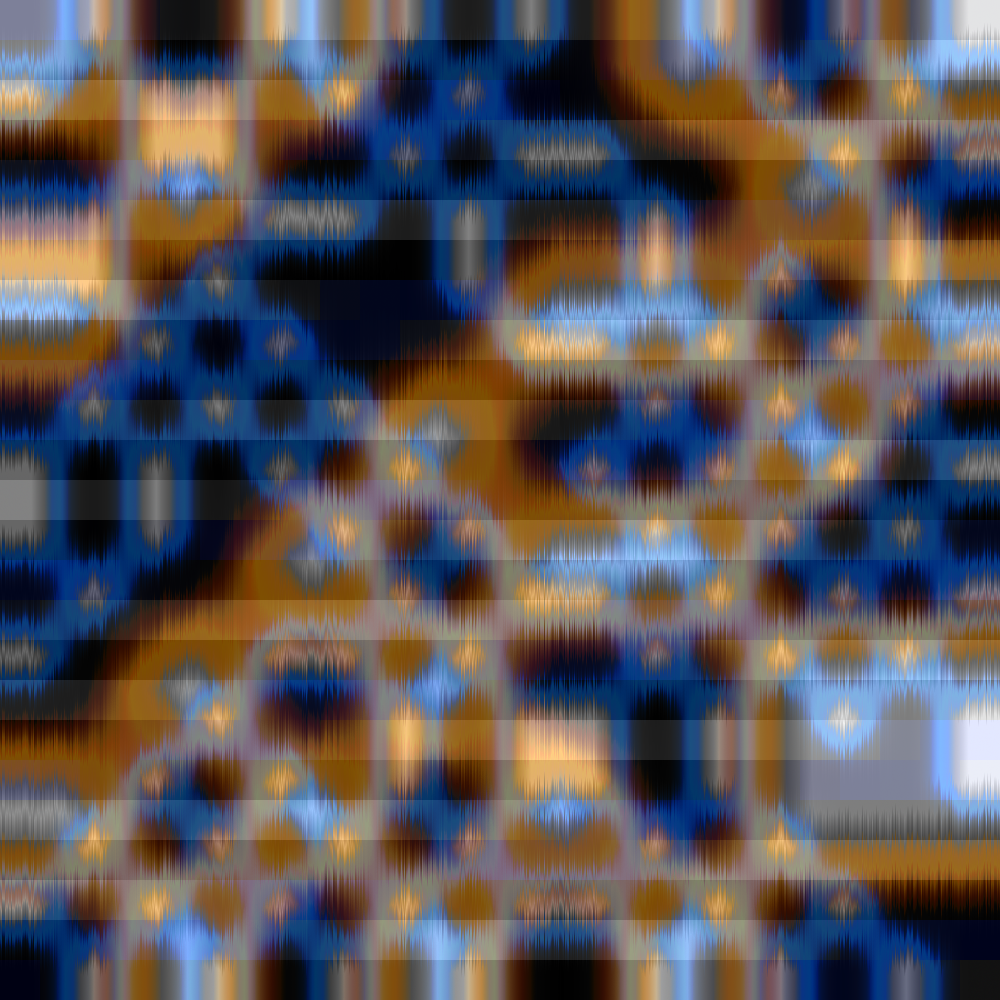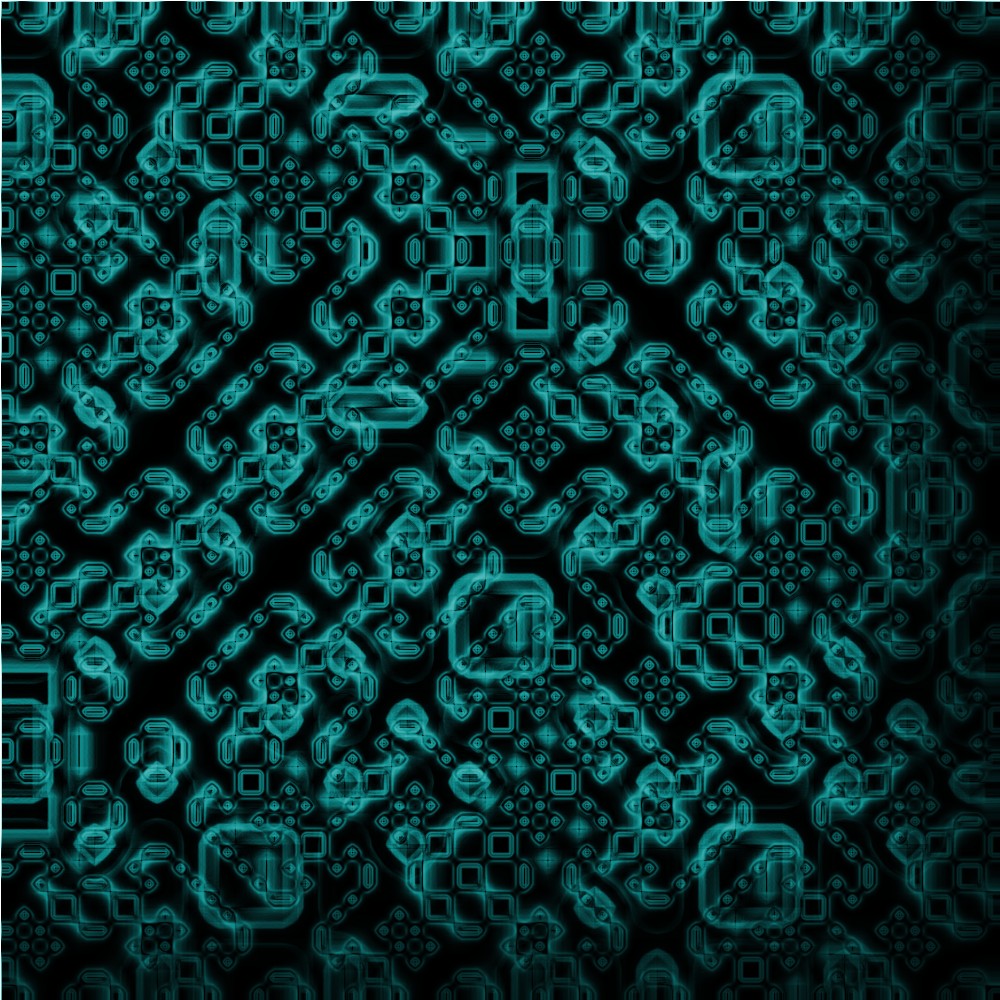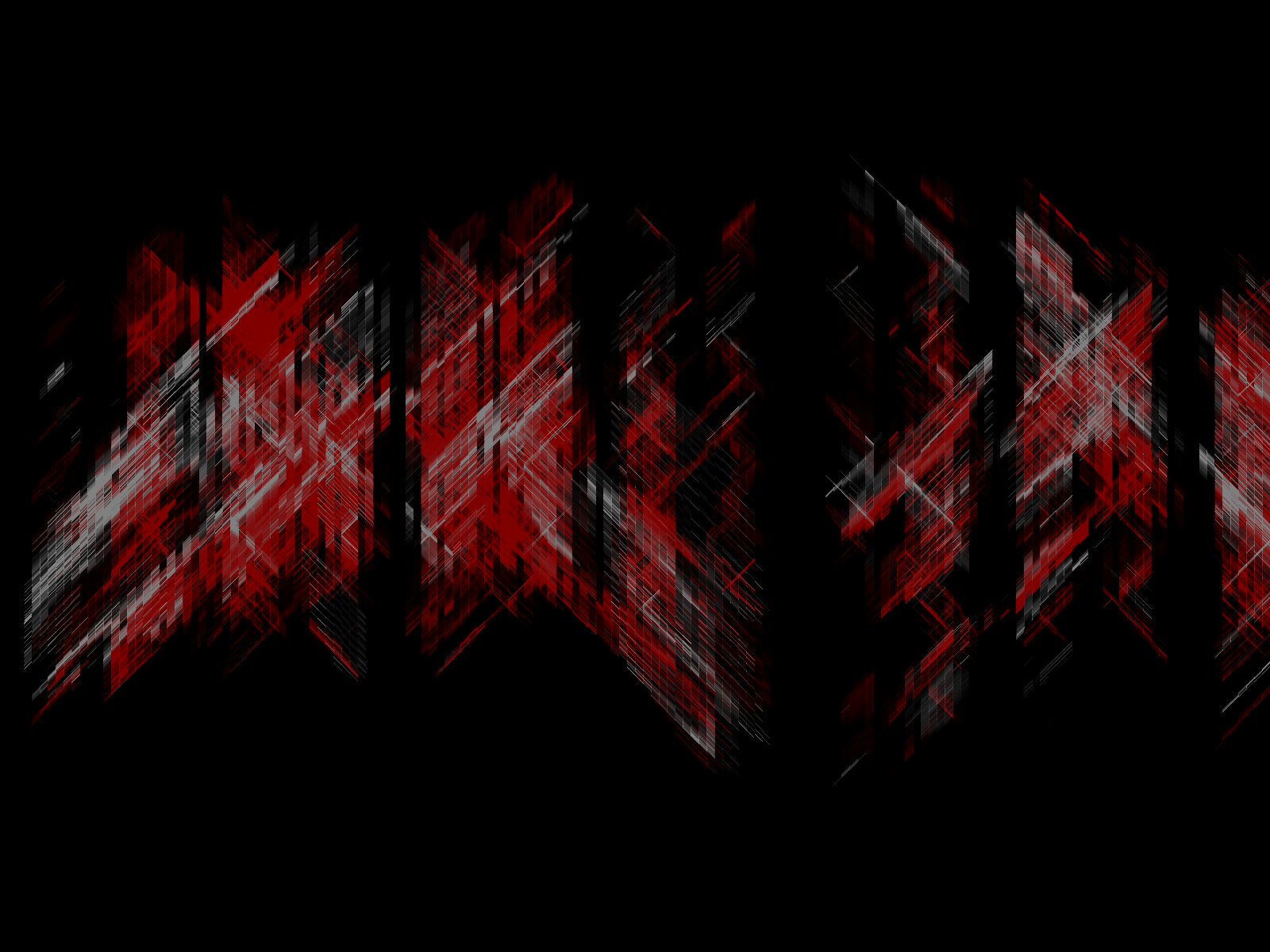
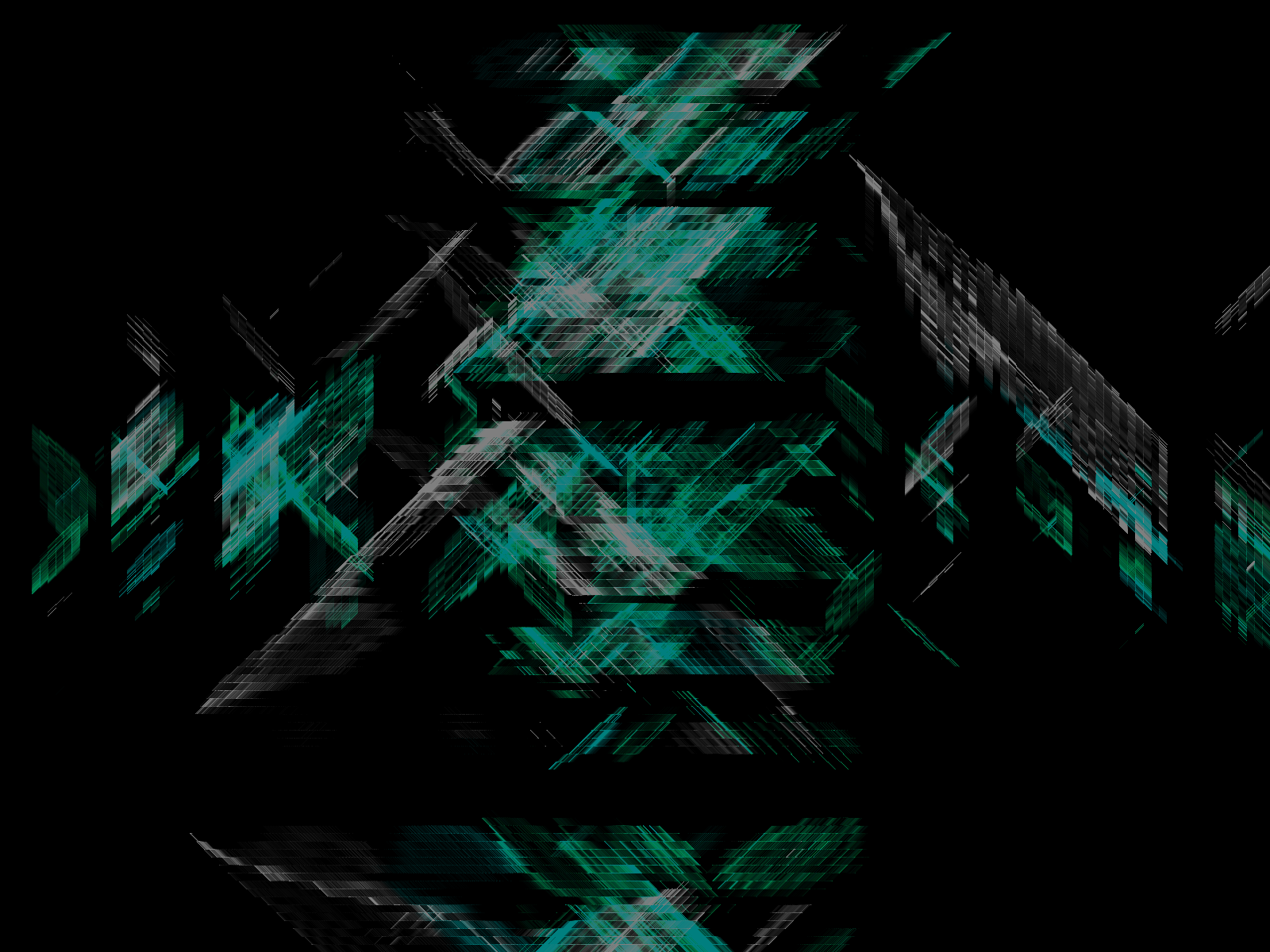
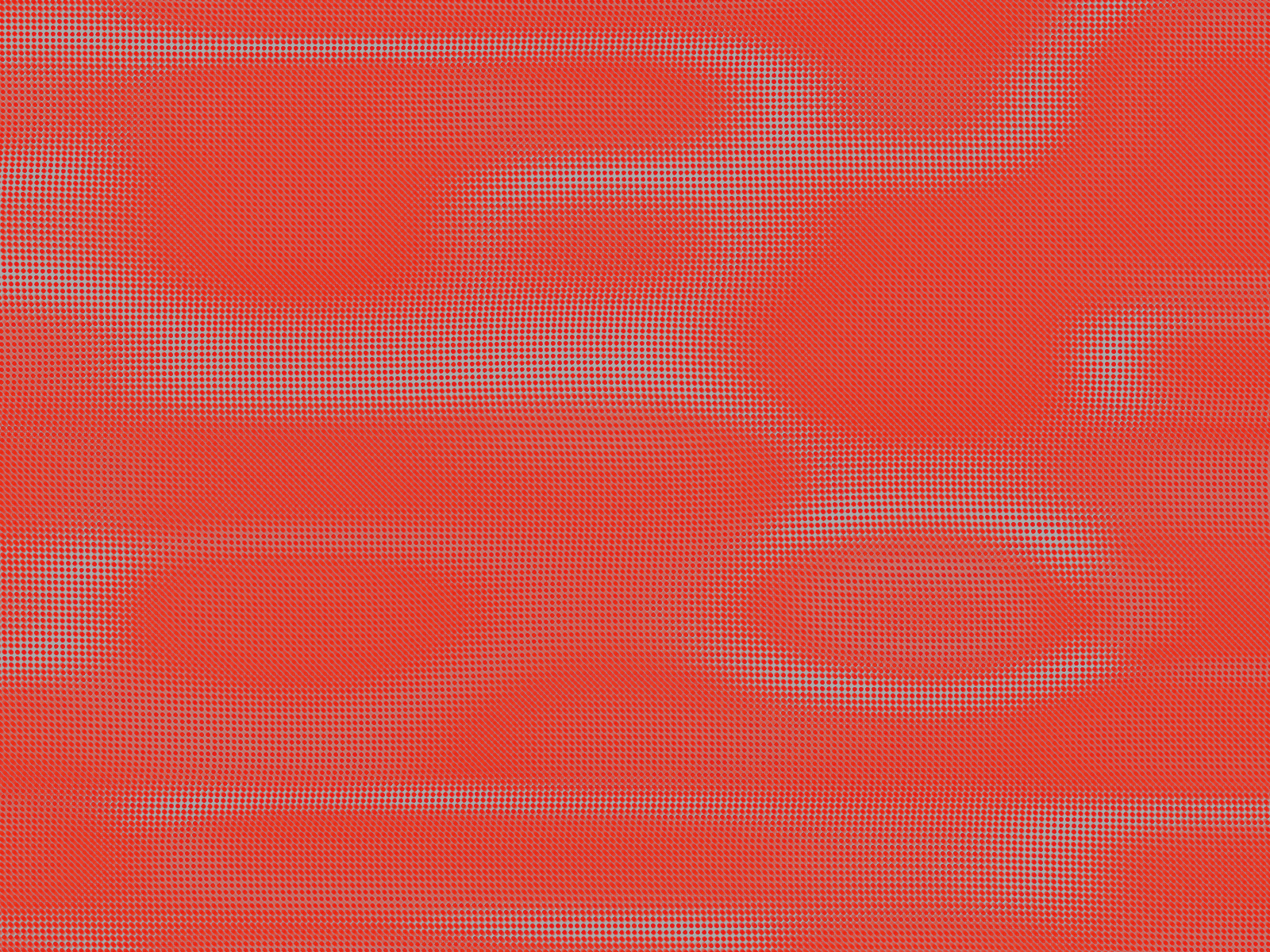
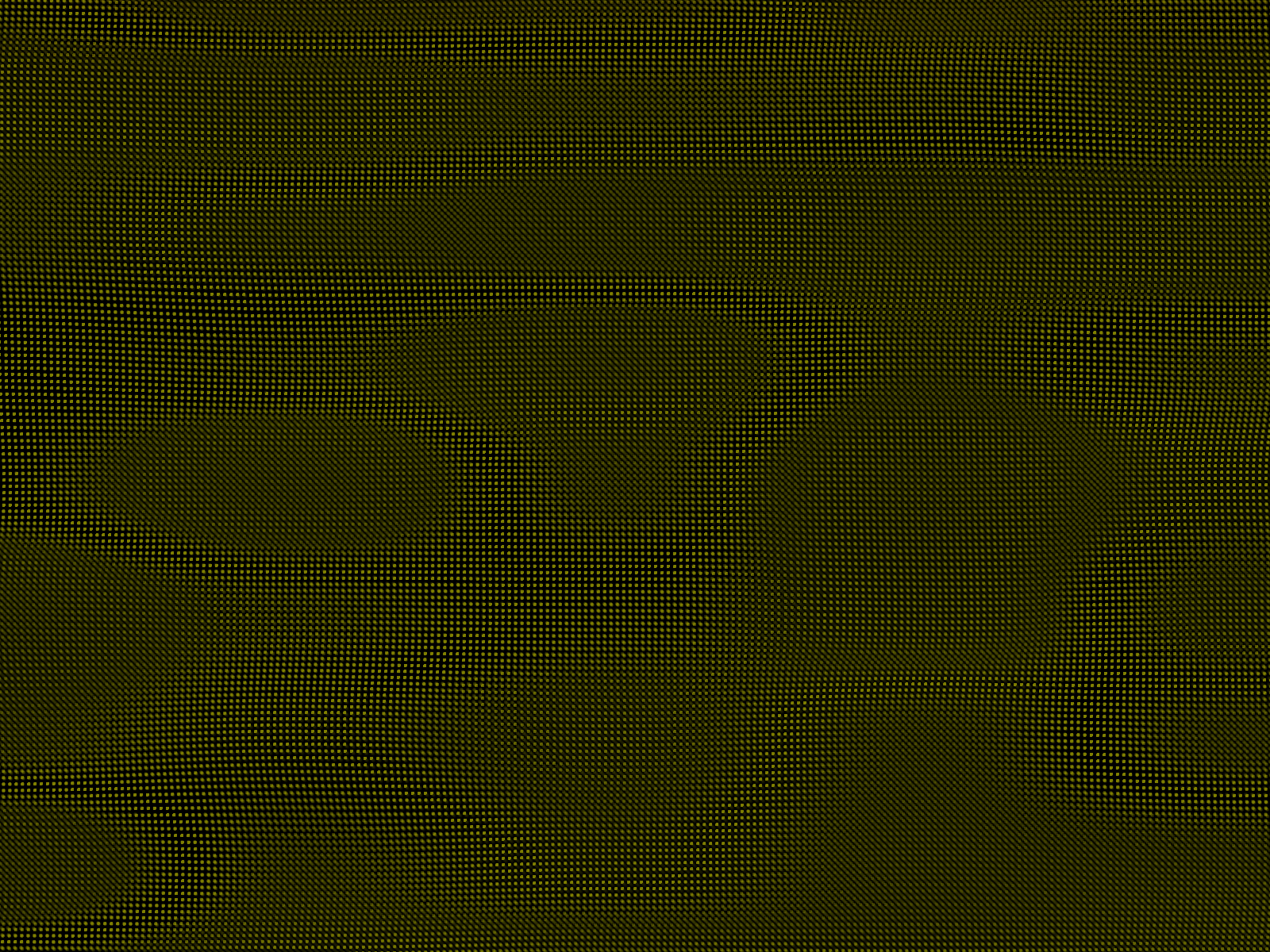
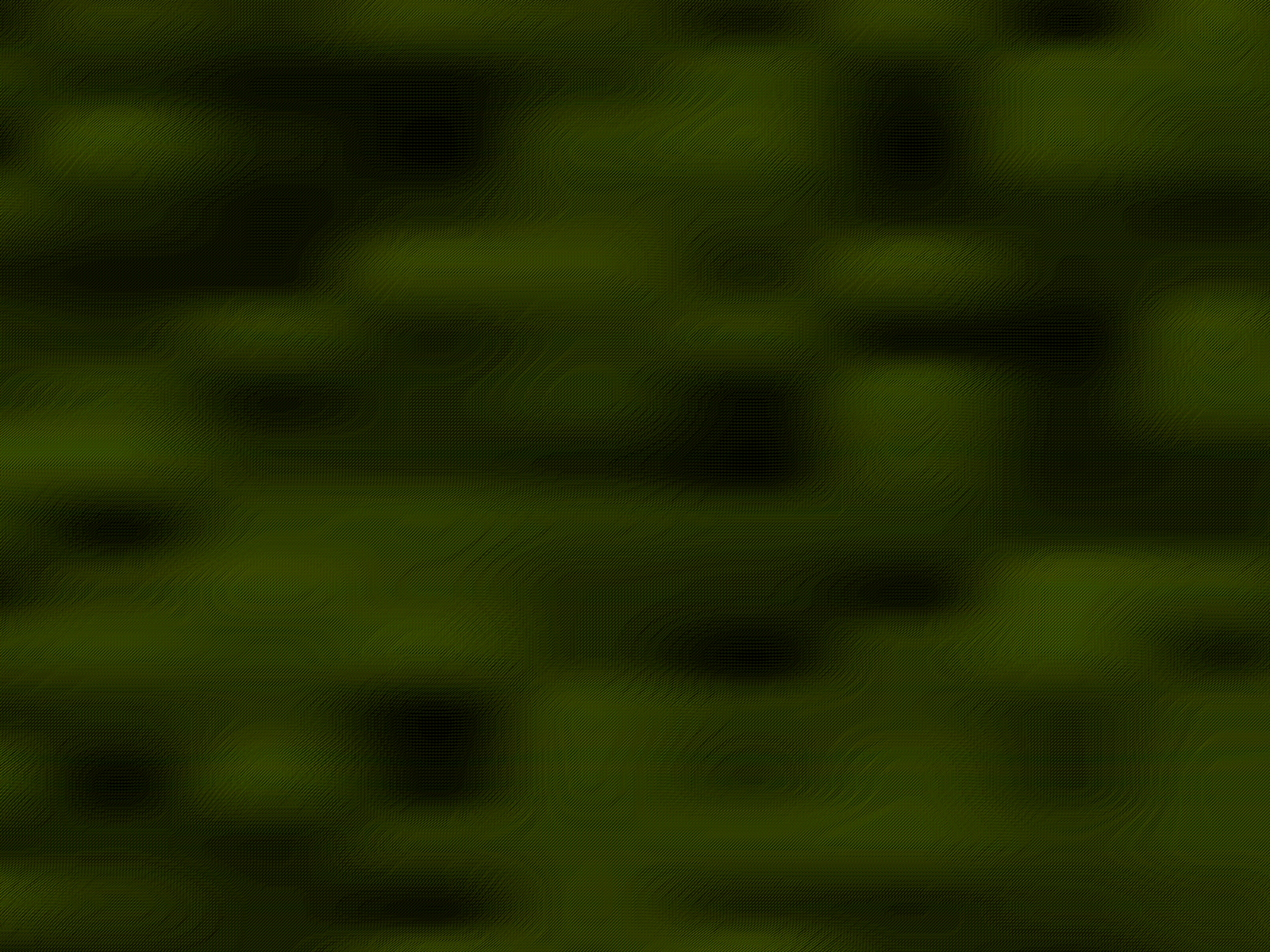
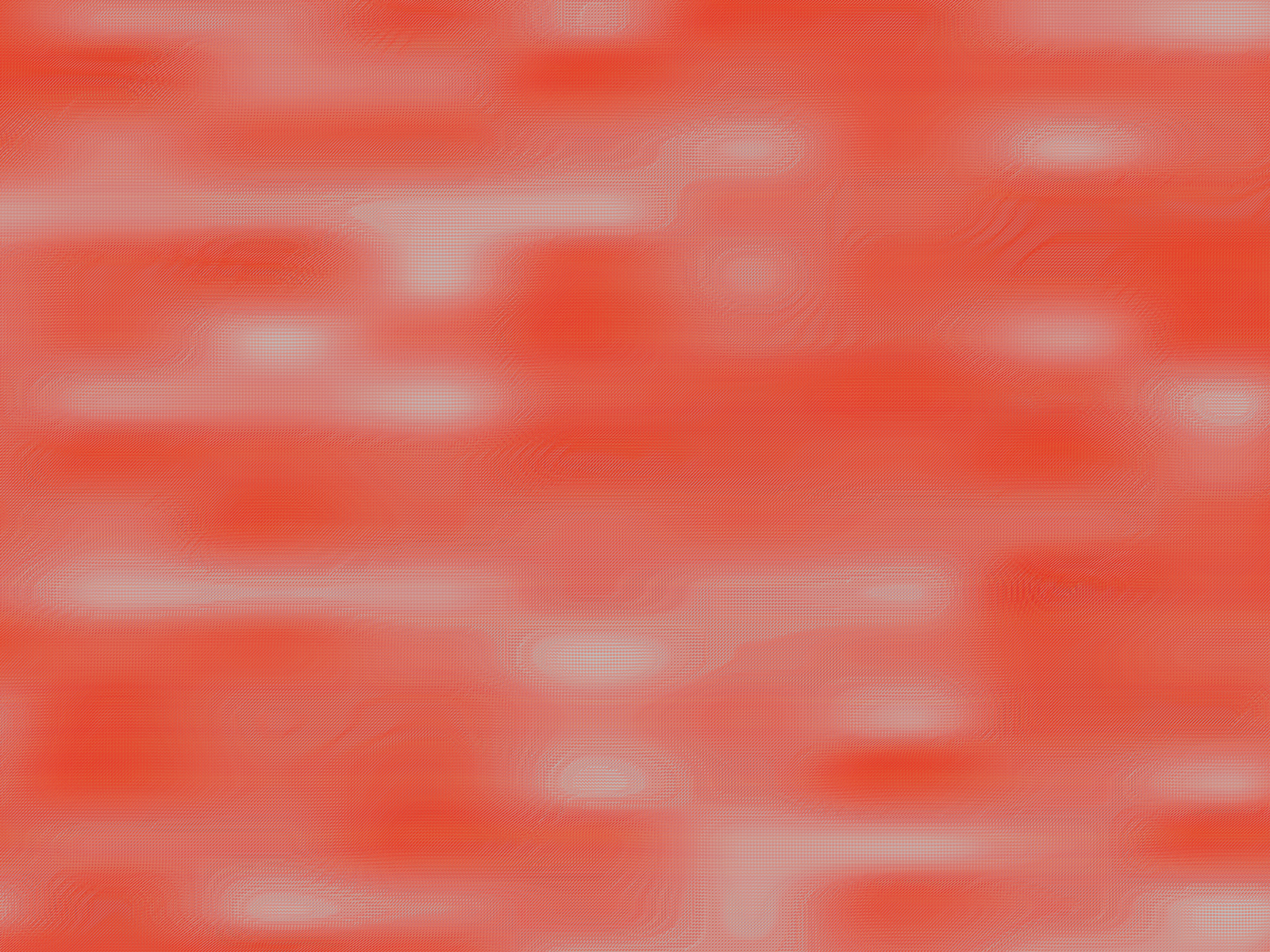
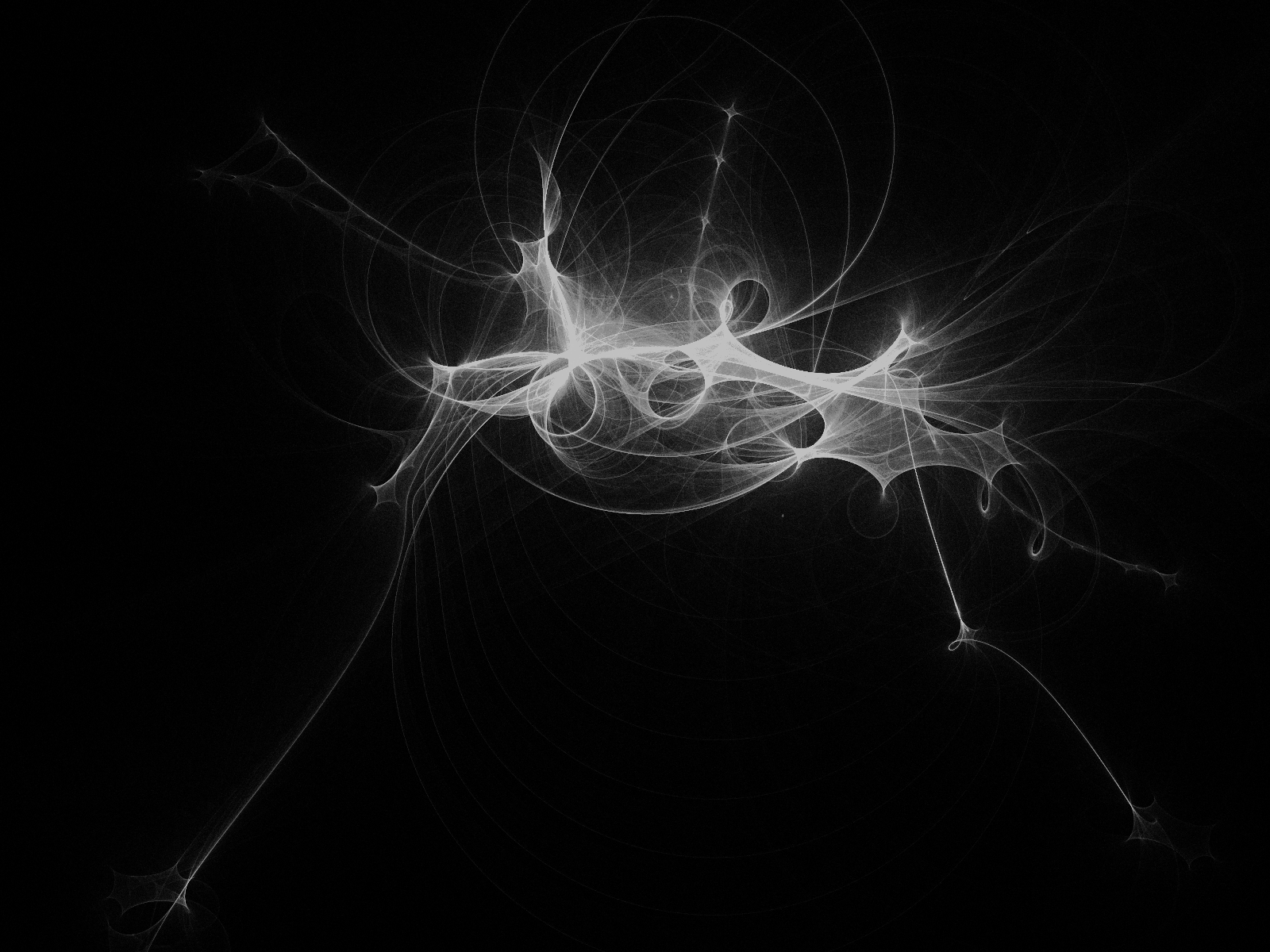
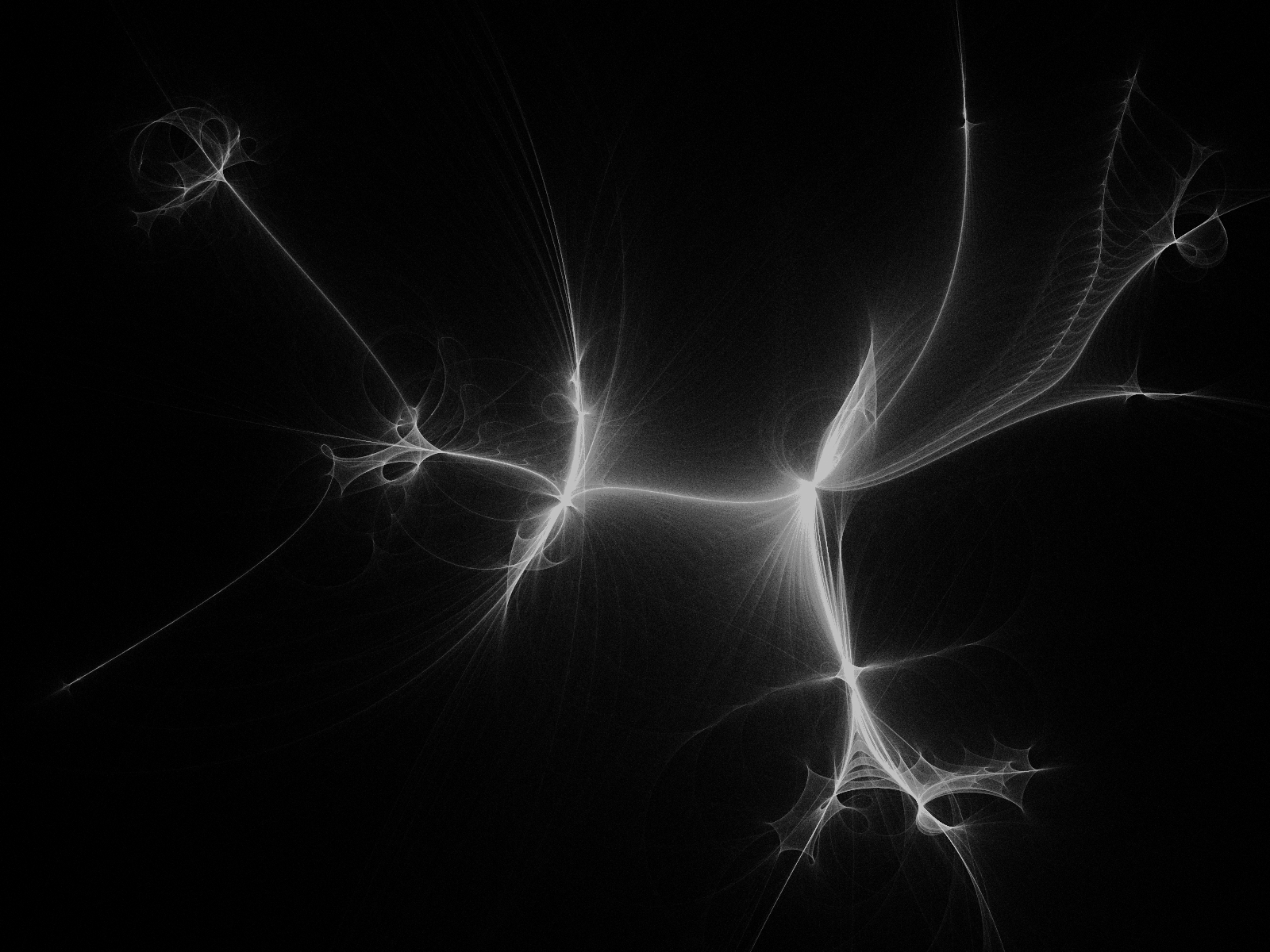
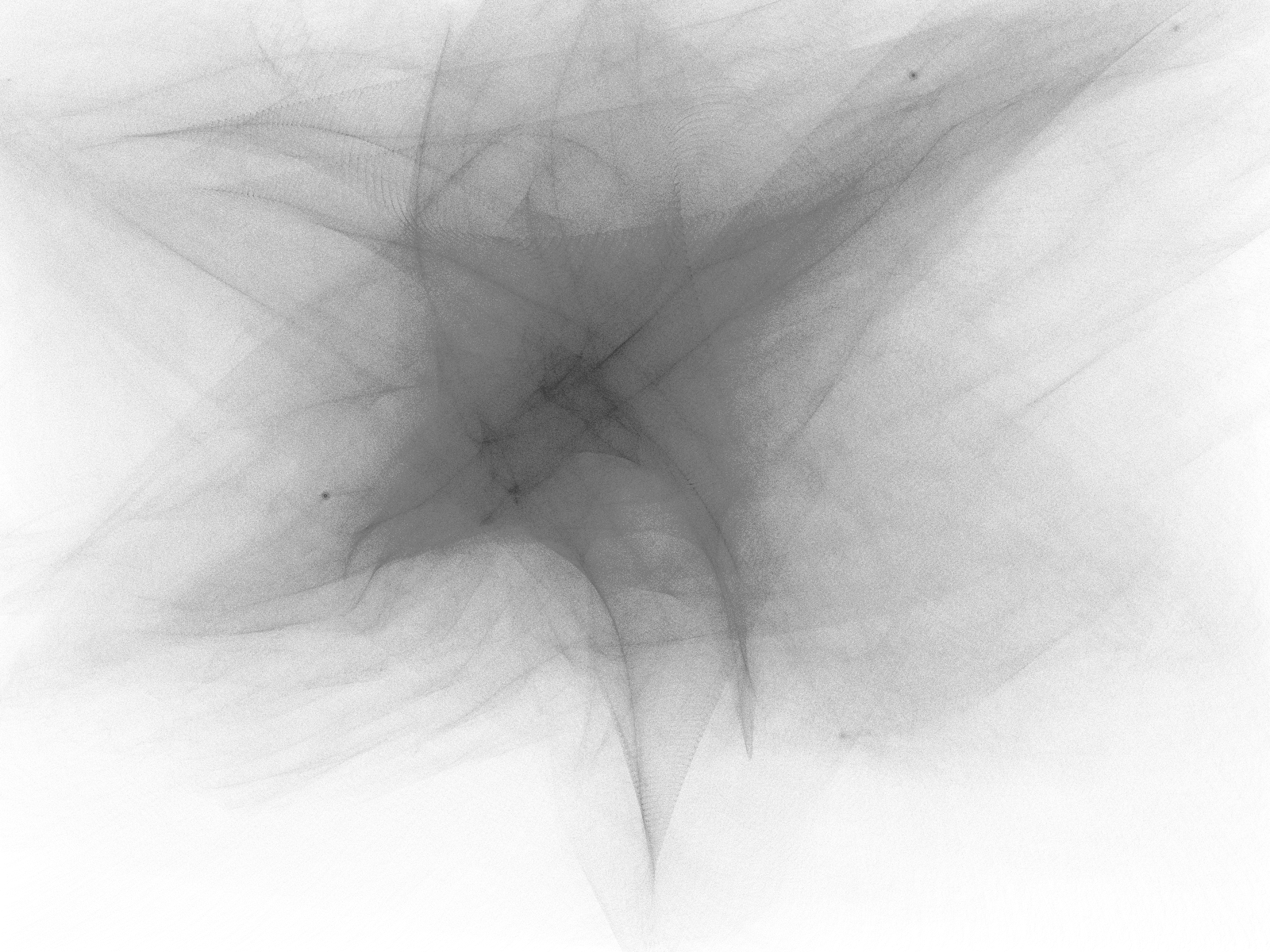
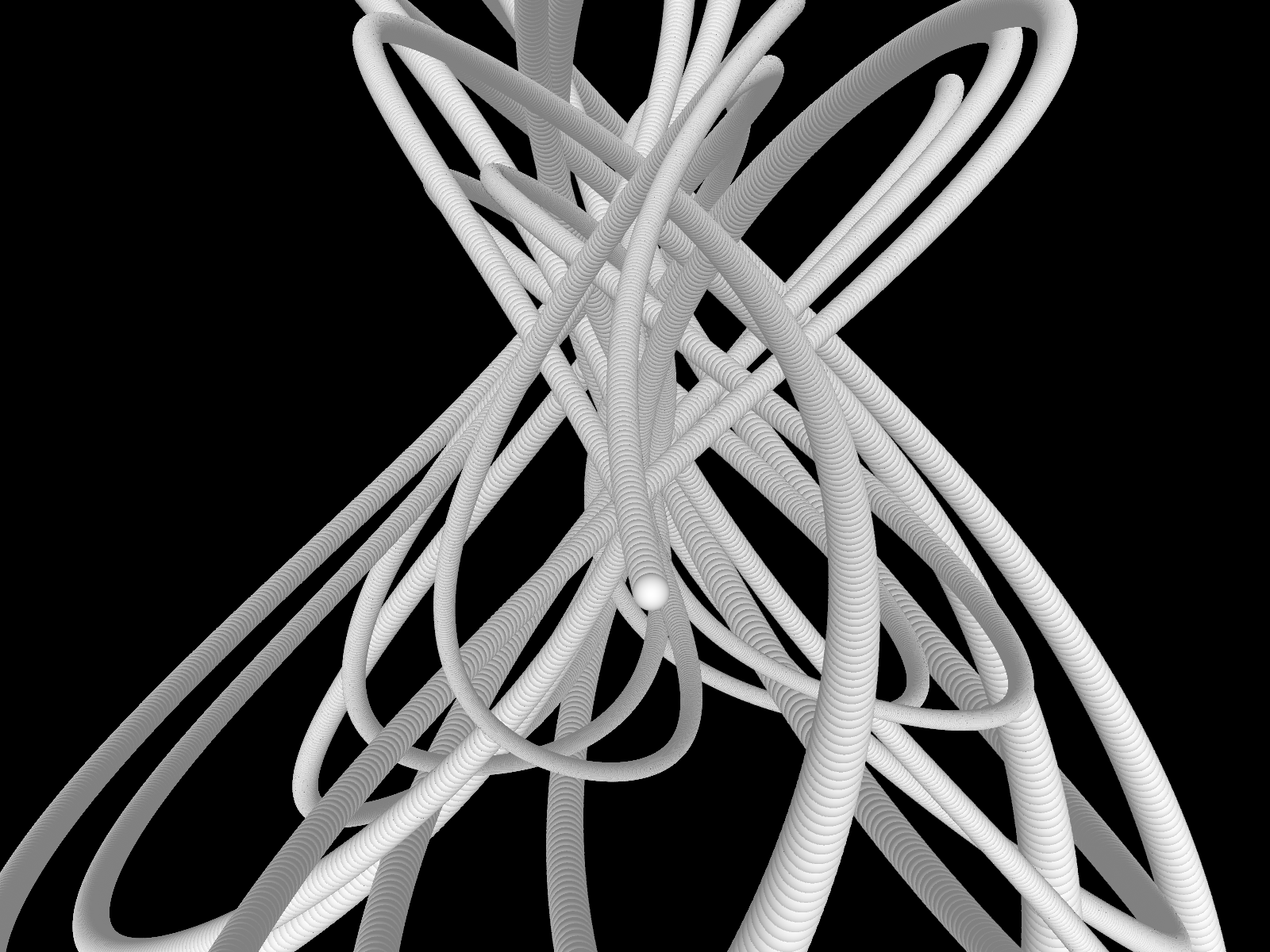
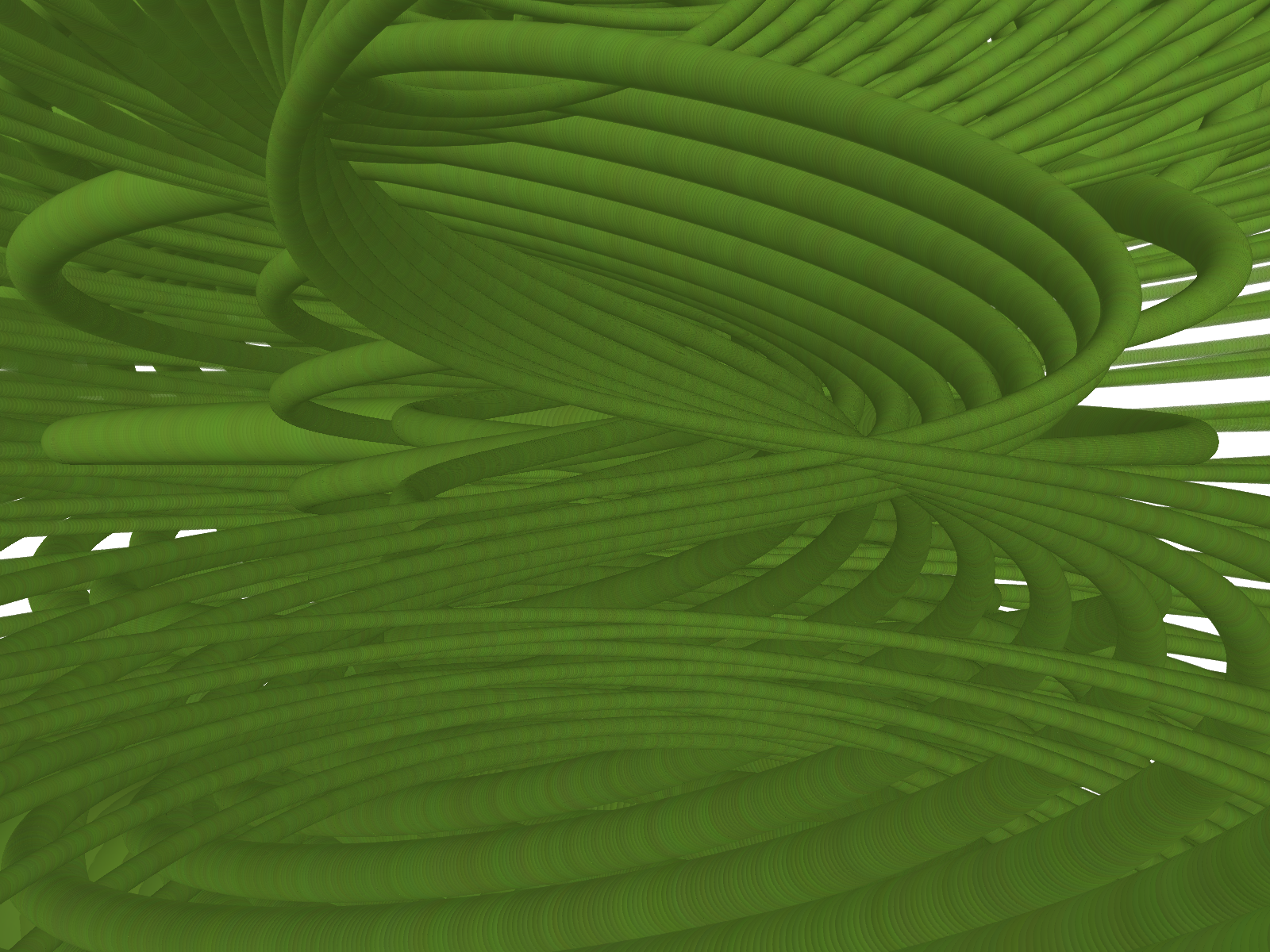
These pictures are generated by lots of „movers“ (actually up to 10M) surrounding a few „attractors“ of different mass. Gravity forces get applied according to their mass. The opposite approach is taking just one „mover“ and apply several „attractors“, resulting in odd curves and traces. Inspired by Daniel Shiffman, „The Nature of Code“.
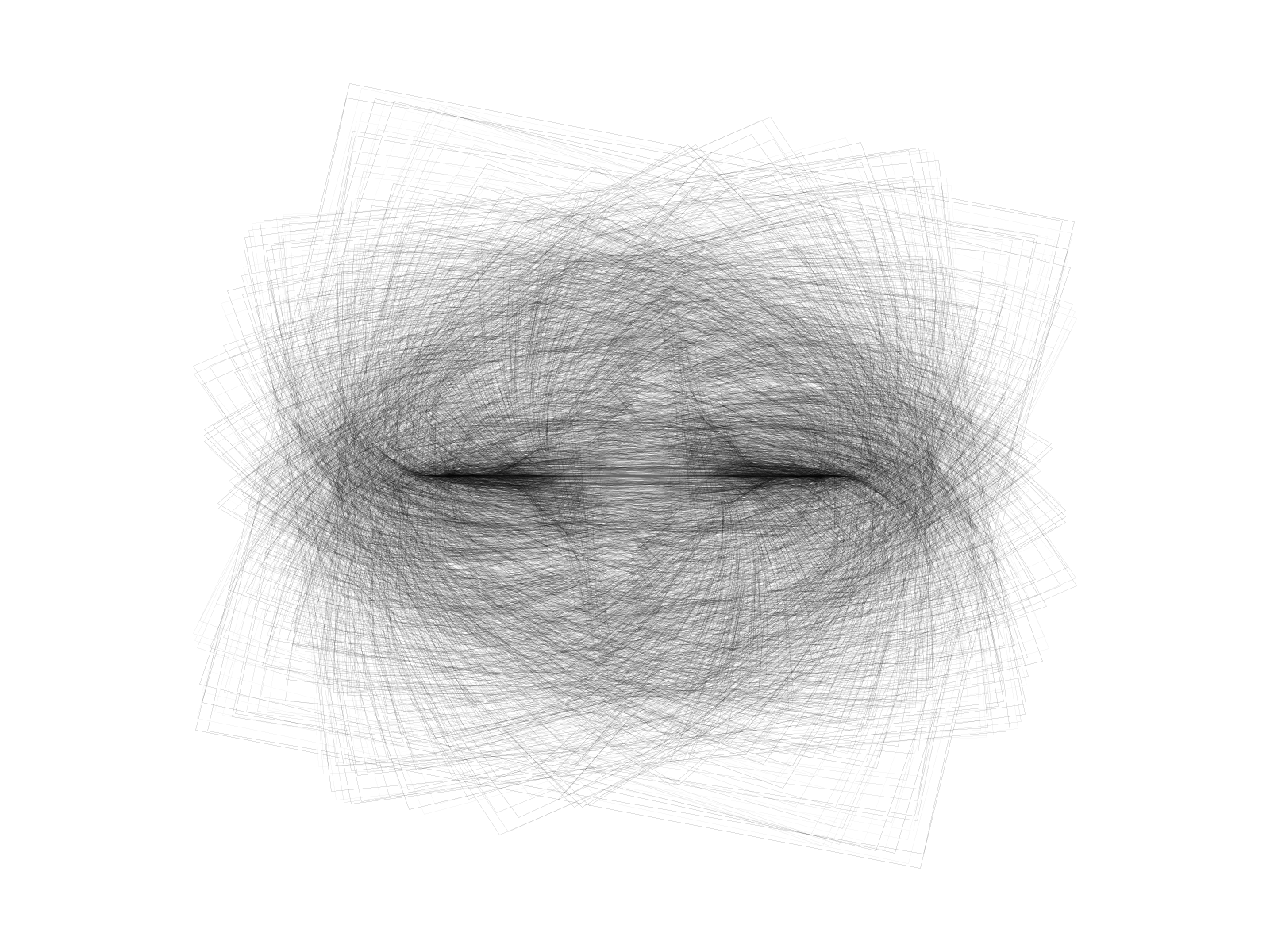
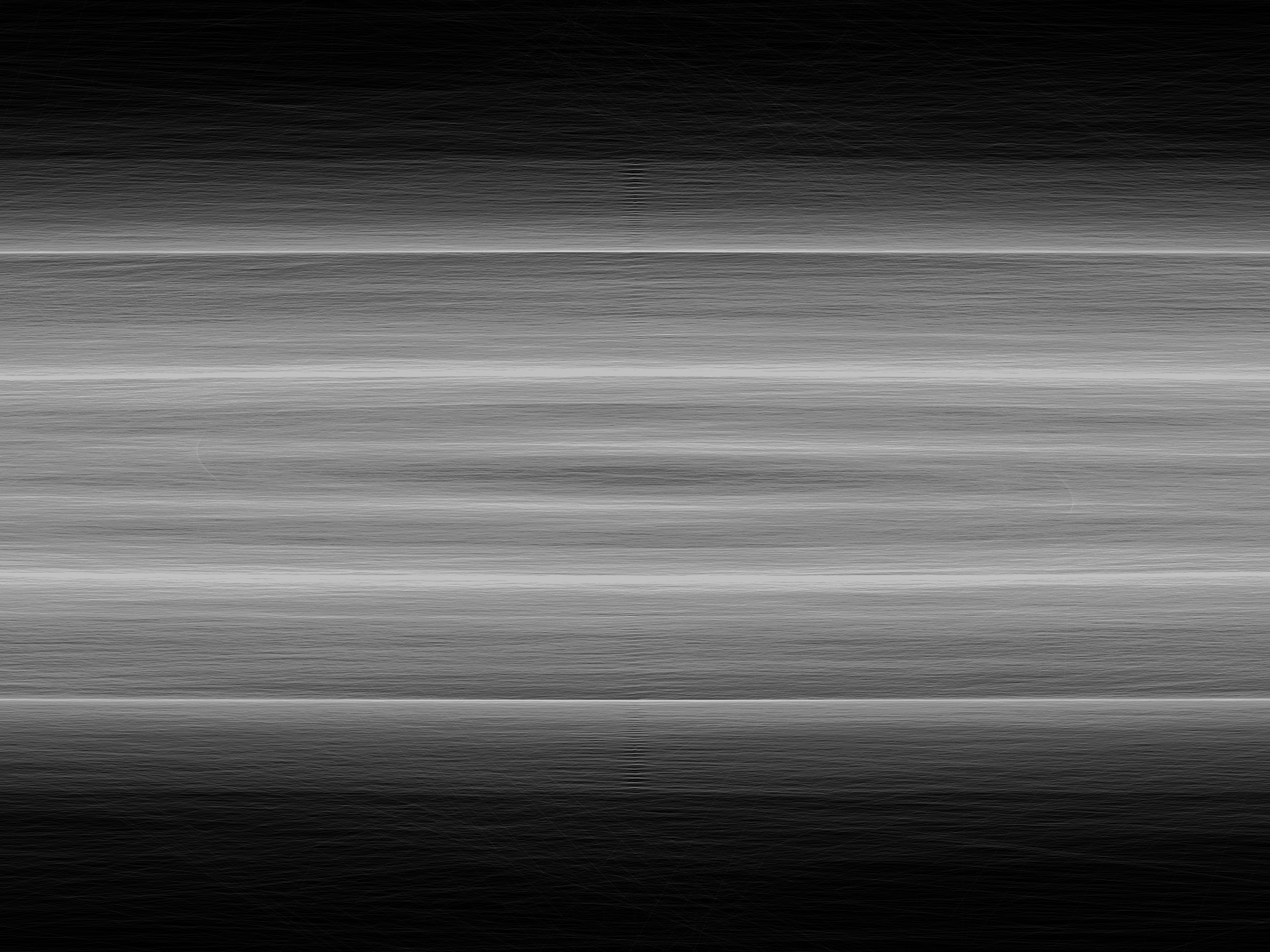
Sutcliffe noticed that if you draw a pentagon, then plot the midpoints of each of its five sides
and extend a line perpendicular to each of these points, you can connect the end of these
lines to make another pentagon. In doing this, the remaining area of the shape also ends up
being subdivided into further pentagons, meaning that within each pentagon are six subpentagons.
And within each of those, another six sub-pentagons, repeated downward toward
the infinitesimal. Using the Sutcliffe pentagon a myriad of exciting effects are possible, of which only a few examples are displayed here.
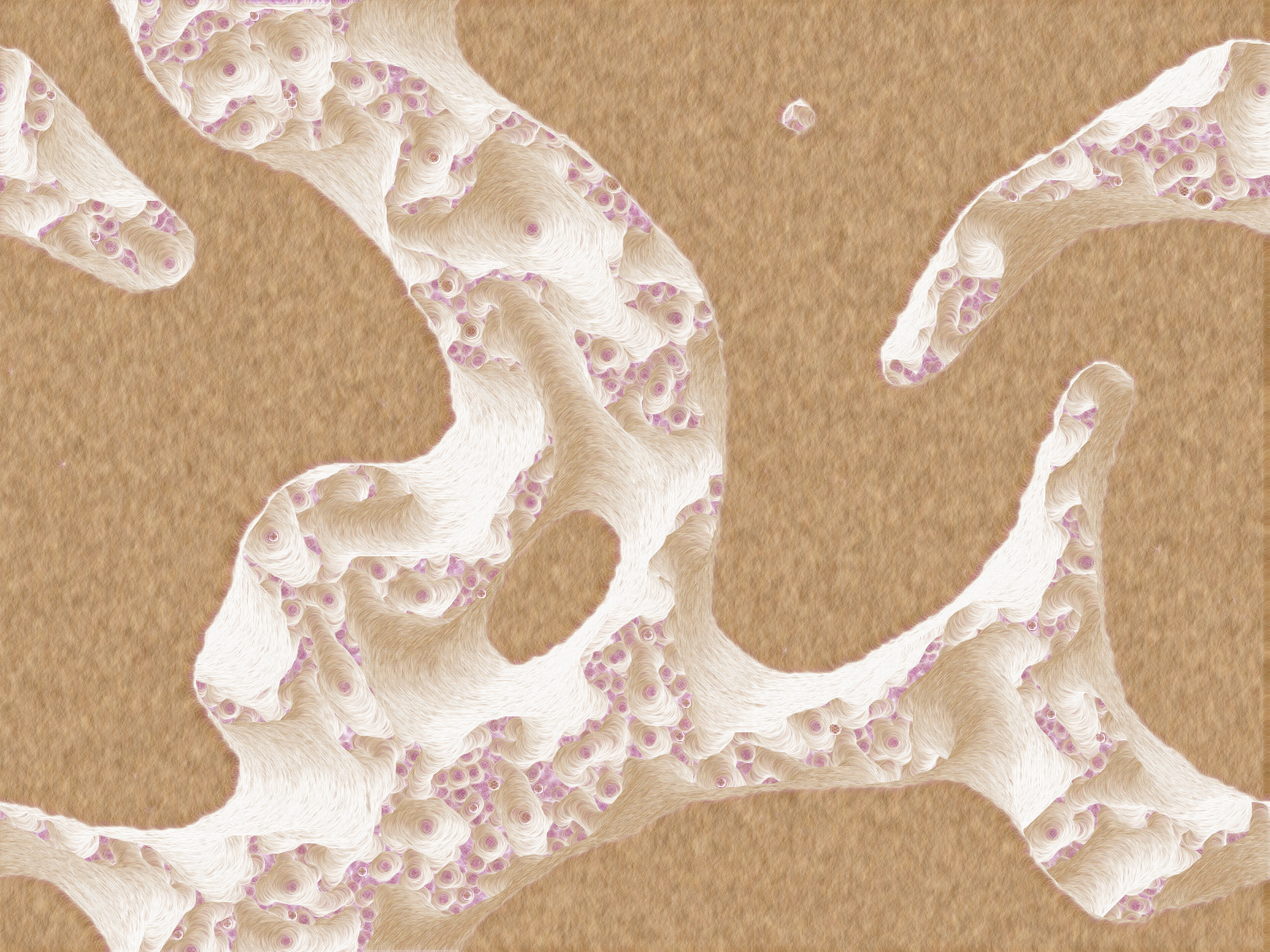
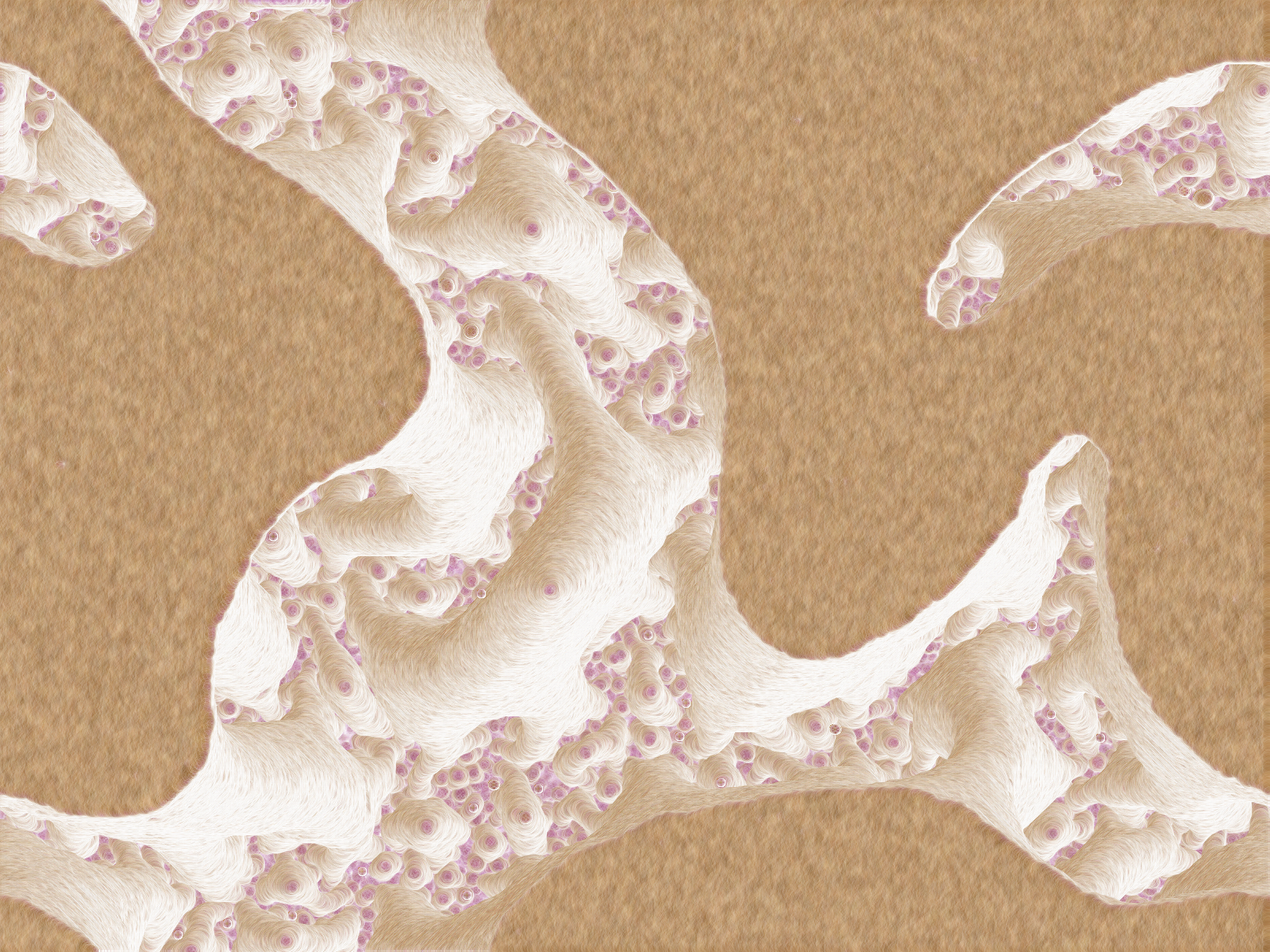
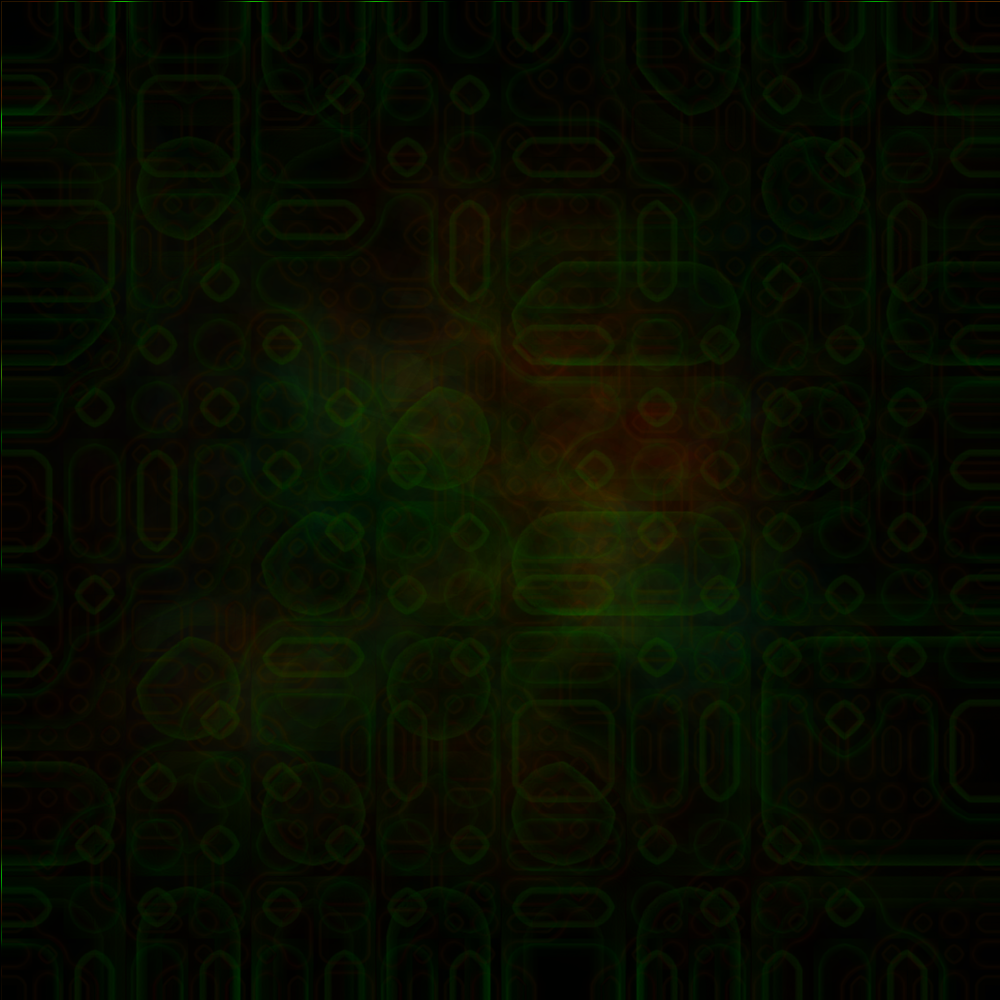
„The Vichniac Vote (after Gerard Vichniac who first experimented with it), is a lesson in conformity. Each cell is particularly susceptible to peer-group pressure and looks to its neighbors to observe the current trend. If the cell’s color is in the majority, it remains unchanged. If it’s in the minority, it changes. To ensure that there is an odd number of cells on which to make the decision, the cell includes its own current state in addition to its eight neighbors in making the calculation.“ (Matt Pearson, „Generative Art“)
Picture generation involved around 1M cells in a couple of 100k iterations.
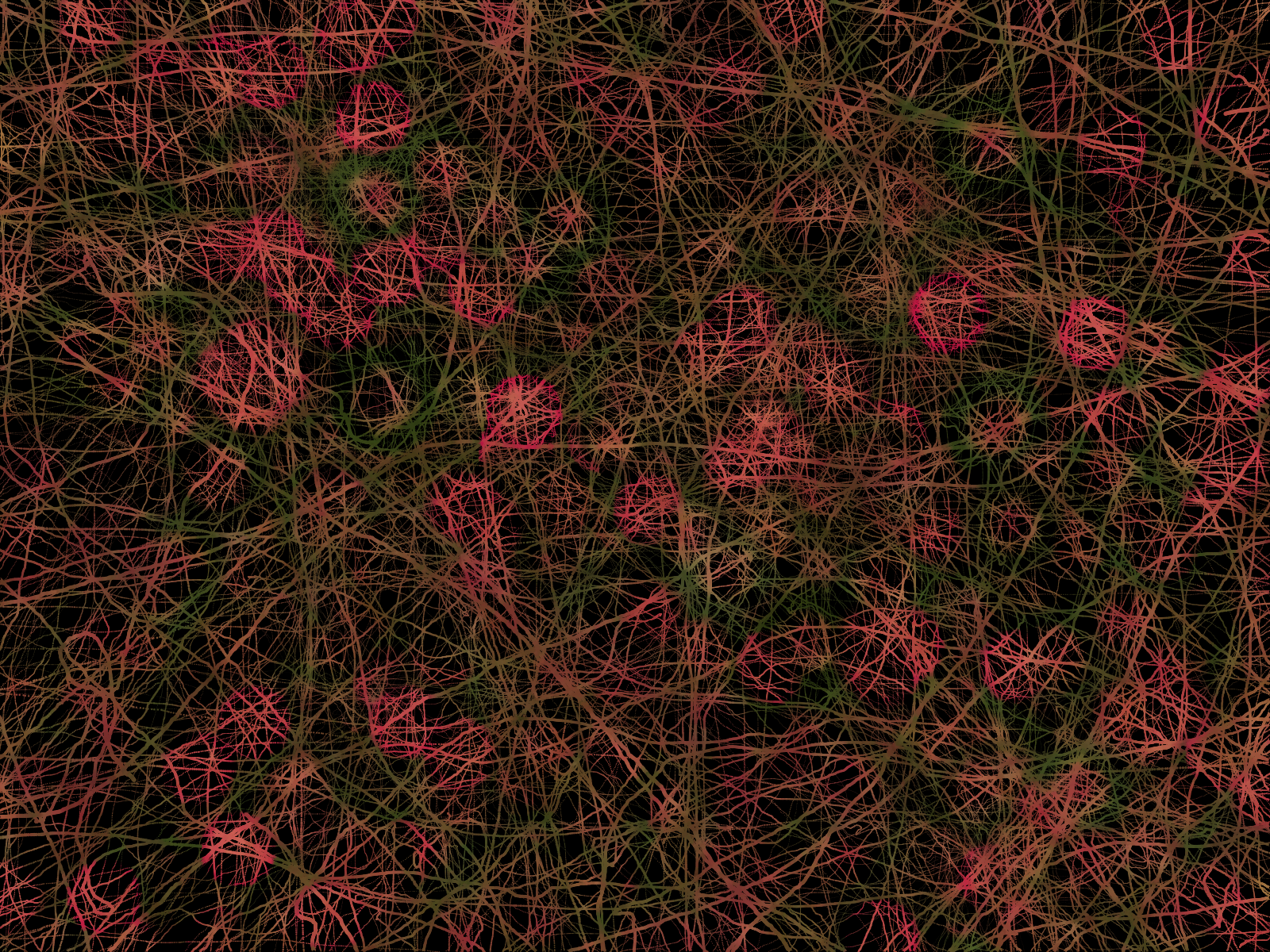
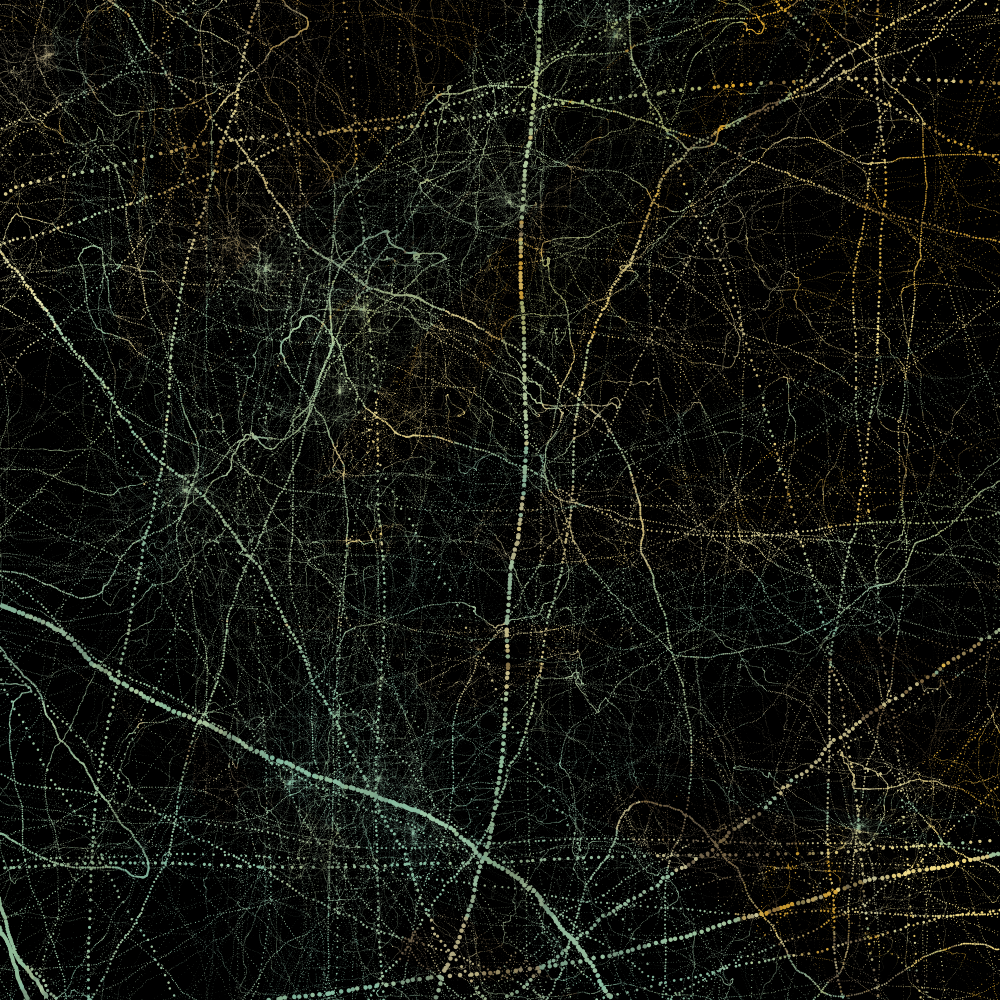
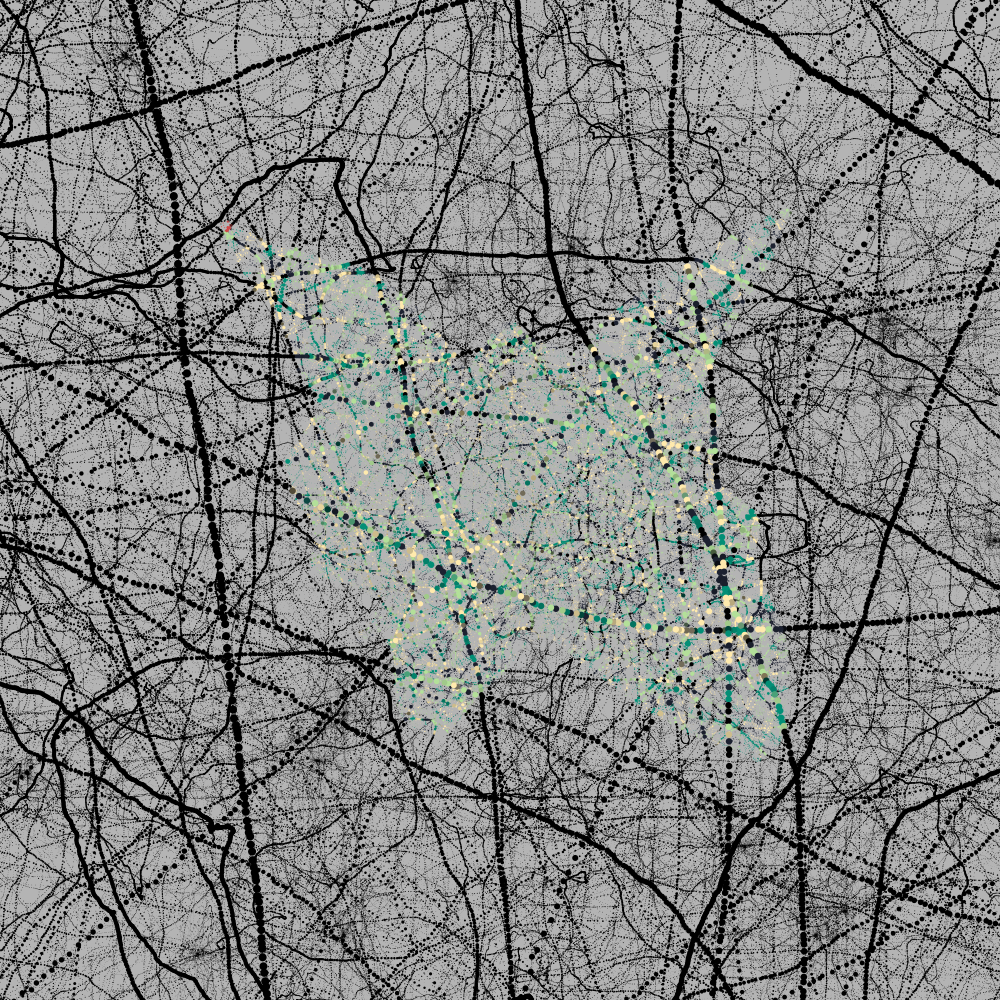
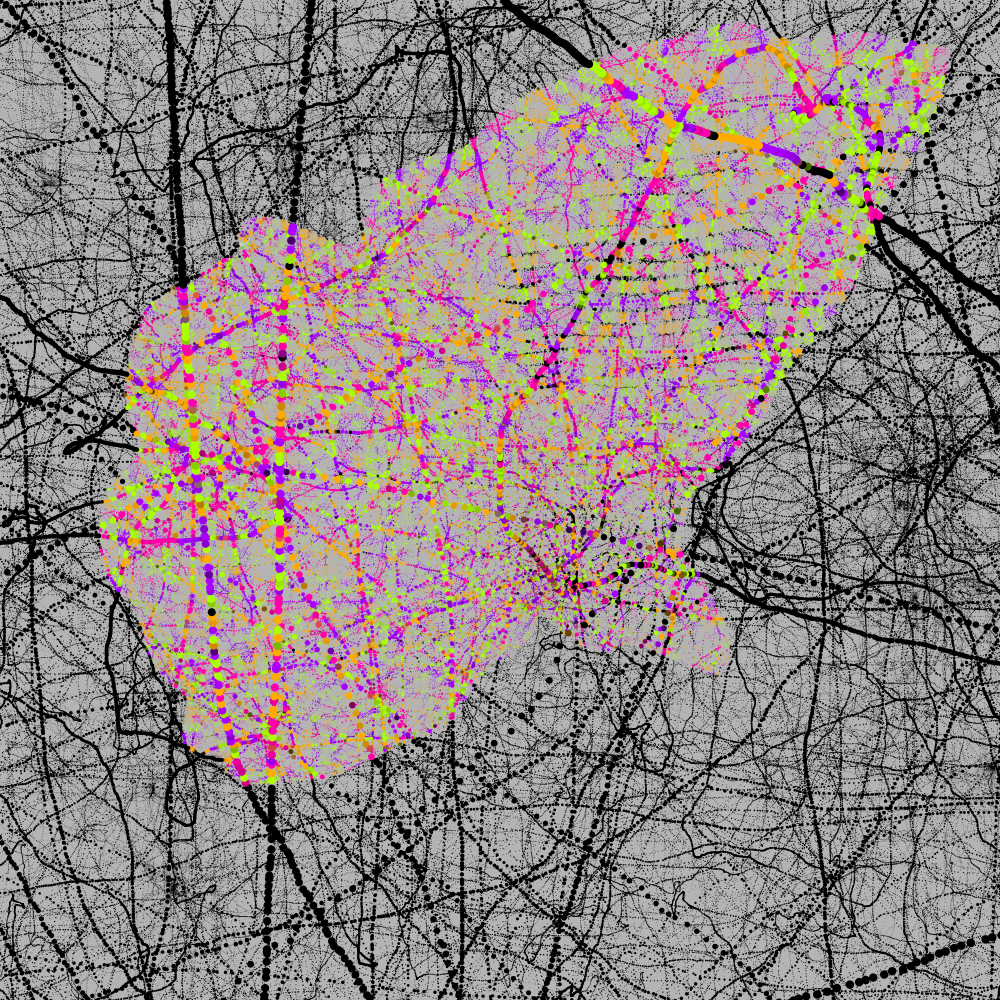
A simple „Dot“ class with increasing or decreasing radius, reading either color information from another picture or changing color based on cell state. Perlin noise does the trick on the dots route.
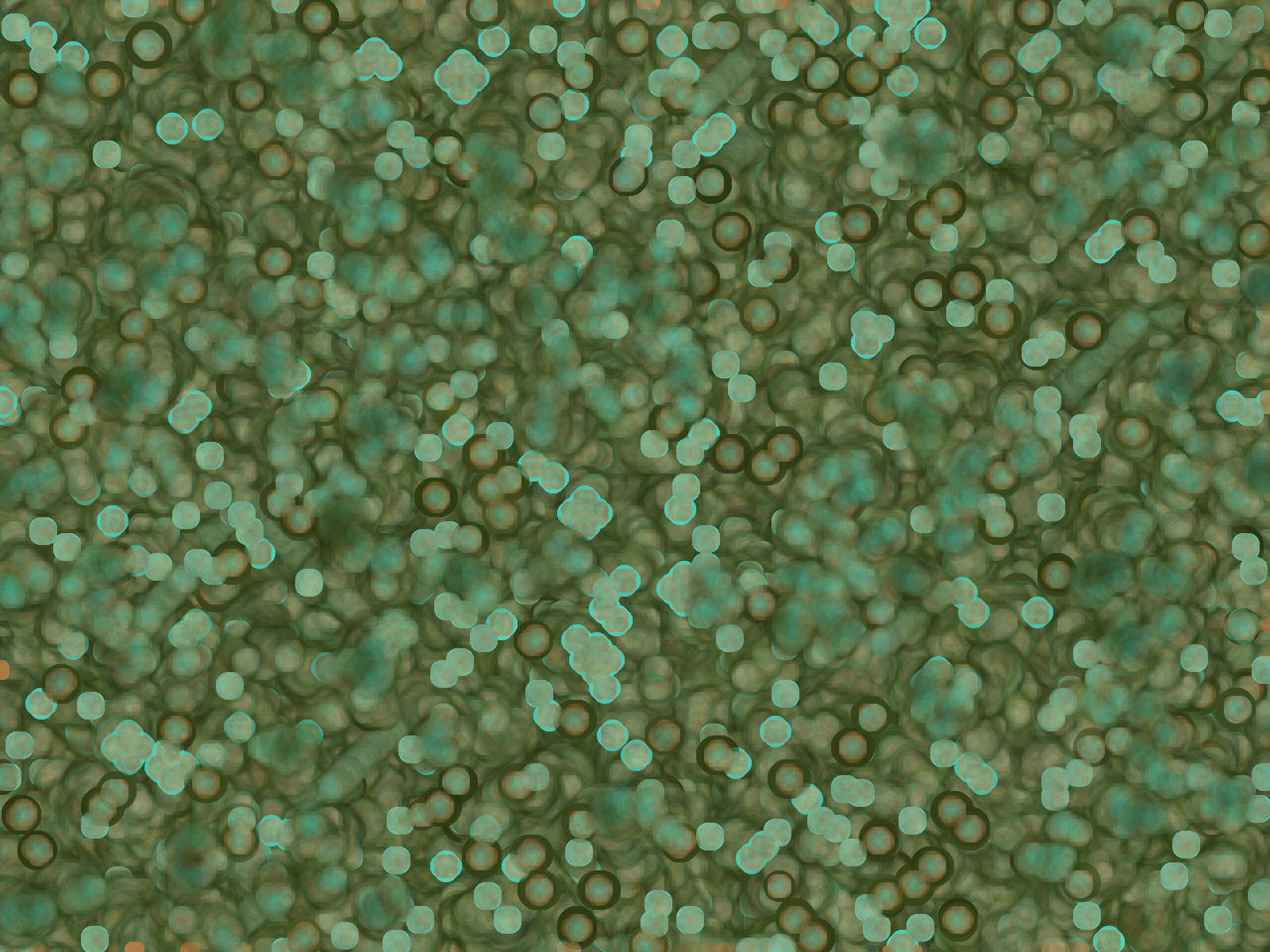
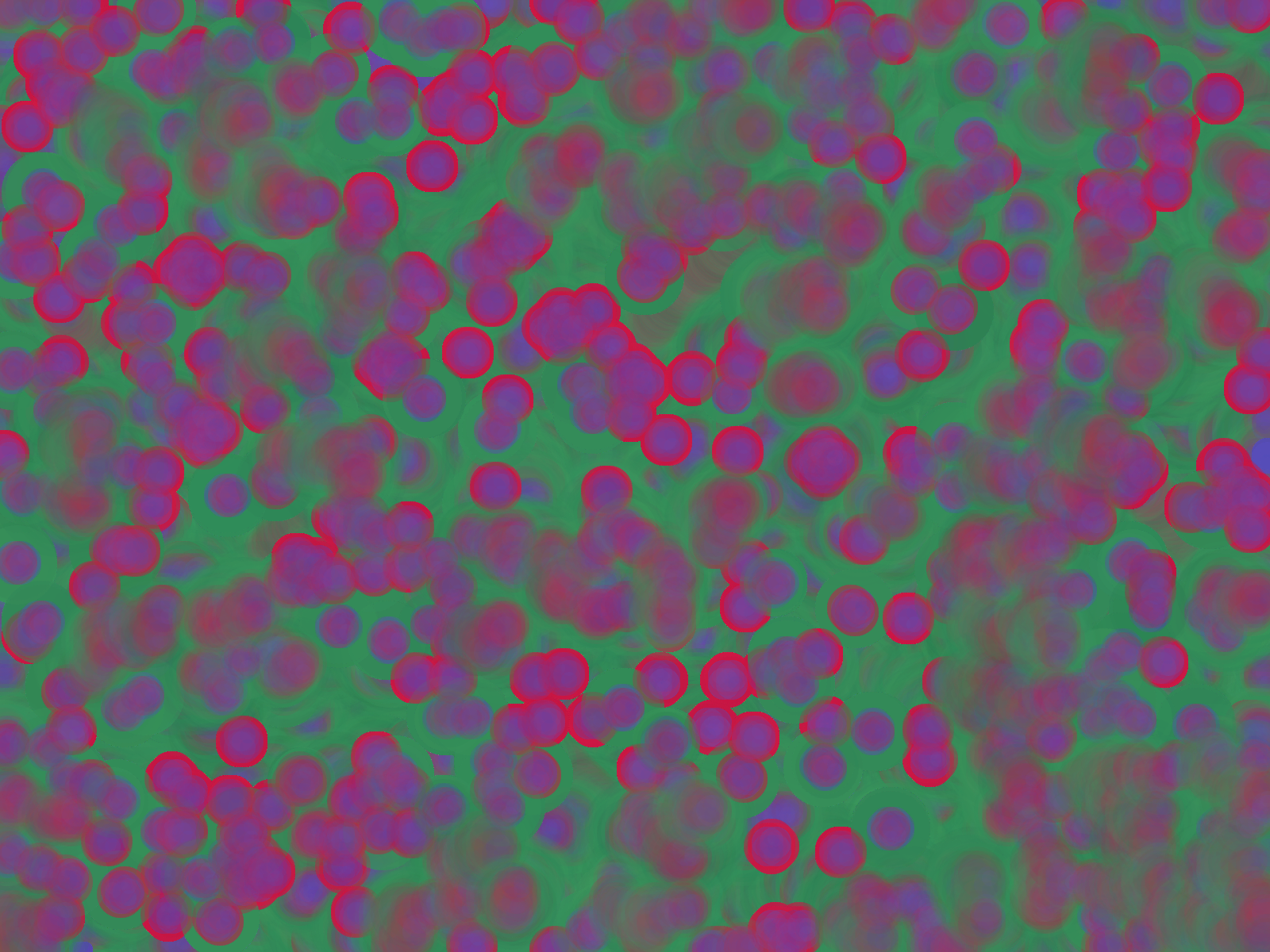
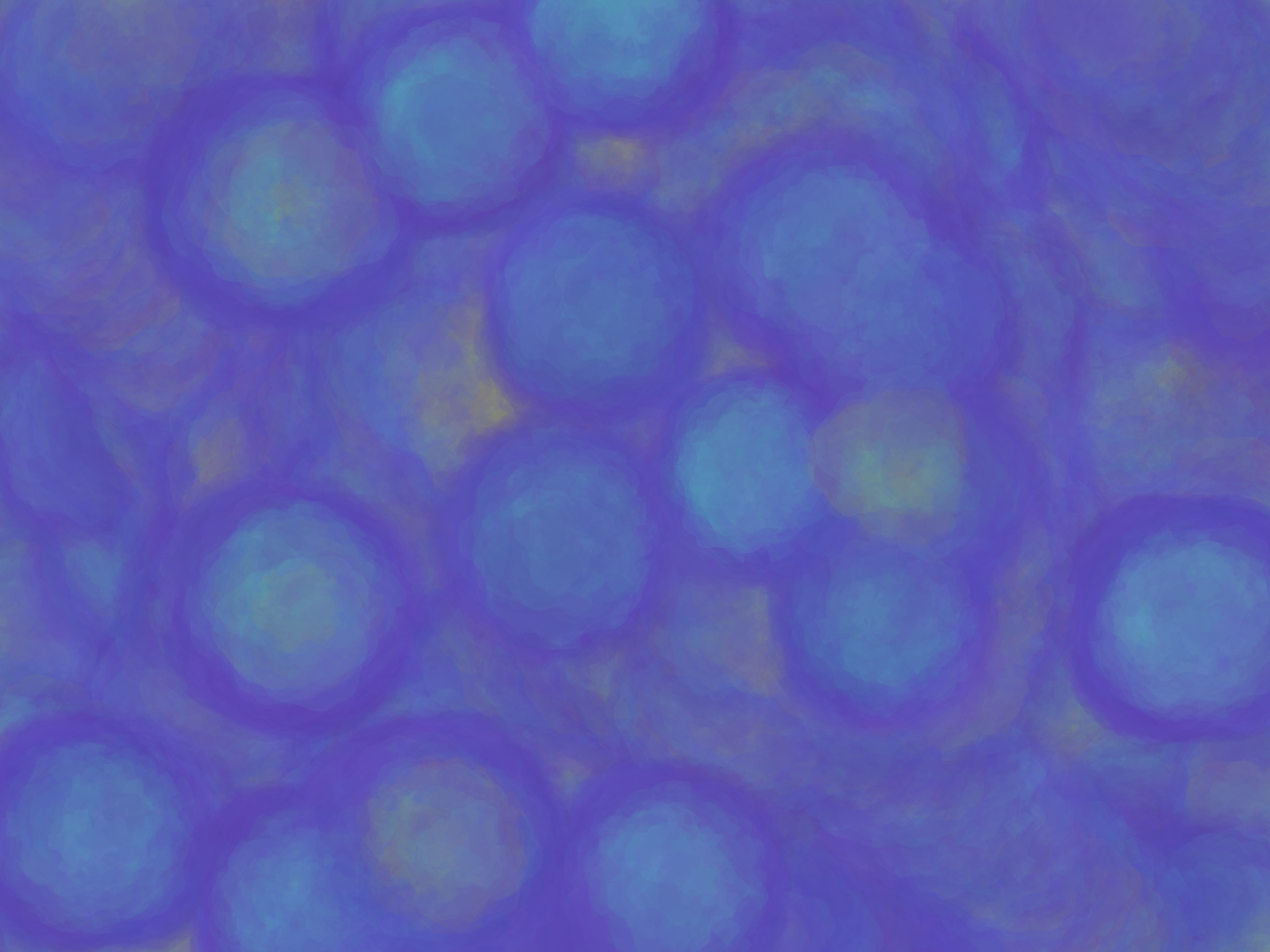
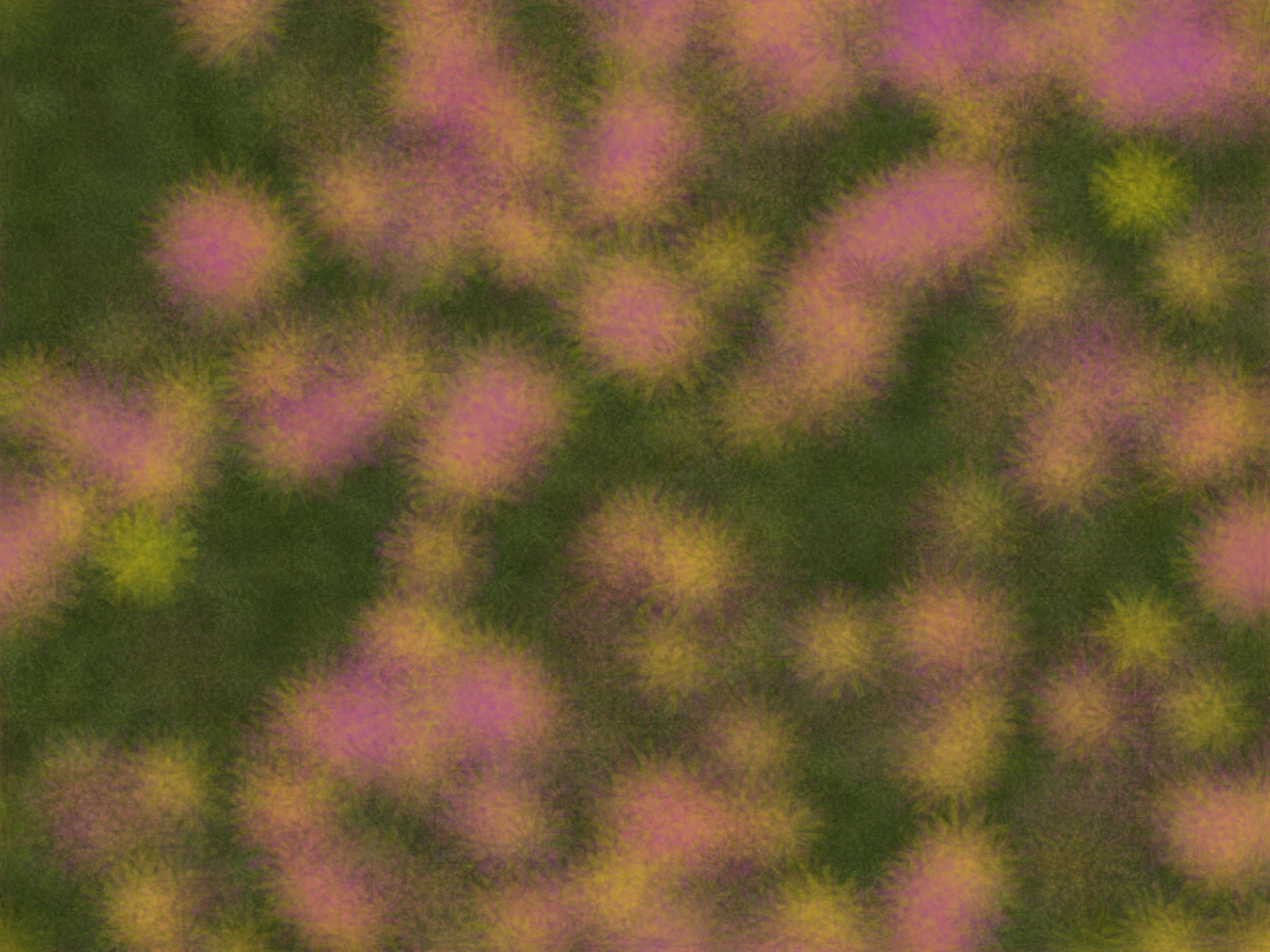
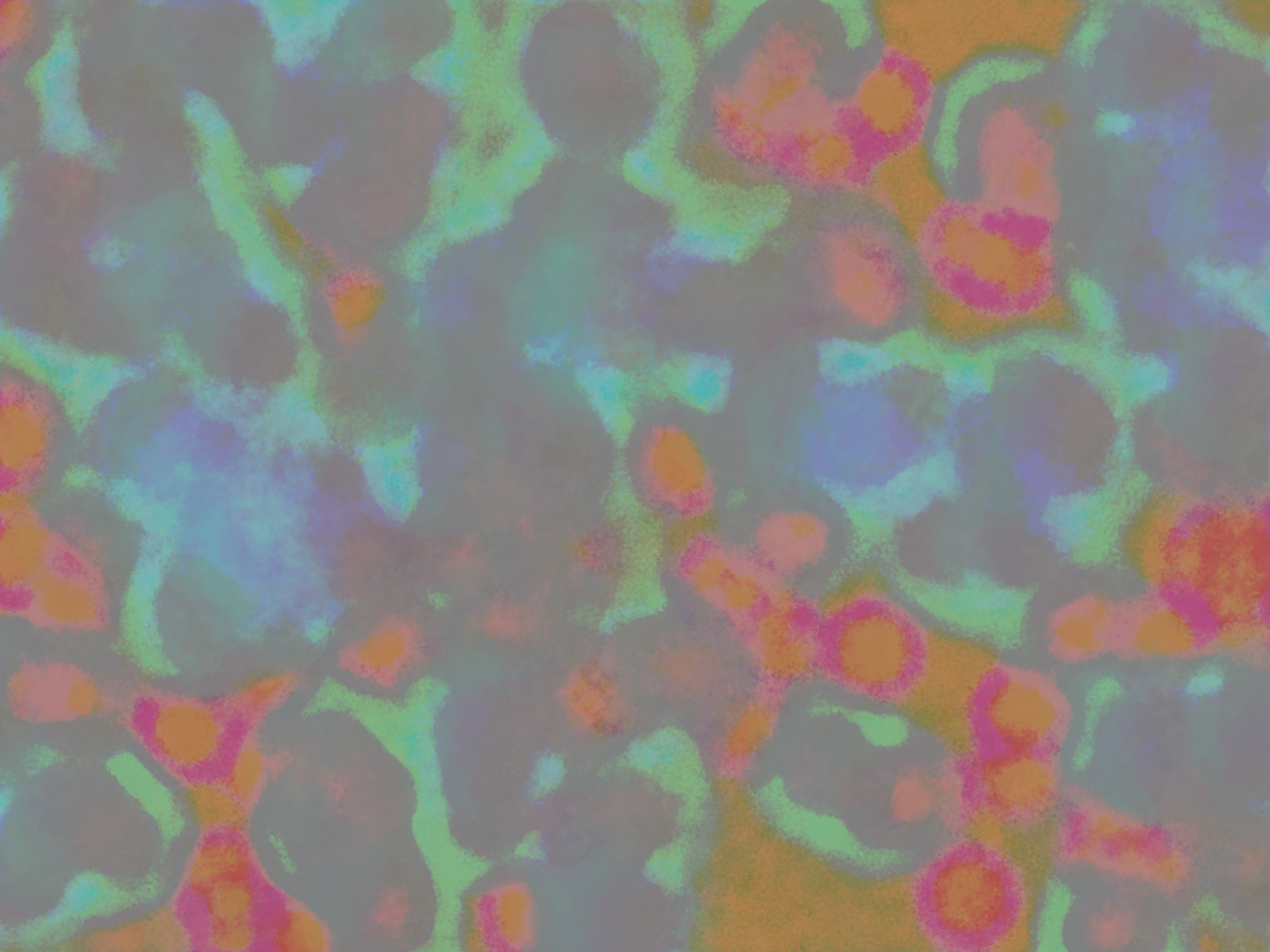
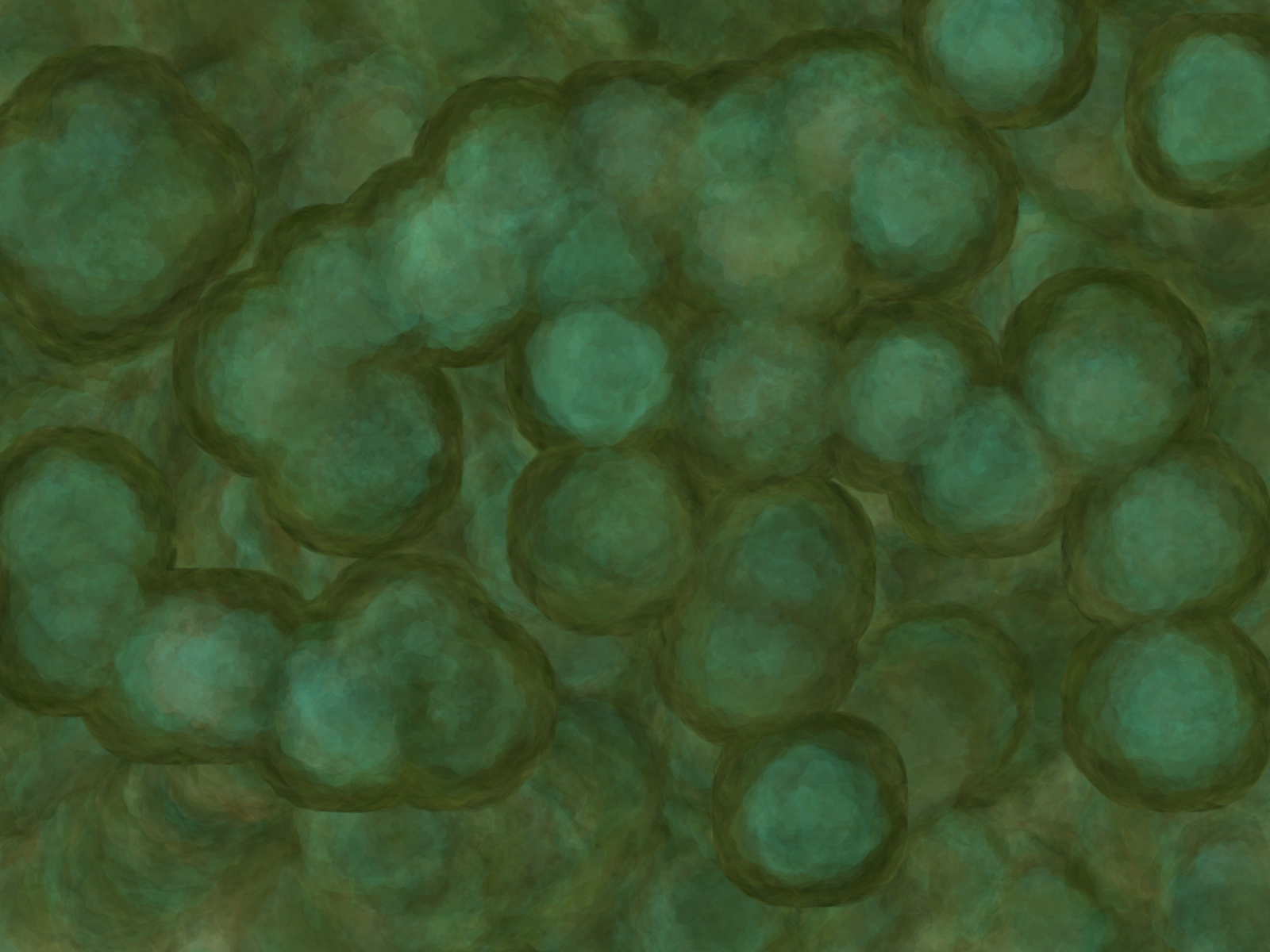
Art work inspired by Conways Game of Life, which has only two rules. Rule 1: If a live cell has two or three neighbors, it continues to live. Otherwise it dies of either loneliness or overcrowding. Rule 2: If a dead cell has exactly three neighbors, a miracle occurs: it comes back to life.
Brian’s Brain consists of an infinite two-dimensional grid of cells, but unlike Seeds, each cell may be in one of three states: on, dying, or off. Each cell is considered to have eight neighbors (the Moore neighborhood), as in Seeds and Conway’s Game of Life. (Wikipedia)
These pictures record the traces of cells while transferring between these three states.
2000 Arcs emerging
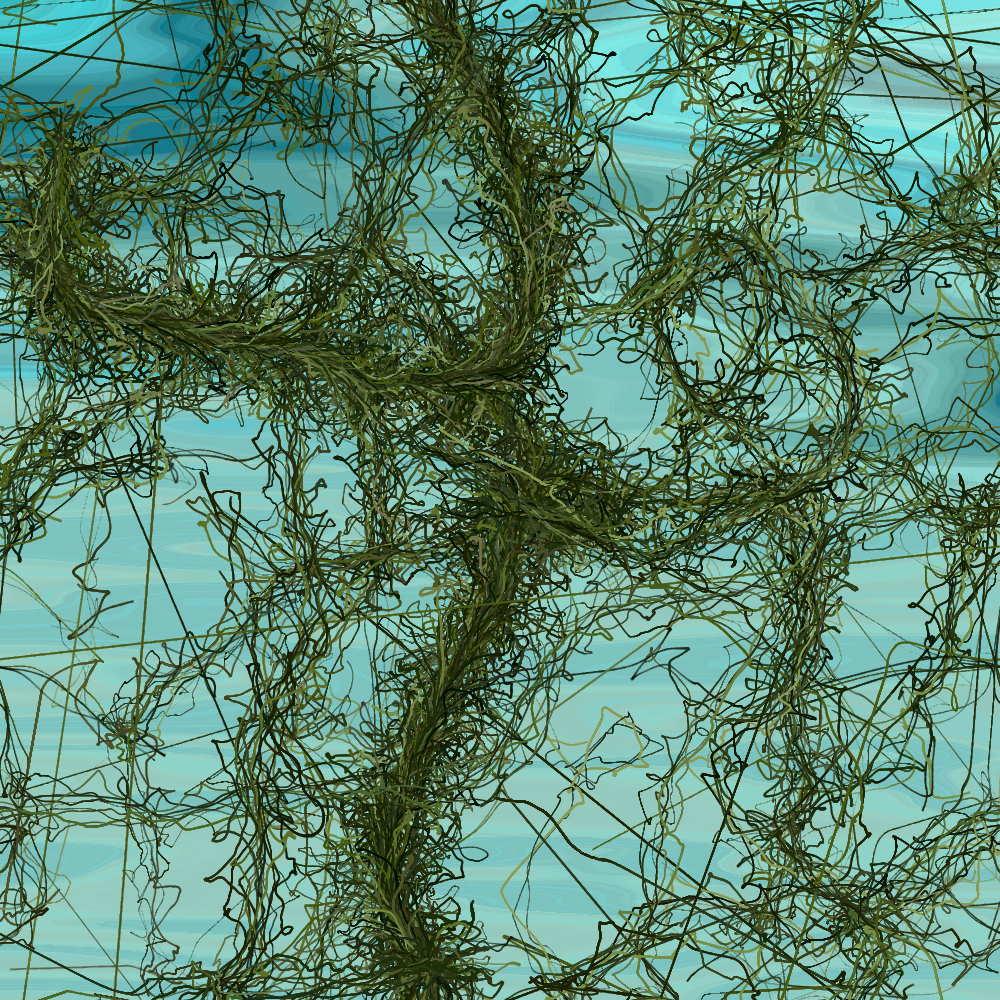
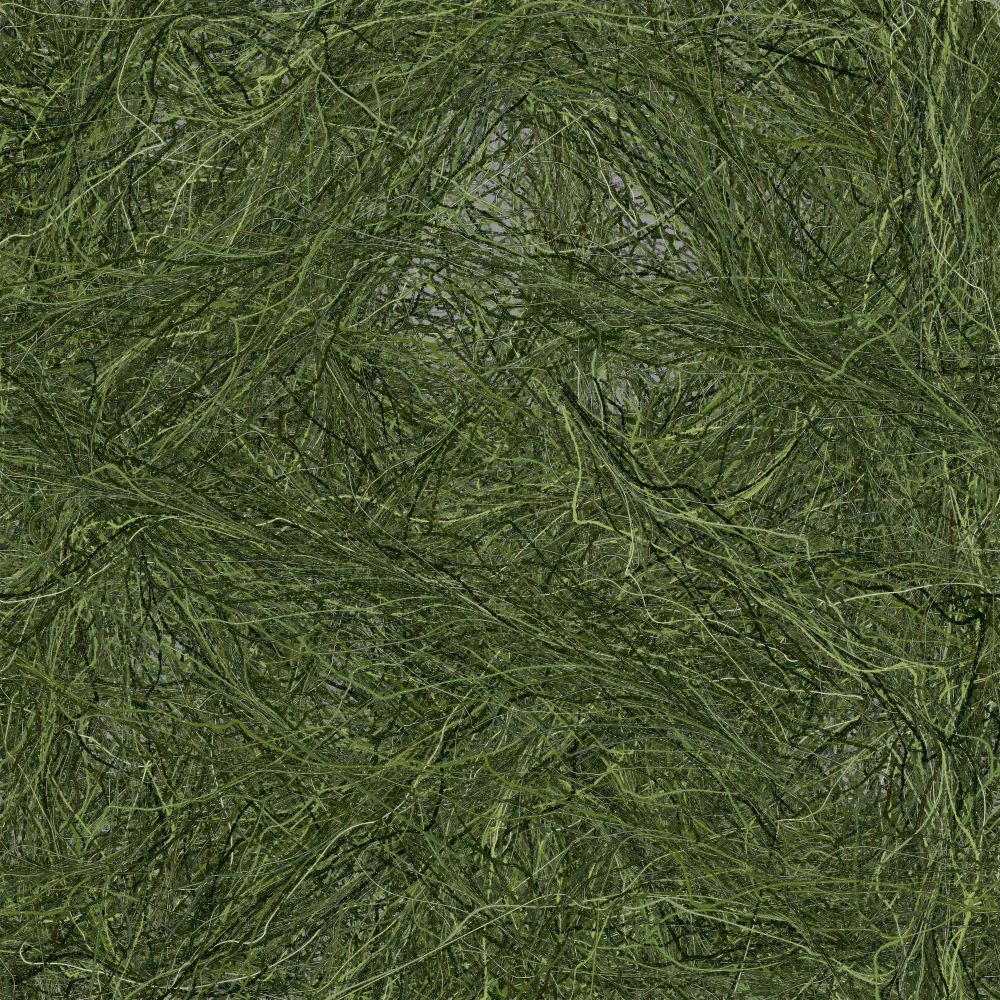
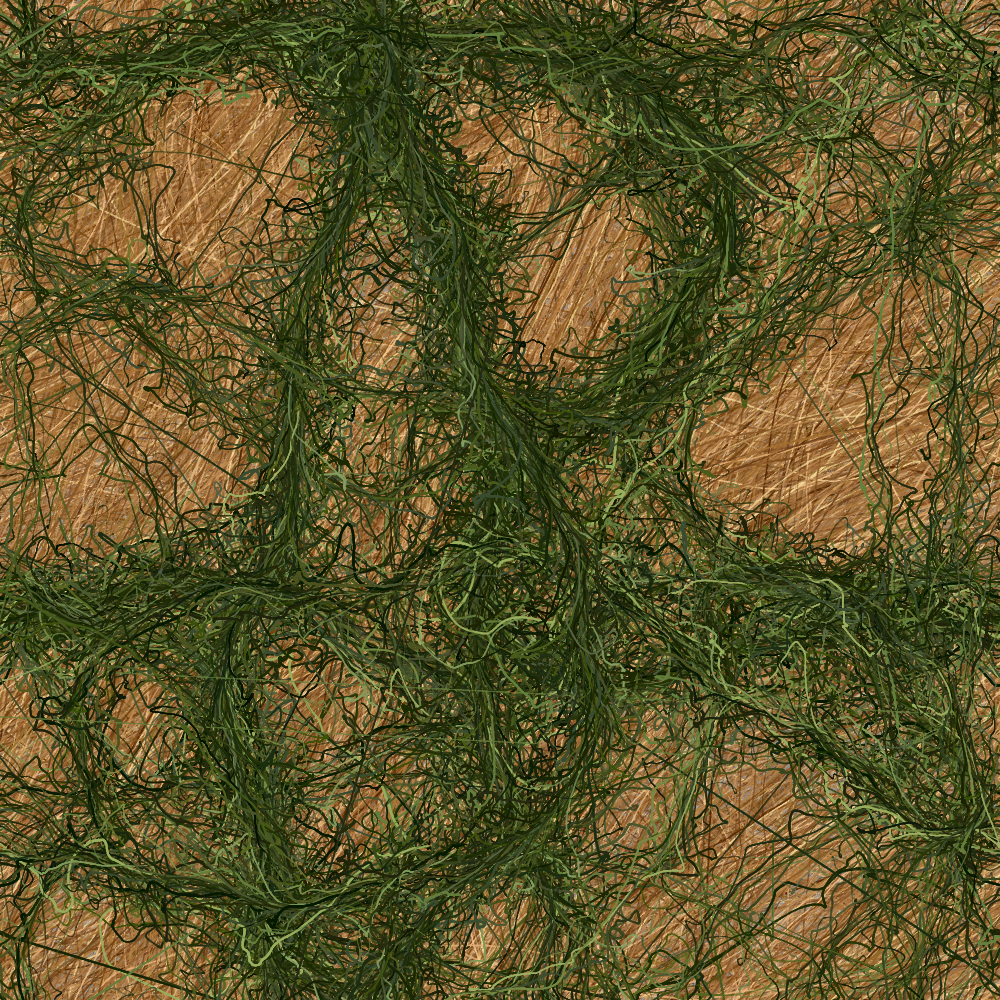
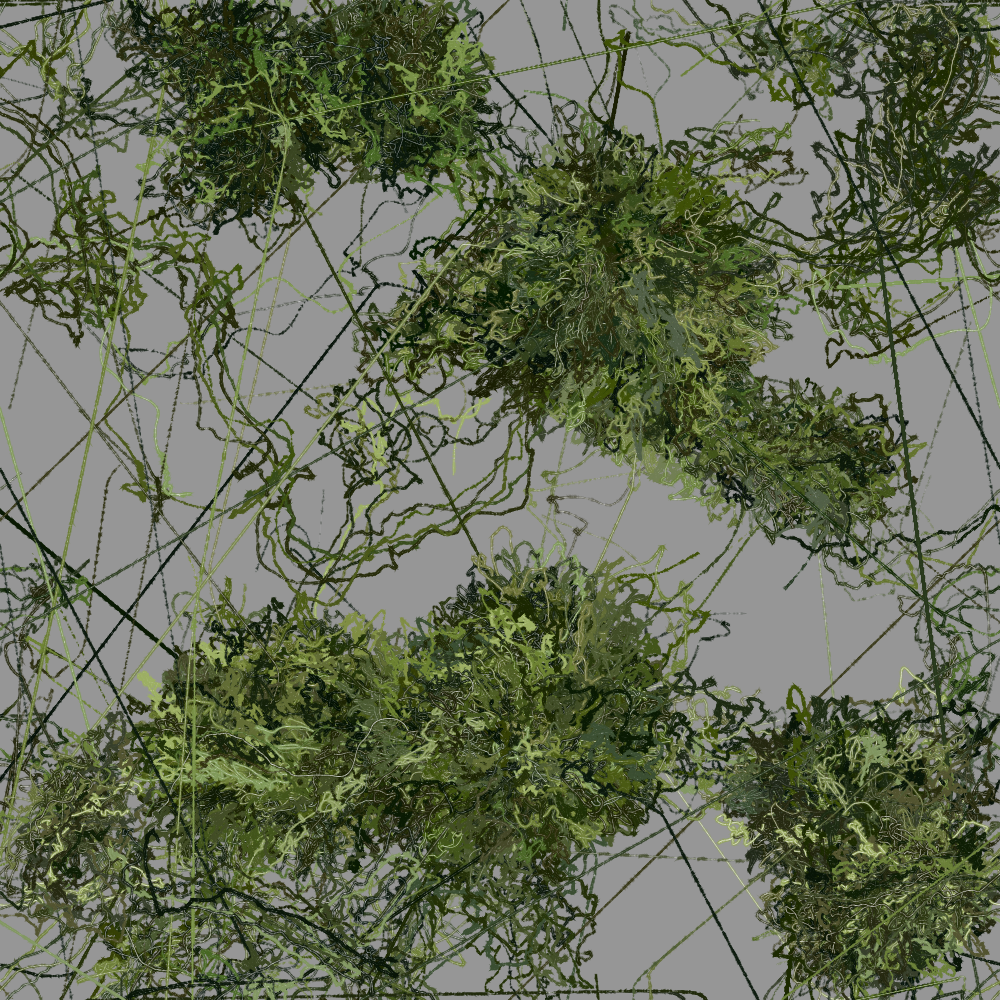
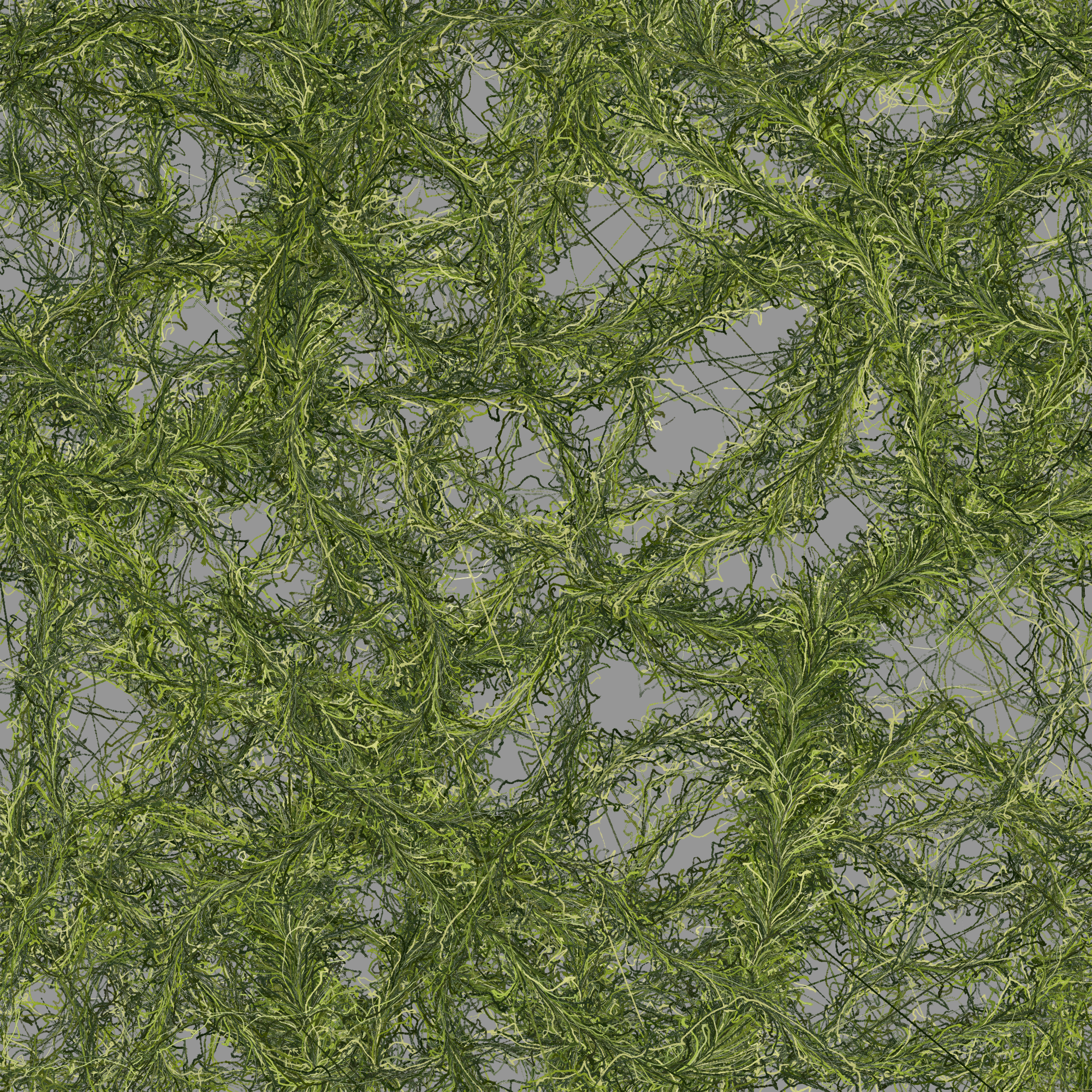
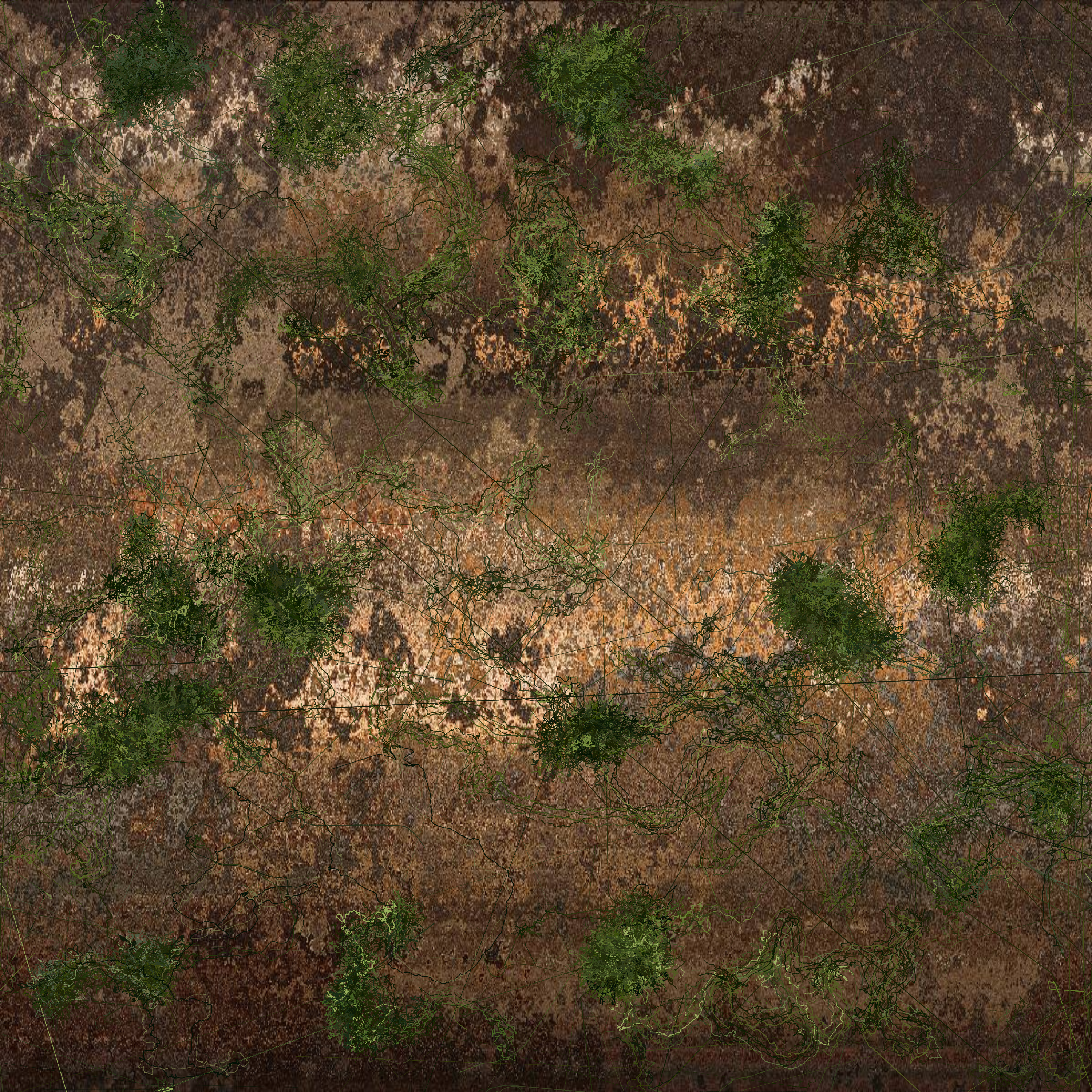
An implementation of Craig Reynold’s Boids program to simulate the flocking behavior of birds. Each boid steers itself based on rules of avoidance, alignment, and coherence.